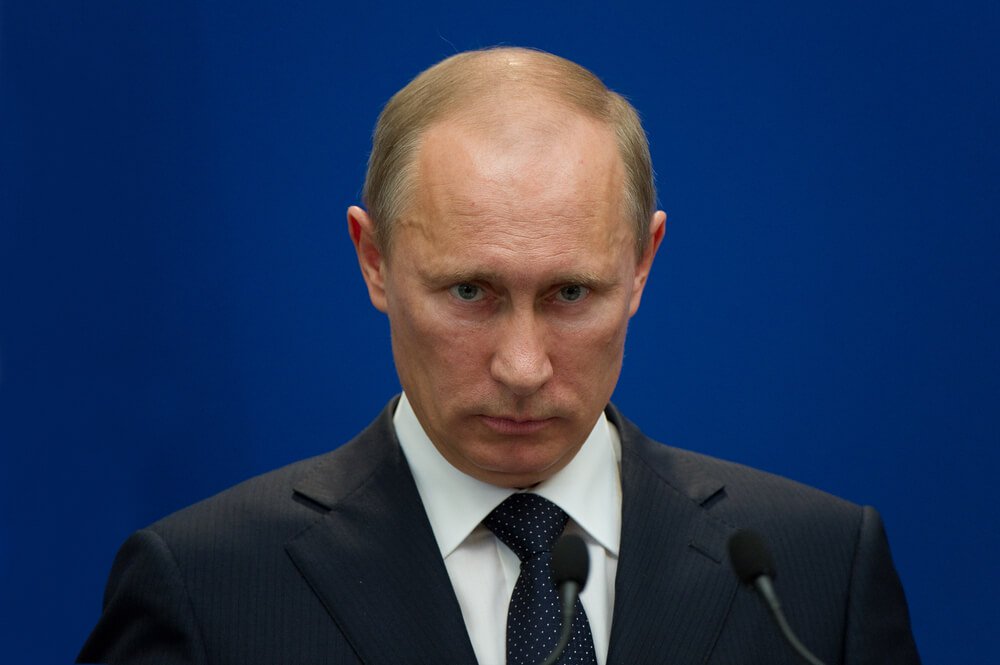
Wopke Hoekstra, the Dutch finance minister, has issued a letter to Holland’s parliament describing the current regulatory framework pertaining to cryptocurrencies as “insufficiently equipped.” The minister advocates the development regional and international regulatory efforts in response to the burgeoning digital currency phenomenon.
Also Read:
Dutch Cryptocurrency Investment Soared in 2017
 Mr. Hoekstra’s discusses the current regulatory framework in place governing cryptocurrencies, in addition to “bitcoin futures and other high-risk derivatives such as binary options.”
The letter’s preface asserts that “bitcoin and other cryptocurrencies” experienced an “enormous” boon in popularity during 2017. Mr. Hoekstra states that “the number of [Dutch] citizens that invest[ed] in cryptocurrency rose sharply in a short time,” adding that “recent research by Kantar TNS [indicates] that now about half a million Dutch households” own virtual currencies.
Mr. Hoekstra describes cryptocurrencies as “inherently cross-border” in nature, owing to their “digital character.” The minister emphasizes the risks associated with cryptocurrency investment, pointing to the warnings “repeatedly” issued by “national and European” regulators. “Unlike with savings,” Mr. Hoekstra states, cryptocurrency holding are “not covered by a guarantee scheme and there is usually no central [arbiter for] case[s] of misconduct.” The minister also highlights “concerns about the use of cryptocurrency for criminal purposes, such as fraud and laundering.”
Finance Minister Identifies Need for Adaptive Regulatory Framework
 Many of the regulatory failures of other nations, Mr. Hoekstra asserts, stem from an inability to develop an adaptive policy approach that is “tailored” to the particularities of cryptocurrency. The finance minister states that developing “an effective […] and proportional” regulatory approach to “trade in bitcoin and other cryptocurrency is complex,” adding that “Many countries are struggling with this, because the current supervisory framework and instruments are insufficiently tailored to cryptocurrency.”
Among the key regulatory issues identified by Mr. Hoekstra are the needs “close […] gaps in consumer and investor protection,” the need to “guarantee” the “integrity of the financial system,” and the need to develop a single regulatory “approach at [the] international level” due to the ease with which “national rules can […] be circumvented.”
The finance minister dismissed the possibility of pursuing a prohibition on cryptocurrency, stating that “a ban can not be expected to [be] sufficient[ly] maintained.”
International Regulatory Approach Advocated
 Mr. Hoekstra advocates that regulators focus on developing “a coordinated international approach.” The minister states that he has identified “growing support and urgency” for a transnational approach, giving praise “The European Commission, Germany and France” for commencing international “discussion on the design of regulation.” Mr. Hoekstra also announced the “Netherlands[’] support” for the expected discussions between financial leaders on the subject of cryptocurrency regulation at the upcoming G20 summit.
At an international level, Mr. Hoekstra states that “the Netherlands will […] be part of the Financial Action Task Force” where it will “call for attention” on “the conversion of cryptocurrency to regular currency.”
Mr. Hoekstra Pursues New European Regulations for “End of 2019”
 The finance minister also states that Holland “wants to play a pioneering role within the European and international approach [to] cryptocurrency.” Mr. Hoekstra states that he will “discuss possibilities for further regulatory steps” with “like-minded [EU] member states.”
Mr. Hoekstra also states that the Netherlands is “actively” pursuing “a change to the anti-money launder directive” of the European Union. Mr. Hoekstra states that the proposed changes would apply similar rules to cryptocurrency as are applied to banks and other financial platforms, including mandatory ID requirements. The finance minister also states that exchanges would be subject to the reporting requirements of the Financial Intelligence Unit.
The letter also states the finance minister’s intentions to spearhead a cooperative European approach to the regulation of initial coin offerings (ICOs). Mr. Hoekstra stated that ICOs are a major means through which “new types of cryptocurrency or tokens can enter the market,” adding that although “ICOs can be used for financing of (new) services or products,” many ICOs are “purely speculative in nature.”
Mr. Hoekstra also states that he “will consult with credit card companies” to discuss “possible measures” regarding the purchasing of “cryptocurrency […] with a credit card.”
What do you think of the Dutch finance minister’s policy recommendations regarding cryptocurrencies? Share your thoughts in the comments section below!
Images courtesy of Shutterstock, Government.nl
Need to calculate your bitcoin holdings? Check our section.
The post appeared first on .