September 11, 2026

Capitalizations Index – B ∞/21M

Dubai Bitcoin Exchange Halts Fiat Withdrawals Due to Bank ‘Issue’

Dubai bitcoin exchange halts fiat withdrawals due to bank ‘issue’

Dubai Bitcoin Exchange Halts Fiat Withdrawals Due to Bank ‘Issue’


Dubai bitcoin exchange halts fiat withdrawals due to bank ‘issue’
Advertisement

Join our community of 10 000 traders on Hacked.com for just $39 per month.

Dubai-based exchange BitOasis has suspended UAE Dirham/BTC trading, citing issues with the bank servicing the exchange itself.
A communication was sent to BitOasis users yesterday that starting Tuesday, no more dirham can be withdrawn from the exchange, leaving users with today only to move their balance elsewhere or top it up with more dirham if desired.
Dubai bitcoin exchange halts fiat withdrawals due to bank ‘issue’
Users wishing to make credit card deposits can do so at the discounted fee of four percent until June 16. According to BitOasis, the issuing bank of the exchange is the only problem, and the normal trading of cryptocurrencies such as BTC, BCH, ETH, XRP, LTC, XMR, and ZEC will continue as usual, as will cryptocurrency withdrawals from the exchange into private wallets.

Arabian Business quotes the statement as informing BitOasis users the following:

“If you decide to leave your fiat balances the only way for you to withdraw your funds at any time after May 15th would be to convert it to cryptocurrency and send it to an external wallet”

“If you choose to keep your AED fiat balances after May 15th, currently we do not have any date on when we will be reactivating AED fiat withdrawals, but we are hard at work to provide our customers with this service.”

There is no date as of yet for the reactivation of dirham withdrawals and deposits by wire transfer, although BitOasis have said it should be soon.

The exchange, which operates in the UAE, Saudi Arabia, and Kuwait, has suspended withdrawals in the past as well, halting transfers to and from Emirates NBD, Noor Bank and Mashreq bank accounts in 2017 for a short time Gulf News reported that customers experienced delayed withdrawals while new verifications were also suspended and that the issue was due to regulatory pressure from within the UAE at the time.

Entrepreneur Ola Dudin of Jordan founded BitOasis in 2014 as a hybrid wallet/exchange, and the exchange has been active since then, listing Zcash as recently as April 23, 2018. According to the website, BitOasis plans to be the first digital assets company in MENA to be registered in a major technology center in the region.

The company has not yet updated the blog regarding the new constraints on the use of the dirham currency on the exchange. Many BitOasis users are concerned with the recent developments, and have taken to Twitter to voice complaints and seek answers to their questions on the timeline of the restrictions and whether they still have time to withdraw their money.

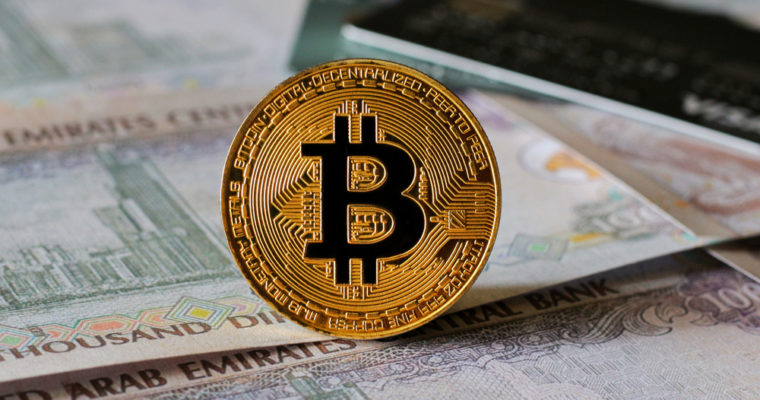
Featured image from Shutterstock.

Follow us on Telegram.
Advertisement

Published at Tue, 15 May 2018 06:32:36 +0000

bitcoin Regulation

Previous Article

1 GBC @ $0.50 Cents

Next Article

Dubai Bitcoin Exchange Halts Fiat Withdrawals Due to Bank ‘Issue’

You might be interested in …

More Mainstream Use Cases Needed to Secure Bitcoin's Legitimacy

LTB: Coin Center

Blockchain technologies like the one that underpins bitcoin are gaining wide acceptance across industry sectors from finance to healthcare to real estate. bitcoin itself, however, is still struggling with legitimacy and regulation issues. Just this week, the fact that bitcoin was chosen as the payment method for the latest round of global data ransomware attacks, WanaCrypt0r 2.0 malware, has underscored the negative perception that still swirls around the cryptocurrency.

On the most recent episode of Epicenter, co-hosts Brian Fabian Crain and Meher Roy interviewed  Peter Van Valkenburgh, Director of Research of Coin Center, a nonprofit research and advocacy center focused on the public policy issues facing decentralized financial networks like bitcoin and Ethereum. During the interview, Van Valkenburgh explained how bitcoin is currently dealing with its branding issue; how Coin Center is laying the groundwork for future discussions about bitcoin regulation; and how more mainstream uses of the technology would be helpful for discussions around regulation.

bitcoin’s Branding Issue

Van Valkenburgh noted how Coin Center has struggled with the issues around bitcoin as a brand, as many in the mainstream associate the digital currency with the collapse of Mt. Gox and drug sales on darknet markets.

“We take a lot of meetings with congressional staff, we take meetings with regulators at [the United States] Treasury, and oftentimes we can’t take credit for those meetings because a congressman doesn’t want it, necessarily, to immediately hit the news that he’s meeting with the bitcoin people,” said Van Valkenburgh.

From Van Valkenburgh’s viewpoint, networks like bitcoin are used to “decentralize power” and push security to end users’ devices. “That means you lose the choke point for regulation because the choke point for regulation is the bank, the choke point for regulation is the centralized intermediary,” he explained.

Van Valkenburgh went on to note that, since control over these networks is pushed to the edges, the technology can potentially be used for illicit activities.

Laying the Groundwork for a Future Debate

One of the illicit activities that regulators and journalists sometimes associate with bitcoin is terrorism. Although there haven’t been any major terrorist attacks funded through bitcoin or any other cryptocurrency up to this point, that we know of, Van Valkenburgh pointed out that it’s “possible that one day somebody will use these networks in a meaningful way” to finance that sort of activity.

According to Van Valkenburgh, one of Coin Center’s main goals is to prepare for the potential conversation that would take place within government in the aftermath of such an event.

“What will be the government response when this tool is used in a way that a lot of people get upset about?” asked Van Valkenburgh. “Our metric of success, I think truly, would be a reasonable response to clear evidence of illicit uses of the technology — like dangerous, illicit uses of the technology.”

For Van Valkenburgh, success for Coin Center in such a scenario would mean the prevention of a push for an instant ban of bitcoin and other related technologies, along with software developers not getting arrested as part of the process. Coin Center is effectively laying the groundwork to make sure these future conversations remain reasonable.

“This is a technology and, just like all technologies, it can be used for good and for evil,” said Van Valkenburgh. “We are not, as Americans, in the business of banning technologies. We’re not in the business of banning speech.”

More “Legitimate” Use Cases Needed

Going back to the aforementioned branding issue, one possible way to improve the outlook on bitcoin from a regulatory perspective is to create more mainstream use cases for the technology. This point was originally brought up by Crain.

“If you have stuff where there is 50 million users and they are like, ‘This thing is great. It really makes something possible that I couldn’t do before. It’s a totally legitimate thing, and this is amazing.’ It would be so much harder if it’s still this kind of fringe thing,” said Crain.

Van Valkenburgh agreed with Crain’s assessment and continued, “You need the legitimate use cases to emerge. You need to show that you’re making a positive impact on the world — that it’s not just a bunch of people getting rich off of token sales or people using underground drug markets.”

Van Valkenburgh added that Coin Center hopes to clear the way, at least from a regulatory perspective, for these sort of mainstream applications to appear. “The longer we go without more mainstream, legitimate uses, the more danger we’re in,” he added.

As far as mainstream uses of bitcoin today, Van Valkenburgh pointed to the financial autonomy enabled by the technology, and he identified WikiLeaks’s use of Bitcoin to get around a financial blockade back in 2011 as a specific example. However, Van Valkenburgh also added that this example has become more politically charged since allegations of WikiLeaks working directly with Russia have appeared.

The post More Mainstream Use Cases Needed to Secure Bitcoin's Legitimacy appeared first on Bitcoin Magazine.

Re: Best offer solving RaiBlocks captchas

Re: Best offer solving RaiBlocks captchas For the top 60 on the leaderboard, they are counting per hour, not per day.So you just need to hard work in that hour than you should able to […]