April 19, 2026

Capitalizations Index – B ∞/21M

Drug Dealer Fights to Prevent Canadian Police From Forfeiting His BTC

Drug dealer fights to prevent canadian police from forfeiting his btc

Drug Dealer Fights to Prevent Canadian Police From Forfeiting His BTC

Drug dealer fights to prevent canadian police from forfeiting his btc

A Canadian online drug dealer, snared by an undercover police agent on the dark web, is pleading to be allowed to keep half of the 288 bitcoins that police seized from him as proceeds of crime. With prosecutors seeking a court order to forfeit the crypto stash, worth CAD$1.4 million (US$1.1 million), the 30 year-old dealer argues that not all of his bitcoin was used for criminal purposes.

Also read: High Cost Slows Down Bitcoin ATM Growth in Africa

 Case Shows State Willingness to Repeal Anti-Surveillance Mechanisms

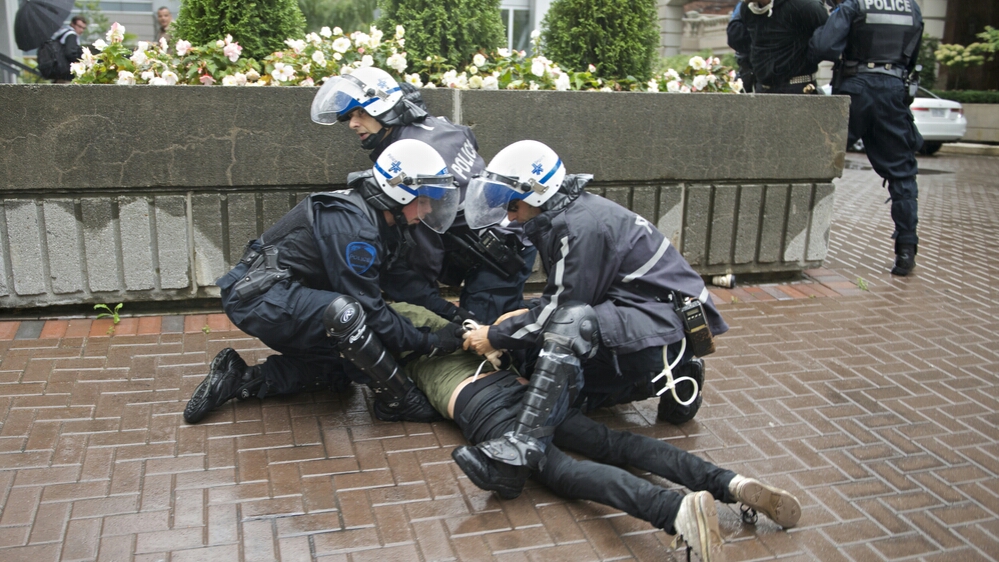
Matthew Phan, a university dropout, pleaded guilty in December to illegally purchasing a firearm and a silencer and being in possession of drugs, according to an article published by the Toronto Star newspaper. Local police, acting on a 2015 tip-off from U.S. Homeland Security, used an agent to trap Phan into transacting on two dark web sites, using bitcoin as a medium.

The case is the first in which Canadian law enforcement has seized BTC, as well as comprising a well-orchestrated dark web trap. In doing so, the police have dealt a double-barrelled attack against technologies that are generally off the radar of state authorities. While the case has its roots in crime, it sets an interesting precedent regarding how law enforcement is prepared to repeal anti-surveillance mechanisms.
Drug dealer fights to prevent canadian police from forfeiting his btc

The police watched Phan as he went to a local post office to collect the Glock gun he had purchased on the dark web – it was, in fact, a flare gun. Officers obtained a search warrant for his condo and storage locker. Lead prosecutor Erin Pancer revealed in court the search team found thousands of grams of marijuana, cocaine, ketamine and MDMA. Additional material, such as addressed envelopes, was picked up as evidence of drug trafficking.

During a search of Phan’s computers, police found and seized a digital wallet with 288 BTC. A member of the police team, Dwayne King, said he quickly seized the bitcoin so it would not be liquidated. He set up a digital wallet for the police and transferred the BTC.

“Not many years ago criminals kept their ill-gotten gains in shoeboxes hidden in their closets or under their mattresses. Cryptocurrencies have changed what that shoebox looks like and where it is hidden,” King was quoted as saying.

Police Rope in Private Firms to Testify
Drug dealer fights to prevent canadian police from forfeiting his btc

Another significant aspect of the case relates to the corporate partnerships Toronto police enlisted to investigate and prosecute the case. King is a former police officer now working with a private firm, while CEO of Ciphertrace Inc., David Jevans, was also asked to testify as an expert. Jevans argued that Phan’s digital trail suggested drug trafficking. He said he had tracked numerous transactions from dark web sites Agora and Evolution to Phan’s bitcoin address.

King commended private-public partnerships in closing in on underground criminal activities and highlighted the case as an eye-opener for state authorities that are not up to speed with crypto-related crime. “It forced agencies to start thinking about cryptocurrency investigations as a reality more than a possibility. A lot of agencies across the country were not ready to properly investigate cryptocurrency-related cases,” King wrote.

Phan claimed that he was into crypto-assisted gold trading on the dark web but the lead prosecutor disputed his involvement in any legitimate business. The judge granted that while Phan may have previously used crypto for legitimate reasons, there was damning evidence regarding drug trafficking and the illegal purchase of a firearm.

The judge will rule on the forfeiture of Phan’s BTC on April 4.

What do you think about police seizing and forfeiting Phan’s bitcoin? Let us know in the comments section below.


Images courtesy of Shutterstock.


Express yourself freely at bitcoin.com’s user forums. We don’t censor on political grounds. Check forum.bitcoin.com

Tags in this story
Bitcoin, bitcoin seized, Canada police, Ciphertrace Inc, court case, Cryptocurrency, David Jevans, drug dealer, Dwayne King, Forfeit, Matthew Phan, N-Featured

Drug dealer fights to prevent canadian police from forfeiting his btc
Jeffrey Gogo

Jeffrey Gogo is an award winning financial journalist based in Harare, Zimbabwe. A former deputy business editor with the Zimbabwe Herald, the country’s biggest daily, Gogo has more than 15 years of wide-ranging experience covering Zimbabwe’s financial markets, economy and company news. He first encountered bitcoin in 2014, and began covering cryptocurrency markets in 2017


Published at Sat, 16 Feb 2019 20:15:27 +0000

Previous Article

Bitcoin: What Bill Gates, Buffett, Elon Musk & Richard Branson has to say about Bitcoin?

Next Article

Cardano Announces Plans To Launch New Roadmap

You might be interested in …

Deutsche Bank Economist Believes a Bitcoin Crash Endangers Global Markets

The continuing frenzy surrounding bitcoin has a number of analysts and economists worried even as global financial institutions are starting to actively participate in the crypto world.


2017 has been a banner year for bitcoin and other cryptocurrencies. Last week saw bitcoin race from $14,000 to over $18,000 in a few hours before coming back down to earth at just over $15,000. While many financial experts are predicting that bitcoin will soar even higher in 2018, there are a number who are a little more gloomy. The latest member of the Gloom Club is Torsten Slok, an economist with Deutsche Bank, who believes that a Bitcoin crash could endanger global markets.

bitcoin Making the List … of Market Risks

bitcoin has been riding high this year, and the launch of futures trading is driving interest to a fever pitch. The CBOE website actually crashed yesterday as it couldn’t handle the massive influx of traffic. One wonders if CME will beef up their site when they launch their own bitcoin futures exchange next week.

Of course, not everyone is tickled pink by the increasing influence of bitcoin and cryptocurrency. Torsten Slok of Deutsche Bank has issued a warning about the ramifications of a bitcoin crash in 2018. Slok released a list of 30 market risks that could impact global markets, and a bitcoin crash came in at lucky number 13. This places bitcoin behind German wages and inflation but ahead of Brexit developments and the Russian presidential election.

How Bad Would a bitcoin Crash Be?

A total bitcoin crash would be devastating to a lot of people, but it may not have the global impact that Torsten Slok envisions. One such reason not to fret is that of scale. The total market cap for all cryptocurrencies is $436 billion at the time of this article’s writing. While a tremendous amount of money, it does pale in comparison to other economic factors. The housing market in the United States alone was estimated to be almost $30 trillion back in 2016. Another example of scale is that the value of all Japanese stocks hit a high of $5.49 trillion back in September.

Another reason why not to panic is that bitcoin is spread across the world and not concentrated in a single economic block, such as Europe. A lot of people would lose a great deal of money in the event of a bitcoin crash, but it should not throw a wrecking ball at a single country’s economy. However, if a bitcoin crash was part and parcel of a greater financial breakdown across multiple markets, then the overall global market would be impacted.

That being said, a bitcoin crash would hurt a lot of individuals, but I wonder if a lot of national governments would welcome such an occurrence. There’s no denying that many governments are not too keen on cryptocurrency as it is currency that lies outside their control, and governments are not thrilled with a lack of control.

As for Deutsche Bank, they’re calling for greater regulation and security on cryptocurrency in order to make it a viable asset class. The bank believes that the imbalance between supply and demand, as well as the volatility of crypto prices, make investing in digital currencies risky. Deutsche Bank says:

If cryptocurrencies are to replace money, then they have to fulfill money’s three core functions: as medium of exchange, a measure of value and a store of value. To do this, cryptocurrencies must be more trusted. Problems here include high volatility and possible price manipulation as well as data loss or data theft.

In the image below are the 30 global market risks as selected by Torsten Slok of Deutsche Bank.


What is your opinion of Slok listing a bitcoin crash on his list? Do you think the cryptocurrency will crash in 2018? Let us know in the comments below.


Images courtesy of Bloomberg, Flickr, Pixabay, and LinkedIn.

The post Deutsche Bank Economist Believes a Bitcoin Crash Endangers Global Markets appeared first on Bitcoinist.com.