February 17, 2026

Capitalizations Index – B ∞/21M

Did Christchurch Killer Invested in Crypto Scam Bitconnect?

Did christchurch killer invested in crypto scam bitconnect?

Did Christchurch Killer Invested in Crypto Scam Bitconnect?

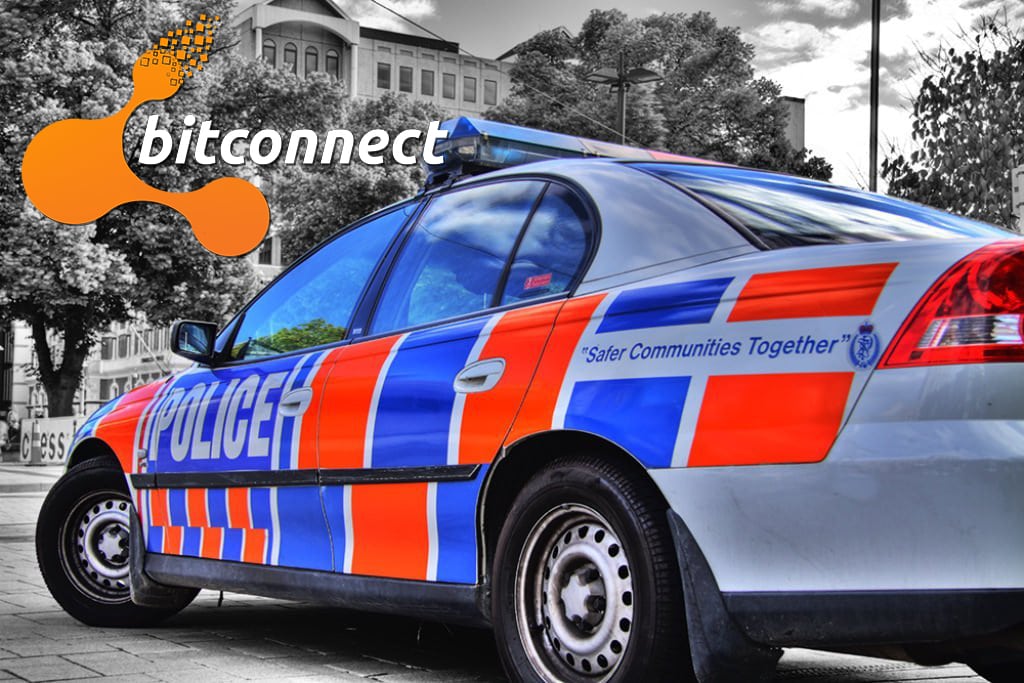
Photo: coinspeaker

Photo: Coinspeaker

The perpetrator of the mass killings at New Zealand mosque appears to have funded his life with investments he made in defunct cryptocurrency BitConnect.

Just for reminder, we wrote of how in January last year, the team of BitConnect officially announced the halt of their lending and exchange platform. The self-regulated all-in-one Bitcoin and crypto community platform, BitConnect was, at the first place, created to offer multiple investment opportunities with cryptocurrency education.

BitConnect has informed the members of their community that they are “closing the lending operation immediately with the release of all outstanding loans”.

The scheme was once grand before its eventual conclusion and went up to a market of over two and a half billion dollars ($2.6B). The scheme has long been dismantled, however, while it lasted many people managed to make money and receive hefty returns.

The platform has been accused of being a pyramid scheme because the marketing structure was built on several levels and that they promised unreasonably high payouts.

However, even though there is (still) no official confirmation of the document’s legitimacy, it may be likewise that Brenton Tarrant participated in BitConnect. Still, there is no official evidence of gaining profit through this participation.

New Zealand Prime Minister Jacinda Ardern described the killer as “an extremist, right-wing, violent terrorist.” She issued “the strongest possible condemnation of the ideology of the people who did this.”

Is There a Crypto Connection After All?

We believe there is. Especially if we look at the revealing of the killer who said that video game Fortnite taught him how to be a killer.

The gunman disclosed that he has dabbled in cryptocurrency, writing:

“I worked for a short time before making some money investing in BitConnect, then used the money from the investment to travel.”

He reportedly used the profits to travel overseas across Europe, Southeast Asia, and Asia, which may be where he became radicalized, according to the manager of the gym where the gunman worked.

Tarrant did not give further details about his investment, and it remains unknown how much he was able to obtain from it, or whether the funds had a direct impact on the crimes he subsequently committed.

The threat of terrorist activity involving cryptocurrency remains a preoccupation of authorities worldwide.

While literature often brings up worries over its use in crime, other studies have questioned the extent to which organized terrorists, in particular, are able to leverage cryptocurrency within their operations.

However, it seems that cash still remains the preferred form of financing.

Christchurch Announced $5M of Tokens Stolen From Cryptopia

New Zealand is known for being safe, and the shooting has rocked the entire region. While Australia and the UK both have bans on semi-automatic weapons, however, New Zealand does not. It also rolls out the welcome mat for immigrants and refugees.

Christchurch however, has been famous for the crypto business before. In January this year, Christchurch-based cryptocurrency exchange Cryptopia suffered a security breach. Customers didn’t have any idea what was happening to their funds, while police remained tight-lipped about the investigation.

Customers couldn’t access their accounts even a month later. The investigation is still ongoing. The combined worth of tokens stolen from Cryptopia’s digital wallets is unclear. On January 13, it’s estimated more than $5 million was transferred to an unknown digital wallet. The following day, the website was down.

On January 15, Cryptopia admitted a “security breach” and said “appropriate government agencies” had been notified. But New York-based analyst Max Galka, of Elementus, said in his blog that funds continued being drained until January 17. He estimated the total value of stolen tokens at around US$16m (NZ$24m).

Published at Fri, 15 Mar 2019 14:26:46 +0000

Previous Article

Litecoin Price Resumes its Push to $60

Next Article

Venezuela: Bitcoin to the Rescue as US-Led Visa, Mastercard Boycott Looms

You might be interested in …

Counterparty Has Reached Its Millionth Transaction

Counterparty Has Reached Its Millionth Transaction

On Thursday, the smart contract protocol Counterparty reached its millionth transaction. bitcoin Magazine received an update on the status of the project from Shawn Leary, the newly elected Counterparty community director.

Counterparty was launched in January 2014 with the creation of its native currency, XCP. Unlike typical ICOs (initial coin offerings) today that transfer funds to the founders, XCP was created by “burning” bitcoins, whereby bitcoins were sent to a special address (one for which no one owned the private key) that rendered them unspendable. Those who destroyed their bitcoins in this manner in return received an amount of XCP in proportion to their bitcoins lost.

This “proof of burn” process put all bitcoin users, including the founders, on an equal footing in terms of obtaining the native XCP token. According to Leary, the Counterparty team hopes that its unique founding sets the tone to attract new projects that won’t take advantage of users’ funds.

“We want to continue this legacy and hope it wards off scams and attracts genuine projects that use our protocol for what it was intended: decentralized markets,” said Leary.

Counterparty doesn’t have its own blockchain; rather, it exists entirely via the bitcoin blockchain. All actions taken on Counterparty are made through ordinary bitcoin transactions using XCP as the “fuel” that is spent. This means that Counterparty transactions are protected by the hashing power of bitcoin, so a double spend would require a 51 percent attack on the bitcoin blockchain itself.

Counterparty Project: More Than Games

Leary described an indie-game network that is “growing leaps and bounds around Counterparty.” This market is arguably where Counterparty has had its greatest impact. The first of these games to rise to prominence was Spells of Genesis, with its token launch in 2015.

Since then, many gaming projects have flourished on Counterparty. The Rare Pepe project currently has over 1,000 digital collectible trading cards registered via Counterparty for use in games such as SaruTobi Island and Rare Pepe Party. The augmented reality game Augmentors has also successfully raised over $1,000,000 in bitcoins in a token sale on Counterparty of the in-game asset Databits, and even won investor Vinny Lingham’s support during an episode of Shark Tank. Augmentors is currently in beta and is planning for a launch in 2018.

But there is more to Counterparty than just games. Generally, Counterparty is helping anyone create digital assets with smart contract properties that are protected by the hashing power of the bitcoin blockchain.

For instance, Counterparty’s FoldingCoin is aimed at rewarding those who provide computing power to Stanford’s Folding@home project to aid in the study of diseases such as Alzheimer’s, Huntington’s, Parkinson’s and many cancers.

In collaboration with Storj, Counterparty developed Pico payments, which will be implemented to reduce the cost of microtransactions.

Probably their most widely used token, LTBCOIN, has been used by the LTB Network for a few years now. In fact, over 17 percent of all Counterparty transactions have been with LTBCOIN.

“Every protocol has its deficiencies and quirks,” Adam B. Levine, Editor-in-Chief of the Let’s Talk bitcoin! Show, said to bitcoin Magazine. “Counterparty is no different.  What I like about it is that we’ve been building with it long enough that I understand those risks and challenges. We’ve already solved most of them, like accepting dollar payments for tokens and giving token buyers the feeling of instant fulfillment when they’d otherwise be waiting for blockchain confirmations.”

The Scaling Debate: Preparing for What’s Next

The Counterparty team has not taken a definitive position on the various scaling proposals, but continues to run bitcoin Core. Leary told bitcoin Magazine that there are two routes Counterparty could take to account for a network fork. If Counterparty supports a hard fork in advance, they will “release a new version of Counterparty utilizing the new bitcoin client, and users must switch to this new bitcoin client as well as the updated Counterparty version before the specific bitcoin fork occurs.”

Alternatively, if a fork occurs that they did not account for ahead of time, they have the option to “freeze” Counterparty balances at a specific block height on the old chain and transition to a new chain at an indicated block height. In this case, “there would be some downtime, but the process would be announced well in advance with clear instructions provided for everyone.”

The team also emphasized that since Counterparty exists entirely through the bitcoin blockchain, there can be no such thing as a fork in Counterparty itself. Counterparty nodes do not need to coordinate with one another, since all nodes simply need to monitor the canonical bitcoin blockchain, whatever the Counterparty protocol defines that to be.

Continuing Improvements

Counterparty is still continually improved with development led by core maintainers Ruben de Vries and Devon Weller. There are currently two Counterparty Improvement Proposals (CIPs) outstanding, CIP 9 and CIP 10. Both are aimed at reducing costs for transactions over the network. The team is also raising funds to upgrade counterwallet.io.

Editor’s Note: The LTB Network is a property of BTC Media.

The post Counterparty Has Reached Its Millionth Transaction appeared first on Bitcoin Magazine.

Криптовалюта, что это? Доходчиво и ясно. Будущее blockchain, Bitcoin, Namecoin, Zerocash…

YouTube: blockchain Криптовалюта, что это? Доходчиво и ясно. Будущее blockchain, bitcoin, Namecoin, Zerocash… Криптовалюта, что это? Доходчиво и ясно. Будущее blockchain, bitcoin, Namecoin, Zerocash… https://goo.gl/oMDBYU Что такое криптовалюта… more info… YouTube: litecoin litecoin increasing in […]