![Demystifying bitcoin [btc] futures trading – bitcoin [btc] news](https://ohiobitcoin.com/storage/2019/01/c9v2dB.jpg "Demystifying bitcoin [btc] futures trading – bitcoin [btc] news")
![Demystifying bitcoin [btc] futures trading – bitcoin [btc] news](http://ohiobitcoin.com/storage/2019/01/c9v2dB.jpg "Demystifying bitcoin [btc] futures trading – bitcoin [btc] news")
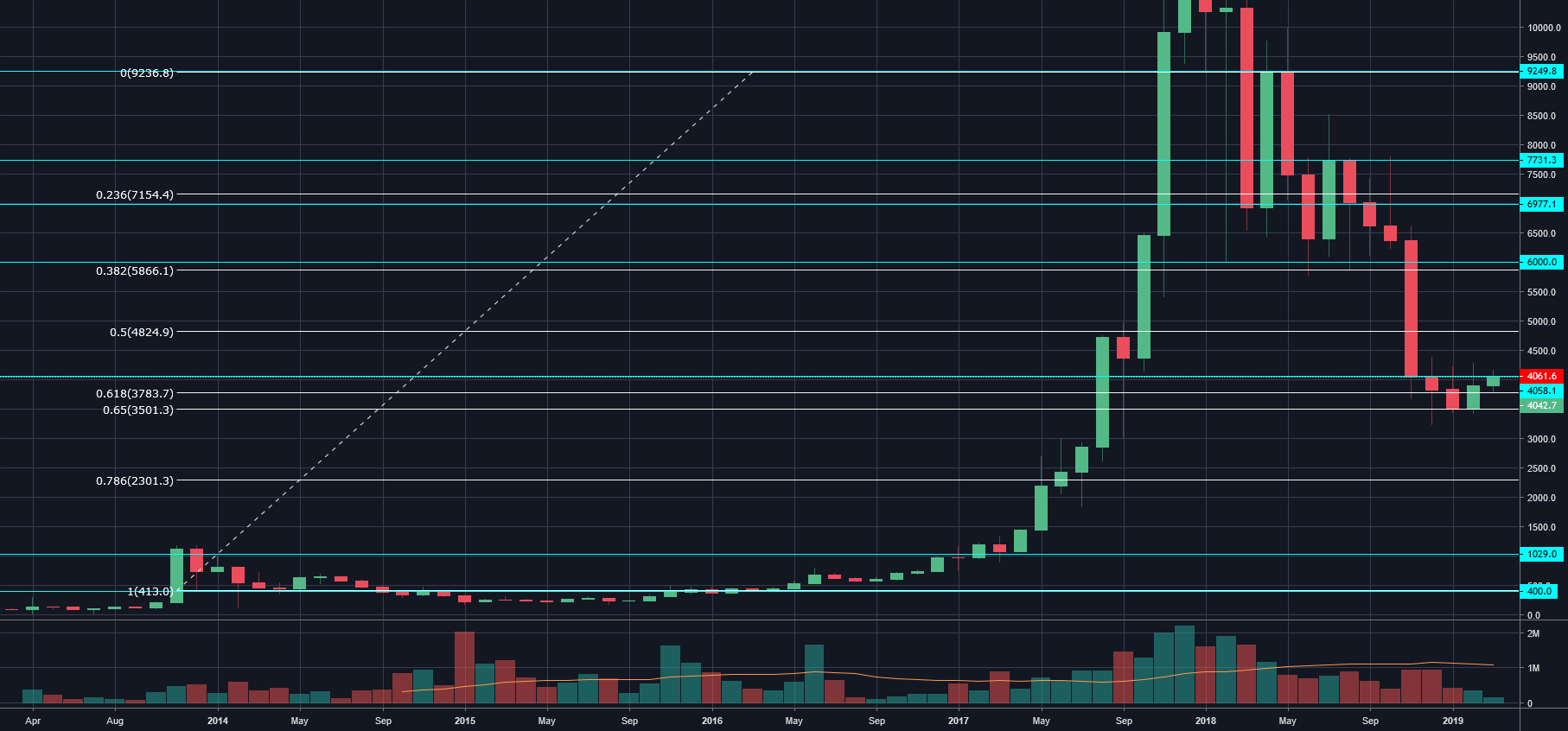
bitcoin is still a young and inefficient market, as evidenced by its many peculiarities. For example, contracts for bitcoin futures on the Chicago Board Options Exchange (CBOE) have been trading in backwardation, which means contracts with a later expiration are trading consecutively lower. This is not a bearish indicator for prices, however, analysts explain.
Also Read:
BTC Futures in Backwardation
When CBOE launched (XBT) futures on Dec. 17, 2017, many investors were excited believing this launch validated as an asset class. In early 2018, the bitcoin futures curve started out in contango, but fast forward to early 2019 we have seen contracts for bitcoin futures on CBOE briefly enter backwardation.
Mati Greenspan, senior market analyst at eToro, has previously his thoughts on CBOE’s bitcoin futures contracts signaling backwardation. He asserts that this trend does not represent a lack of confidence in the future price, with Greenspan highlighting that oil futures were in contango – the opposite of backwardation – before back in October 2018.
Understanding Backwardation and Contango
When trading futures, investors should be aware of basic principles such as the futures curve, and should determine whether the market they wish to access is in contango or backwardation. Contango, also sometimes known as forwardation, is when the future price of a commodity (in this case BTC) is above the expected future spot price. Investors who are long on commodities that are experiencing contango tend to lose money when the futures contracts expire. On the other hand, when a market is in backwardation, the futures price is below the expected spot price for a particular commodity. Backwardation indicates that the forward or futures curve is sloping down. It’s important to remember the futures market changes all the time.
Rise of Crypto Futures and Derivatives
There is a belief that bitcoin futures provide some level of transparency, liquidity and efficient pricing to the sector, allowing investors to speculate on the price of BTC. Frank Wagner, CEO and co-founder of Invao, explained that the cryptocurrency industry is still maturing into a more legitimate and established space. “Crypto traders are becoming more seasoned, and using the bear market to their advantage. Turbulent markets present an opportunity to turn profits. We’re going to see more of this in the coming year,” he predicted.
Wagner also added that in 2019 we will see the rise of crypto futures and derivatives: “The industry is awaiting clear, supportive regulation to allow these products to flourish. Derivatives will offer some insulation from market uncertainty and therefore an opportunity for new investors to get involved. All of the trends in crypto trading stem from a universal need to make the industry more stable, predictable, and legitimate.”
High Margin Requirement
BTC futures products also give investors the ability to hedge and arbitrage. When the value of an account drops below the maintenance level, a margin call is triggered. The margin is like a down payment or a deposit that a market participant posts with the exchange clearing house. Some have that the margin requirement is too high for CBOE’s BTC futures, which sits at 40 percent. The minimum margin level is usually determined by the futures exchange and is around 5-10 percent of the total value of the futures contract. For example the margin requirement for an S&P 500 futures contract is just 5 percent.
Since BTC futures trading products were only launched in December 2017, investors are still gathering data and observing the behavior of cryptocurrencies while refining their strategies. Fran Strajnar, founder and CEO at Brave New Coin, said: “Since 2013, we have witnessed the industry grow from just a couple of exchanges globally to a good number of exchanges set up in different countries. There has also been more on-ramps and off-ramps for retail investors in the early days, with sophisticated exchanges catering to institutional traders more recently.”
Strajnar added:
We have also seen the rise of futures contracts in 2018, made available via many brokerage firms that tap into CBOE and CME bitcoin futures or Coinshares’ bitcoin and ethereum trackers. We can expect to see the general trend of more exchanges and more financial instruments, particularly derivatives, being set up in 2019. We will also see the beginning of more high-frequency and quantitative style traders entering the market, now that more tools to execute and monitor trades are starting to come to the market.
The Intercontinental Exchange has announced that its Bakkt Daily Futures Contract will launch this year. Investors are anticipating with great interest in the hope that Bakkt’s physically settled contract will attract a new wave of traders and facilitate new price discovery mechanisms.
Will we see the rise in popularity of futures in 2019? Let us know in the comments section below.
Images courtesy of Shutterstock, CBOE and Investing.com.
Need to calculate your holdings? Check our section.
Published at Sat, 19 Jan 2019 17:12:28 +0000