November 12, 2026

Capitalizations Index – B ∞/21M

Crypto Exchange Giant Kraken Quits Japan Citing Rising Costs: Report

Crypto exchange giant kraken quits japan citing rising costs: report

Crypto Exchange Giant Kraken Quits Japan Citing Rising Costs: Report

Kraken japan
Advertisement

Join our community of 10 000 traders on Hacked.com for just $39 per month.

US-based cryptocurrency exchange Kraken will reportedly shutter its trading services in Japan due to rising business costs.

Referencing an emailed statement from Kraken, Bloomberg is reporting that the San Francisco-based exchange operator is closing ‘all of its services’ in Japan with a tentative planned exit in June 2018. However, the exchange did leave the door open to a re-entry sometime in the future.

Kraken was quoted as saying:

Suspending services for Japan residents will allow us to better focus on our resources to improve in other geographical areas. This is a localized suspension of service that only affects residents of Japan and does not impact services for Japanese citizens or businesses domiciled outside of Japan.

Kraken was not immediately available to respond to CCN’s request for comment at press time.

Kraken, one of the longest-running cryptocurrency exchanges in the world, has seen millions in investments from Japanese financiers including the venture capital arm of banking giant SBI, lead investor of a “multi-million” Series B round in early 2016. At the time, Kraken outlined its plans to use the financing to push cryptocurrency services, specifically bitcoin and Ethereum at the time, in Japan.

Kraken’s reported exit comes a time when the Financial Services Agency (FSA), Japan’s financial regulator, is increasing its scrutiny of domestic exchange operators – already operating or applying for a license – in the country. In March, the FSA issued a formal warning to Binance, now the world’s biggest cryptocurrency exchange, for operating in the country without registering and earning a license from the agency.

The ramped-up scrutiny follows the infamous theft of $530 million in NEM tokens from Tokyo-based exchange Coincheck, now seen as the biggest crypto exchange theft in history. The fallout from the January heist has seen a handful of exchanges hit with suspension orders from the regulator. The FSA has also taken the drastic step of issuing orders to shut down two cryptocurrency exchanges in late March. Elsewhere, SBI Virtual Currencies, the exchange operated by Japanese banking giant SBI, postponed its launch after determining it had to further strengthen its cybersecurity posture before launching services.

However, Japan remains among the friendliest jurisdictions for cryptocurrency businesses. Earlier this month, a government-backed working group proposed new guidelines intended to legalize and regulate initial coin offerings (ICOs) in the country.

bitcoin’s recognition as a legal method of payment and the advent of cryptocurrencies in Japanese society has also seen major Japanese corporate giants foray into the crypto space. Earlier this month, Japanese online brokerage Monex announced its total acquisition of embattled exchange Coincheck despite opening itself to liabilities following the January theft. Last week, internet giant Yahoo Japan confirmed its intention to buy a 40% stake in Tokyo-based crypto exchange BitARG for anywhere between a reported 2 billion – 3 billion yen, between $18.5 million and $27.8 million.

Featured image from Shutterstock.

Follow us on Telegram.
Advertisement

Published at Tue, 17 Apr 2018 09:24:06 +0000

bitcoin Exchange
Previous Article

FLUX and Bancor announce strategic partnership

Next Article

FairMining – новый майнинг Bitcoin, Dogecoin, Litecoin – Бонус 100 GHS – заработок криптовалюты

You might be interested in …

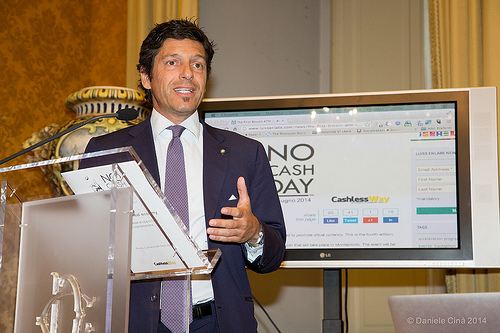
Bitcoin_nocashday-85

bitcoin_nocashday-85

bitcoin_nocashday-85By CashlessWay – Global Hub for ePayment Culture on 2014-06-28 09:38:58[wpr5_ebay kw=”bitcoin” num=”1″ ebcat=”” cid=”5338043562″ lang=”en-US” country=”0″ sort=”bestmatch”]

NO2X: Next Week’s Hard Fork Has Been “Suspended” Due to a Lack of Consensus

b2xcancel

There will almost certainly be no bitcoin hard fork next week: the main organizers behind the SegWit2x project have “suspended” their efforts.

In an email to the SegWit2x mailing list, one of the main organizers behind the project, BitGo CEO Mike Belshe, explained that the proposed hard fork has not been able to gain sufficient consensus to proceed:

“Although we strongly believe in the need for a larger blocksize, there is something we believe is even more important: keeping the community together. Unfortunately, it is clear that we have not built sufficient consensus for a clean blocksize upgrade at this time.”

The New York Agreement was originally forged between a group of bitcoin companies in May of this year. An initiative by Digital Currency Group CEO Barry Silbert, the project — later dubbed “SegWit2x” — was to combine activation of the Segregated Witness soft fork with a hard fork to double bitcoin’s block weight limit. With Segregated Witness activated on the bitcoin network this past summer, arguably helped by the SegWit2x project, the hard fork was scheduled to take place next week.

However, the hard fork part of the New York Agreement was always controversial for a number of reasons. As a result, a growing number of signatories dropped out of the agreement over the past weeks and months, while developers, user communities, public polls, future markets and more all indicated limited support for the effort. And as the hard fork date drew closer, it become increasingly clear that SegWit2x would in fact spawn a new currency rather than constitute an upgrade of the bitcoin protocol.

And this was never the plan, Belshe wrote:

“Continuing on the current path could divide the community and be a setback to bitcoin’s growth. This was never the goal of Segwit2x.”

Belshe’s email was also signed on behalf of Xapo CEO Wences Casares, Bitmain CEO Jihan Wu, Bloq CEO Jeff Garzik, Blockchain CEO Peter Smith and ShapeShift CEO Erik Voorhees. In a separate blog post published just before Belshe’s email, BitPay CEO Stephen Pair also called for cancelation of the hard fork.

While the New York Agreement was signed by even more companies (and some individuals), and anyone can still deploy the hard fork, it is unlikely that anyone will proceed with the hard fork in any meaningful way.

Belshe does, however, note that a hard fork to increase bitcoin’s block weight limit might be needed in the future, writing:

“As fees rise on the blockchain, we believe it will eventually become obvious that on-chain capacity increases are necessary. When that happens, we hope the community will come together and find a solution, possibly with a blocksize increase.”

The post NO2X: Next Week’s Hard Fork Has Been “Suspended” Due to a Lack of Consensus appeared first on Bitcoin Magazine.