April 7, 2026

Capitalizations Index – B ∞/21M

Counter Argument: A Caracas-Based Journalist Says Bitcoin is Not Saving Venezuela

Counter argument: a caracas-based journalist says bitcoin is not saving venezuela

Counter Argument: A Caracas-Based Journalist Says Bitcoin is Not Saving Venezuela

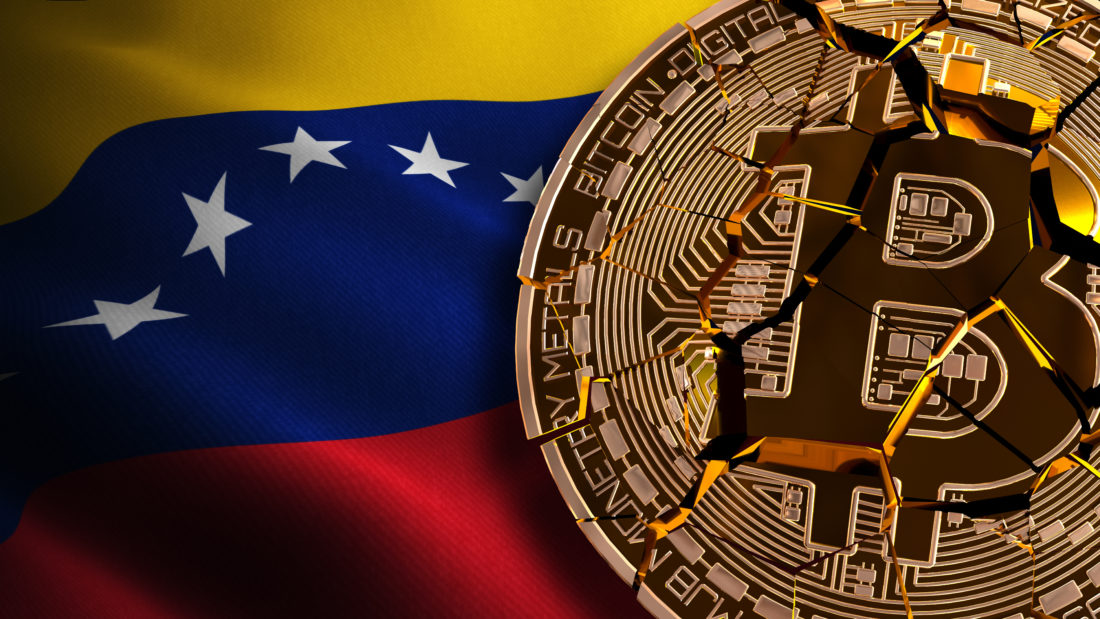
While Venezuela’s economy continues to suffer under the haphazard mismanagement by Nicolás Maduro, it has caused the country’s citizens to rely on bitcoin as a currency, store of value, and its use to transfer funds across borders.

Bitcoin has been at the center of many discussions claiming that the entire country is turning to the leading crypto by market cap, with one recent op-ed in the New York Times offering up a story how it saved one struggling Venezuelan citizen’s family. However, a new counter-argument is suggesting that bitcoin’s usage and dominance in the economically strapped country is extremely overstated, and is instead is being used to fuel cryptocurrency-promoting campaigns.

Argument: bitcoin Is Saving Families During the Venezuela Economic Crisis

A recent opinion piece published by the New York Times entitled “bitcoin Has Saved My Family,” has the crypto world buzzing. bitcoin’s deflationary design, its existence outside the control of governments and financial institutions, and its use as a store of value and transactional currency make the first ever cryptocurrency especially valuable for nations in economic turmoil or those without meaningful banking infrastructure.

The article’s author told a tale of how due to the rapidly declining value of the bolivar – Venezuela’s fiat currency – he buys bitcoin from LocalBitcoins and uses it to send money to family members, or cashes it out to the bolivar when its time to actually spend money on essentials such as groceries, or in the article’s example, a carton of milk.

Related Reading | Bitcoin Is A Hedge Against Bolivar-Induced Financial Suicide, Claims Venezuelan Economist

Many may wonder why someone would prefer to keep their spending money in bitcoin when the price of the cryptocurrency has declined over 84% since it’s all-time high price of $20,000, however, bolivar’s annual inflation rate in 2018 was nearly 1.7 million percent. To avoid the value of the author’s funds from falling too much, he finds bitcoin to be a safer method that better preserves its value.
Counter argument: a caracas-based journalist says bitcoin is not saving venezuela

Counter-Argument: Venezuela’s Reliance on bitcoin Is Far Overstated

Recently, a counter-argument was made against the New York Times piece, penned by a journalist from Venezuela’s capital, Caracas. The author details how, despite conflicting reports and dominant majority trading volume on LocalBitcoins originating from Venezuela, the country is “not becoming a bitcoin nation.”

The author himself previously published an article about “how bitcoin is a lifeline for some Venezuelans,” he doesn’t want to “overstate the popularity of bitcoin in Venezuela.”

“And please don’t use our crisis to attract attention to your crypto campaign,” the author pleads.

The author claims that although the nation has its own native cryptocurrency in the oil-backed Petro, and many are indeed turning to bitcoin, the country’s citizens are still generally confused by crypto, and don’t yet trust the asset class as a medium of exchange. Others outright think it’s a scam, or lack the technological infrastructure to even access cryptocurrency.

Related Reading | Strong Fundamentals: Bitcoin Daily Transactions Return to Bull Run Levels

“Venezuela’s Internet continues to deteriorate, as the government manages most of country’s telecommunications concessions. Once you get far from the big cities it is even harder to get an good Internet connection. Smartphones, which tend to be priced in dollars, are even more expensive for Venezuelans now,” the author reveals.

In conclusion, the author believes that bitcoin being a savior for the country has been overblown by the cryptocurrency community, and that Venezuelans would rather fight harder to earn income in their native fiat currency, and find other workarounds to deal with the government’s tightening grip that don’t include cryptocurrency.

Published at Thu, 28 Feb 2019 20:00:35 +0000

Previous Article

XRP Is Now Live and Trading on Coinbase’s Consumer App

Next Article

After a Brief Decline, Crypto Market Cap Is Stable Around $130 Billion, Stocks Are Down

You might be interested in …

Cardano (ada) remains bullish, could revisit $0. 0500

Cardano (ADA) Remains Bullish, Could Revisit $0.0500

Cardano (ADA) Remains Bullish, Could Revisit $0.0500 ADA price corrected lower and found support near the $0.0400 level against the US Dollar. There is a major bullish trend line formed with support at $0.0415 on […]

Microsoft Office Can Now Verify Docs on the Bitcoin Blockchain

Microsoft is continuing its Blockchain journey by integrating Stampery into Microsoft Office Outlook with cross-compatibility.


Office Applications Verify Docs On bitcoin, Ethereum

Stampery, which provides verification of documents against both the bitcoin and Ethereum blockchains, will be accessible for verifying emails without users leaving Outlook itself.

“Stampery provides this functionality today by creating hashes of documents submitted through the web and storing them on the Ethereum and bitcoin public blockchains. To enable this capability, Stampery provides a RESTful API that is accessible from applications,” a dedicated release about the integration from Microsoft explains.

In this project, we leveraged this secure API to create a convenient add-in to Microsoft Outlook that performs like a near-native feature to stamp/certify an email without leaving Outlook or even the specific email that you are viewing.

Removing Centralized Trust

Microsoft adds that while various solutions already exist for document certification online, these involve signature storage via a centralized entity, thus placing trust at a weak point.

“An alternative to relying on a single entity (commercial, public, government, etc.) to keep such proof of identity safe is to create a hash of the document and send that hash to the publicly accessible blockchain, such as bitcoin,” the release continues.

“Once the hash data is present on the public blockchain, the document can’t be changed without invalidating the hash. This approach guarantees both the document’s privacy and the data’s availability for future validation purposes.”

The solution is compatible with products across the Office suite. “In a more general sense, anyone wanting to certify and verify any digital asset could reuse and build upon this knowledge, too,” Microsoft adds, noting the code for the Office implementation is open source and available on GitHub.

Microsoft ‘Will Signal UASF’

The move comes as a source claims Microsoft would “by default” support a user-activated soft fork (UASF) on the bitcoin network.

In a tweet Tuesday, Daniel Buchner, the corporation’s head of decentralized identity, said that such signalling would occur across “all (bitcoin) full nodes and clients used in Microsoft’s open source decentralized identity implementations.”

//platform.twitter.com/widgets.js

Asked whether this would mean following a minority chain, Buchner said in a response that it would be “any chain’s version (it’s a cross-chain system) that best preserves/enhances the decentralized state of IDs rooted on it.”

Will Microsoft’s Stampery integration and UASF support boost bitcoin adoption? Let us know in the comments below!


Images courtesy of Microsoft.com, Shutterstock, Twitter

The post Microsoft Office Can Now Verify Docs on the Bitcoin Blockchain appeared first on Bitcoinist.com.