Connecting blockchains as final step for mass adoption
Source:
Matteo, Essentia co-founder and Chairman of The Internet of Blockchain Foundation, explained the problem at stake: “Due to the number of border control agencies required to scrutinise travellers along the route, it’s vital for customs agents to be able to view passenger data in advance in the knowledge that it hasn’t been tampered with or impaired in any way. We believe this is to be a problem which blockchain would be ideal for.”
On February 20th, representatives of Essentia One met with Dutch ministers at The Hague. The purpose for the meeting was to discuss possible solutions to border control issues that currently beset the Amsterdam to London Eurostar route.
Amsterdam-based Essentia One specialise in blockchain technology, and are in the process of developing a framework for the decentralised web. “Where some people see problems, we see challenges, which then motivates us to develop a solution” says Matteo.
Together with Head of Business Development Bedros Awanesian and Essentia Advisor Erik van der Staak, Mirco and Matteo made the trip to The Hague where they engaged in “productive” talks with officials from the Ministry of Justice & Security and the Ministry of Infrastructure and Water (Transport).
Matteo conceded that the problem the team were hoping to address was a complex one, but was optimistic that progress could be made, stating: “The fact that representatives of the Dutch government were willing to even countenance using blockchain technology showed they were open to left field ideas if these proved to be workable and cost-effective.”
The proposal put forward by Essentia One would alleviate much of the disruption that passengers currently endure as part of the extent border check process. Because the train passes through multiple countries and jurisdictions on its way from the Netherlands to England, travellers are obligated to disembark and then reboard the train as checks are carried out.
Blockchain technology is prized for its transparency and auditability, and it was these characteristics that Essentia emphasised as to why it could prove its use on the Eurostar route.
The team’s solution would see passenger records securely stored on the blockchain in near-real time by Dutch officials and then made available to their counterparts in other countries. That way, passengers could be screened in advance, eliminating the need for multiple checks at stopping points along the way.
“The existing system puts an unnecessary strain on travellers and the transport system, and it severely prolongs journey time,” noted Essentia co-founder Mirco, speaking from personal experience. He also spoke of the “positive atmosphere” that pervaded the meeting with Dutch Ministry officials in The Hague, and was optimistic that tangible progress would be made.
His fellow founder Matteo concurred, explaining: “Using Essentia, all four countries connected by the Eurostar service (the Netherlands, Belgium, France, and the United Kingdom) have the opportunity to independently and remotely identify passengers and confirm whether they have been approved for boarding. This allows for rapid, remote control of which travellers are allowed to enter a target country, based on entry requirements.”
Due to the number of countries and border control agencies with a stake in the Eurostar Amsterdam to London route, any potential project would be subject to agreement from all parties. The Essentia team spoke warmly of the progress made at the initial meeting, not only in regards to the Eurostar route, but potentially elsewhere in the country too.
The blockchain solution Essentia outlined would be equally suited to other border control points within the Netherlands, including airports, and the company is now in talks with Dutch officials with a view to potentially devising a pilot.
Whatever the outcome of future talks, Essentia emphasised their gratitude to officials from the Dutch government for taking the time to hear their proposal, and for considering innovative solutions to border control. Essentia is optimistic that a working model can be implemented in the future, demonstrating another real world use case for blockchain.
Be a part of the change which is putting into action! Join the Essentia Telegram group one and participate in the rapidly-growing community.
The post appeared first on .

Every so often, corporate business blushes its latest fad speak. Disruptive. Paradigm shift. 2.0, 3.0. Game changer. For about half a decade now, blockchain technology has been the phrasing du jure among ecosystem corporatists and assorted scammers. It’s weak jingoism employed to disguise against real innovation, cryptocurrency. Blockchain is just a damn database, a giant spreadsheet. I’ve officially had an ass-full of it. Knock it off already. WARNING: Language quite salty ahead!
Also read:
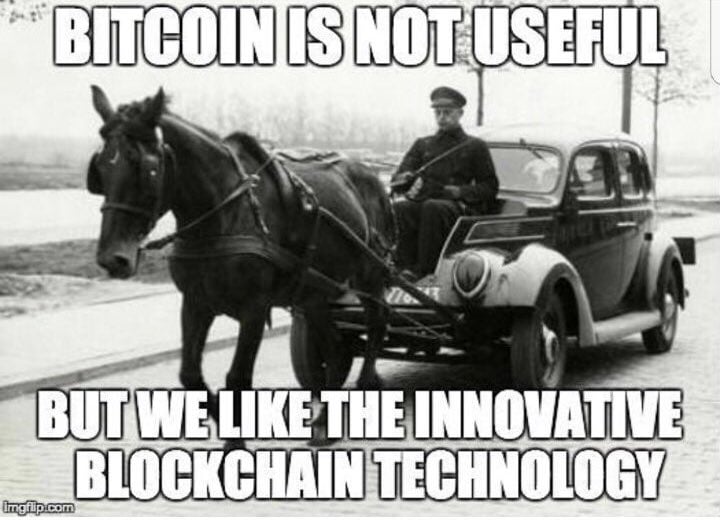
Blockchain Without bitcoin is Just a Database
Stanford University Computer Science Lecturer created a bullshit detector. Dr. Lee answered an off the cuff provocation by Wall Street Journal columnist, . Exasperated, he Tweeted about the possibility of “a browser extension that replaces ‘blockchain’ with ‘multiple copies of a giant Excel spreadsheet.’”

She went to work on . The result instantly sweeps away mounds of stupidity, shelves of inane TED Talks, and bullets god awful gurus of modern finance. And it’s glorious. Fuckery from Porsche, for example, loses its heart-pounding intensity: Porsche becomes the first auto manufacturer to utilize multiple copies of a giant excel spreadsheet.

Her fanciful github project worked so well, it turned meta once she jumped back on Twitter to share the hilarious product, correcting even her previous Tweets. Articles suddenly lost their edge. Initial coin offering projects immediately were revealed for the mostly fraud they are. It’s especially helpful for those new to the space, the crypto idea.
In the mainstream press and the global corporate world, cryptocurrency is reviled. It is hated. Its users are thought to be straight trash. Don’t ever forget that. That it derives from distinctly polemical anarchists who were bent on leaving government forms of money makes it all the worse. There is absolutely no reason for the financial system undergirding media and business, insulated and protected by the status quo, to do anything other than what they’re doing: portray cryptocurrency as a plaything for geeks, drug losers, terrorists.
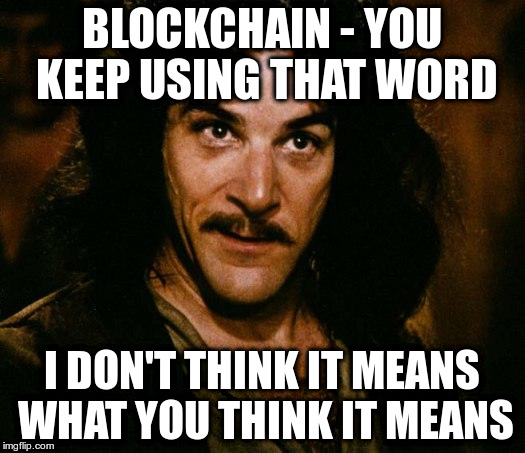
Blockchain Tech Talk is Insidious and Undermining
This is why blockchain tech talk is so insidious. The legacy financial world cannot stop the phenomenon, as it jumps, memetically, from person-to-person. It constitutes exactly no threat now, especially when at the height of its popularity late last year, cryptocurrency’s main brand, bitcoin core (BTC) laid a colossal egg through retarded wait times and ridiculous fees, souring the first user experience of millions — millions who won’t return. But also do not for one second peg traditional financial pros as stupid.
They were saved by bitcoin core stubborness, no doubt. We cannot know how many would’ve held on or been inspired by decentralized currency if their initial experience was pleasurable. The run-up, however, is there. It is a fact of history. bitcoin was ready to break out and do something huge.

Part of the quell, much worse than the bitcoin core debacle, was foundationally put forward years prior with blockchain tech talk. Forget the stupid currency, bankers and financial elite scowled. Mom and grandfather are not ‘anarchists,’ icky anti-government folk. They just want a faster way to pay for products. Blockchain this and blockchain that allows the financial elite community to participate in the spectacle and entrepreneurial awakening by having their cake while eating it too: blockchain, blockchain, blockchain; bitcoin is soiled, ugly, gimmicky.
A cursory reading of what now amounts to a near religious document, Satoshi Nakamoto’s white paper, : A Peer-to-Peer Electronic Cash System, reveals no mention of blockchain. Chain appears 27 times, block 67. The two words get close, circling one another, but never consummate. I’ve mentioned it before in polite company as some suited fellow attempts to bedazzle me with blockchain talk. Face scrunches in response. “Really?” they inevitably ask.
It’s the Currency, Stupid
Yeah, you’d imagine if the entire point to Satoshi’s work was a damn blockchain that it’d get a mention. Like one. Nope. Instead, the focus is entirely upon a way to get to decentralized currency, peer-to-peer, as cash but without a government middle person. The entire bother, grand affair, is for you, fool, to become your own bank.
Invade any bank boardroom, and you’ll get a shit-ton of gab about blockchain. Nary a peep will be about bitcoin, unless as a point of derision and scorn. bitcoin? The drug dealer thing? Created out of thin air by some imaginary dude? Are you mental!
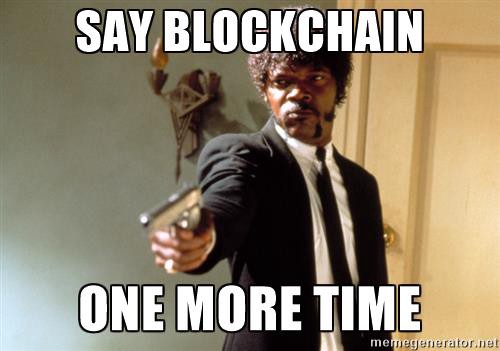 That is the fundamental misunderstanding, which again I believe at higher levels to be quite purposeful: there’s literally no reason to run the distributed software if people didn’t first spend bitcoin as a currency. A spreadsheet copied many times without a spendable currency is just the banking system as we now know it … maybe mildly more efficient. And literally no one would have hailed bitcoin as a history changing technology if it were just a bunch of private, distributed accounting ledgers.
While many of the previous bitcoin evangelists now sit on banking boards and are toasts of Wall Street, commanding nice speaking fees, book deals, and guru status, it’s time for bitcoin to return to danger. Cryptocurrency is punk rock. It’s fast. It’s here to knock things over. It’s here to starve bankers, fiat whores, who’ve funding wars and massive police states. It’s borderless, permissionless. It’s everywhere and nowhere all at once. It has the chance to become the greatest transfer of wealth the world has ever witnessed, from entitled, politically connected hands to those who’ve never had a chance at financial freedom. Your fakakta blockchain talk won’t ever do any of that. Knock it off.
What do you think about blockchain tech talk? Let us know in the comments!
Images via Pixabay, Twitter.
At we do not censor any comment content based on politics or personal opinions. So, please be patient. Your comment will be published.
This is an Op-ed article. The opinions expressed in this article are the author’s own. bitcoin.com does not endorse nor support views, opinions or conclusions drawn in this post. bitcoin.com is not responsible for or liable for any content, accuracy or quality within the Op-ed article. Readers should do their own due diligence before taking any actions related to the content. bitcoin.com is not responsible, directly or indirectly, for any damage or loss caused or alleged to be caused by or in connection with the use of or reliance on any information in this Op-ed article.
The post appeared first on .