April 2, 2026

Capitalizations Index – B ∞/21M

Chinese President Xi Jinping: Blockchain Reshaping Global Economic Structure

Chinese president xi jinping: blockchain reshaping global economic structure

Chinese President Xi Jinping: Blockchain Reshaping Global Economic Structure


Xi jinping
Advertisement

Get exclusive analysis and cryptocurrency insights on Hacked.com for just $39 per month.

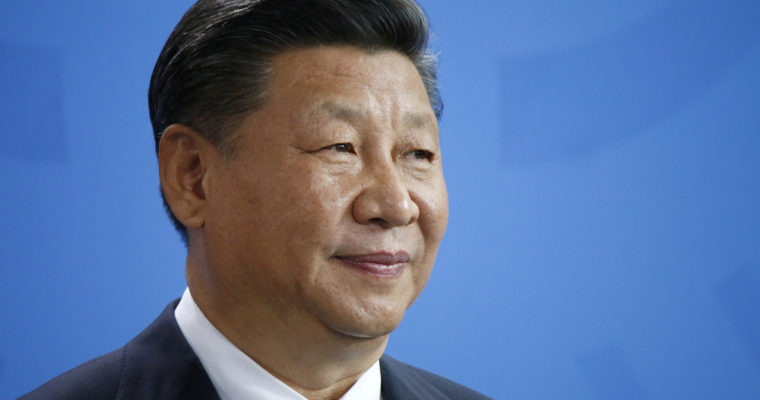
Xi Jinping, the President of China, arguably the most powerful politician in the world today, has said at the annual academic conference hosted by the Chinese Academy of Sciences that blockchain technology, artificial intelligence (AI), and Internet of Things (IoT) are reshaping the global economic structure.

“Ever since the start of the 21st century, a new generation of industrial revolution is substantially reshaping the global economic structure … with artificial intelligence, internet of things and blockchain constantly making application breakthroughs,” said President Xi.

Didn’t China Ban Cryptocurrency Trading?

In September 2017, the Chinese government and local financial authorities led by the People’s Bank of China (PBoC) officially banned cryptocurrency trading, shutting down local cryptocurrency exchanges and ordering commercial banks to prevent transactions to cryptocurrency brokerages.

However, even after prohibiting cryptocurrency trading, the Chinese government and local conglomerates such as Alibaba and Tencent have continued to focus on developing the blockchain and decentralised platforms that have the potential to improve the economy and the global financial structure.

On May 26, CCN reported that the State Council of China ordered local financial authorities and government-funded research centres to allocate more resources in developing, deploying, and commercialising the blockchain.

“To build a regional equity market in Guangdong, according to the opening up of the capital market, timely introduction of Hong Kong, Macao and international investment institutions to participate in transactions. We will vigorously develop financial technology and accelerate the research and application of blockchain and big data technologies under the premise of legal compliance,” the State Council of China said, maintaining a pro-blockchain attitude.
China

The statement of the State Council of China was released merely a month after Hangzhou city government decided to spend $1.6 billion on funding blockchain startups.

Most recently, ZhongAn, an insurance giant in China founded by Alibaba and Tencent founders Jack Ma and Pony Ma Huateng, partnered with more than 100 hospitals to utilise the blockchain in processing healthcare records, financial information, and payments.

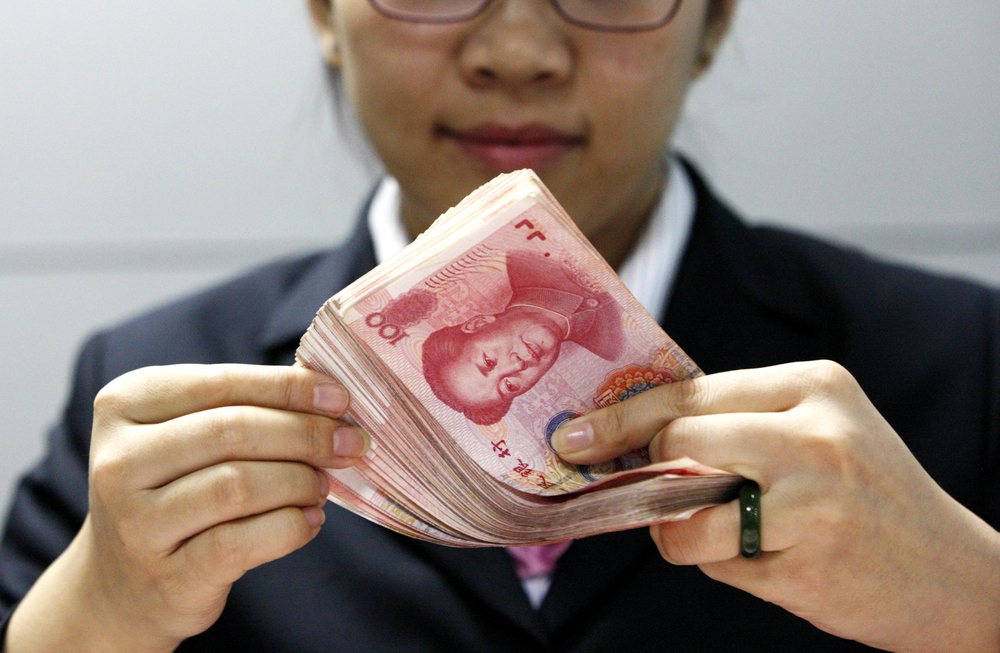
Local analysts have stated that the ban on cryptocurrency trading does not reflect the government’s stance on the blockchain as an innovative technology. The Chinese government prohibited cryptocurrency trading because it led to local investors and businesses moving the Chinese yuan out of the country to other leading economies.

China has continued to impose strict capital controls since early 2000, and the ban on cryptocurrency trading was a part of the country’s capital control policies.

The Chinese government and the country’s President Xi still remain optimistic in regard to the long-term adoption of the blockchain, as seen in the government’s blockchain initiatives and large allocation of funds into the blockchain sector.

Chinese blockchain projects such as Qtum and VeChain have demonstrated massive success over the past year in the global market as well, with support from local authorities and the government.

China’s Own Blockchain

China has a strong history of replacing dominant platforms and companies such as Google, Facebook, and YouTube with local platforms to boost its economy. WeChat, Youku, and other domestic products replaced Western platforms.

The Chinese government is wanting to remain at the forefront of blockchain development, with local blockchain projects and networks leading the global market.

Images from Shutterstock

Follow us on Telegram.
Advertisement

Published at Wed, 30 May 2018 20:46:57 +0000

Blockchain News

Previous Article

Matryx ICO Review – Decentralized Collaboration Platform

Next Article

ZSECOIN – Summary for How to Buy ZSECOIN

You might be interested in …

Steem Added to State of the DApps Listings

CCN Steem Added to State of the DApps Listings Social blockchain platform Steem, home to the Steemit social network, has been added to dApp (decentralized application) tracking website stateofthedapps.com and now sits proudly next to […]

Groestlcoin price prediction

Groestlcoin Price Prediction

Groestlcoin Price Prediction http://AlphaInvestors.Club – Hey guys! Thanks for joining us here at http://AlphaInvestors.Club where today we will be reviewing Groestlcoin Price Prediction WHAT IS GROESTLCOIN (GRS)? Groestlcoin allows for instant and private transactions along […]

Abra Closes $16M in Funding and Looks to Venture Into Consumer Product Space

Abra Foxconn

Abra, a mobile payment and digital currency platform that relies on bitcoin, closed $16 million in series B funding, led by Foxconn, the electronics supplier for Apple and other tech giants.  

Bill Barhydt, founder and CEO of Abra, made the announcement on October 23, 2017, at Money20/20 in Las Vegas, where he also outlined his vision for how consumer product companies will use bitcoin in the future.

Other investors in the round include Silver Capital and IGNIA, as well as previous investors Arbor Ventures, American Express Ventures, Jungle Ventures, Lerer Hippeau and RRE Ventures. Total funding to date for the company now stands at nearly $35 million.

“We believe that Abra represents the future of digital payments and banking,” Jack Lee, founding managing partner at HCM, the investment arm of Foxconn, said in a statement, adding that Abra could potentially usher in a new era of financial inclusion to billions of people.

In speaking with bitcoin Magazine, Barhydt explained that Abra plans to use the funds to expand globally and invest in future product development. “We have a lot of project announcements we will be making on a rolling basis,” he said.

Three-Part Vision

Though Barhydt did not offer exact details on what Abra’s new products will be, he did drop several hints in his three-part vision for how consumer products will implement bitcoin in the future.

The first part, he explained, involves cross-border and consumer payments, which he said has been Abra’s focus for a couple of years now.

The second part involves using bitcoin as an investment vehicle, in which smart contracts built on top of bitcoin’s ledger would enable more complicated if-then types of financial transactions — payments that go through only if specific conditions are met.

Abra already relies on smart contracts to hold fiat currency and manage bitcoin price fluctuations, Barhydt explained.

He went on to describe the third part of his vision: “A new model of consumer asset finance,” which he said is where consumer product companies like Foxconn enter into the picture.

It was an idea that he conceived while recently traveling to Africa. There, he saw how a company was leasing solar panels to people who were making regular micro-payments via M-Pesa, a mobile money transfer service.

“They give solar kits to people who use them only if they make a weekly lease payment from M-Pesa wallet,” he explained. If a borrower does not make the payment, a SIM card in the phone communicates with the battery in the solar panel, shutting it off.

His idea was to extend the concept to other consumer appliances, like refrigerators, flat-panel TVs and washing machines, that people in developing countries struggle to afford.

“Using this model of embedding this cellular technology combined with a bitcoin-based payment system like Abra, you now have a new model where people can do instant on-lease payments,” he said, calling it a “new trillion-dollar business” that can only be done on scale using something like bitcoin.

Continuing to remain tight-lipped about future product launches, Barhydt said, “Our goal is to be the best digital currency wallet in the world for the average consumer, starting with real cash and bitcoin, and we’ll see how it evolves from there.”


The post Abra Closes $16M in Funding and Looks to Venture Into Consumer Product Space appeared first on Bitcoin Magazine.