Every country produces its share of underperforming altcoins. They’re called shitcoins for a reason. But China has a track record for creating altcoins that are shittier than most. The country has spawned a slew of talented developers, and has made a huge contribution to cryptocurrency adoption and innovation as a whole. But when it comes to altcoins, China’s wither and die at a phenomenal rate. The question is, why?
Also read:
Big Trouble in Crypto China
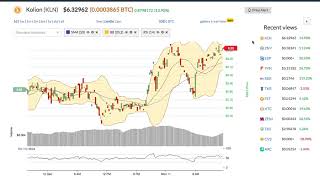
During bull markets, checking your portfolio every five minutes is unavoidable. It’s addictive: swipe down to refresh and you’ve gained another $500. During bear markets, the opposite is true; it’s possible to go days without checking, because it’s easier to hide the pain than open your Blockfolio and discover how far underwater your bags are. If you did buy into any Chinese ICOs in the last three months, or purchased any Chinese altcoins, there’s a good chance they look like this:

And this:

And this:

And this:

And this:

And this:

Altcoins are in a bear market right now, but there are bear markets and then there’s total collapse, and Chinese altcoins have capitulated on a grand scale. There’s something all six of those coins – deep brain chain, red pulse, alphacat, trinity network credit, the key, and qlink – share in common aside from an Asian connection: all were launched as NEO ICOs. For reasons that aren’t immediately clear, NEO projects have been doing really badly. They’re not the only Chinese coins to have gone belly up – we’ll get to that later – but they’re among the most notable failures. How did this happen?
Something Rotten in the State of NEO
 Every trader has their share of heavy alt bags to carry
NEO’s came in for a lot of stick lately, so much so that the project was forced to break its silence to the worst of the criticism. When it comes to the failure – thus far – of the projects to have launched on its blockchain, NEO can be absolved of blame. It’s not NEO’s fault that investors don’t seem to believe in the long-term fundamentals of RPX and DBC and virtually every other token on the Chinese blockchain. In fact, the only NEO ICO that has yet to fail is Zeepin, probably because it’s only a month old. The – ONT, IAM, and NRV – are too new to have been listed.
Every ICO launchpad has its share of failures; ethereum failed straight out the gate thanks to the debacle that was The DAO. But for every DAO, there was a 0x or a BAT, ERC20 tokens that proved to have longevity and a tangible use case. All NEO’s NEP-5 tokens are good for is as millstones around the neck of unfortunate traders. There’s still time for these Chinese projects to recover, and when altcoin season returns, they surely will to some extent. Right now though, it doesn’t look pretty, and it doesn’t augur well for the prospects of other NEO ICOs. In fairness, many of this year’s ICOs have similar charts; (another Chinese project, this time an ERC20) is also looking glum. DBC and RPX are spectacularly bad though.
Why Are Chinese Altcoins Failing so Hard?
It’s difficult to make sweeping statements about an entire nation without resorting to crude stereotyping. The following observations apply to a segment of Chinese cryptocurrencies, but should not be taken as an indictment on them all. Nor are these problems limited to Chinese coins. From a western perspective, one of the biggest impediments to investing in Chinese projects is an informational one. Due to the language barrier, coupled with the limited digital footprint of many Chinese entrepreneurs, performing fundamental analysis of projects is hard – a lot harder than it is in the U.S. or Europe.
This is exacerbated – and sometimes abetted – by unscrupulous Chinese projects making unprovable claims about major partnerships. It’s very hard to verify these, causing investors to pile in, only to get burned when the promised partnerships fail to materialize. As exhibit A, consider Internet Node Token:

INT has no NEO connection, but has fared just as badly as every other Chinese altcoin featured here. In January, INT was shilled heavily by a number of respected Twitter traders who thought they’d uncovered a diamond in the rough. It turns out to have been more of an unpolished turd, and those traders have now cut their losses and quietly distanced themselves from the project. Another Chinese problem is that many of the NEO ICOs have some sort of AI connection, and AI claims are very hard to verify. How do you tell what’s real and what’s vaporware?
The final major issue affecting Chinese altcoins concerns counterfeiting and plagiarization. The country’s burgeoning fake goods industry is worth billions – and so is the market value assigned to its ersatz altcoins that are little more than shameless knock-offs. Again, this isn’t just a Chinese problem – spotting fake team members and plagiarized white papers is a trans-national game – but China has produced more than its share of copycats including Tron.
Leave Your Sentiment at the Door
Crypto trading is a cold game in which there’s no place for emotions. It doesn’t matter that a number of Chinese blockchains are performing well, or that some of the best ethereum scaling solutions and most promising layer-two projects are emanating from the east. All that matters is that, statistically speaking, if you invest in a Chinese token, you stand an above average chance of getting rekt. Given the difficulty of distinguishing the meritorious projects from the scams, investors may conclude they’re better off seeking their fortune elsewhere.
Do you think Chinese altcoins are unfairly castigated here, or do you agree that they typically make for poor investments? Let us know in the comments section below.
Images courtesy of Shutterstock, and Coincodex.
Need to calculate your bitcoin holdings? Check our section.
The post appeared first on .