October 1, 2026

Capitalizations Index – B ∞/21M

China Attemps to Spoil the Bitcoin Bull Run With Mining Ban Proposal

China attemps to spoil the bitcoin bull run with mining ban proposal

China Attemps to Spoil the Bitcoin Bull Run With Mining Ban Proposal

China attemps to spoil the bitcoin bull run with mining ban proposal


Any news coming out of China tends to trigger some cryptocurrency market momentum. In recent years, most of the news has been negative, which won’t surprise too many people. In the most recent development, it would appear China’s state planner wants to put an official end to bitcoin mining in the country. It is one of several dozen activities to be “blacklisted’ in the country.

China Goes After bitcoin Again

Ever since bitcoin trading in China took a big hit due to new regulatory measures, the country has continued its effort to thwart any cryptocurrency activity. While those efforts have seen varying degrees of success, any hint at banning bitcoin-related activity usually drives the world’s leading cryptocurrency’s price down as a result. This most recent development may trigger a very similar effect, although it remains to be seen how things will play out in this regard.

China’s state planner has submitted a new draft proposal which will legally put an end to bitcoin mining. Not entirely surprising, as China has begun weeding out most of the bitcoin mining operations in the country over the past two years. This new proposal, however, seems to indicate bitcoin mining does “not adhere to relevant laws and regulation, or wastes resources”. It seems the latter angle will be the main reason for this approach, albeit no one ever knows for sure how government officials think when it comes to cryptocurrency activity.

It is also worth noting this new proposal does not just revolve around bitcoin mining either. A revised list or industries to be restricted or eliminated has been produced. It now encompasses over 450 activities, which is a vast increase compared to its previous iteration published back in 2011. It is only normal some changes are made in that regard, and the growing dislike toward bitcoin has been well-documented as well.


What is rather interesting is how there is no official date as to when these changes could go into effect. The Chinese public has the option to comment on this new proposal from now until May 7 of 2019. It will be interesting to see how things will evolve in that regard, as the public may take somewhat of a stance against some of these future restrictions. Even so, after the comment period comes to an end, there is still no official indication as to when the proposed changes would go in effect or how they will be enforced exactly.

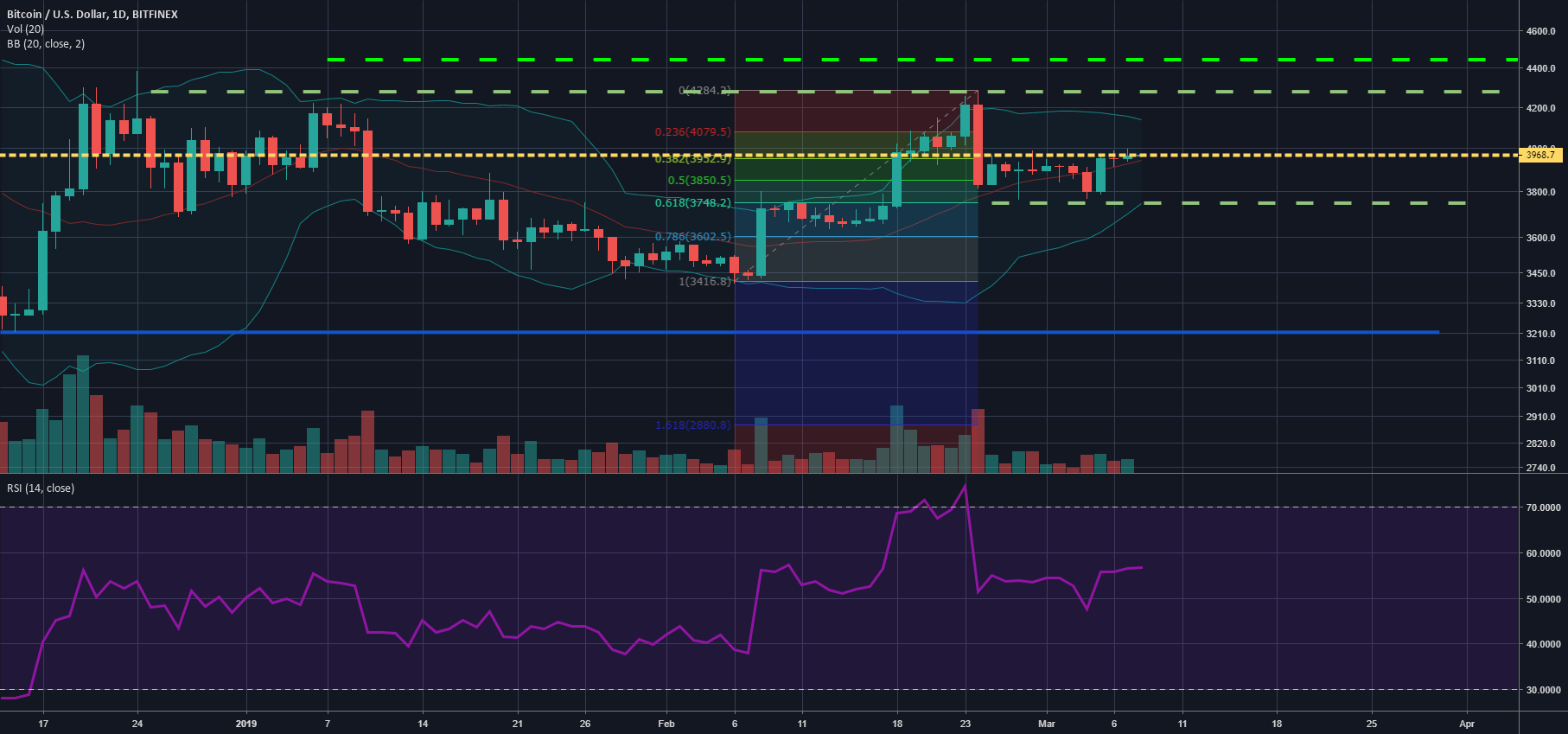
The big question is whether this news will trigger a wave of bearish bitcoin price pressure again. The world’s leading cryptocurrency recently broke the $5,000 resistance numerous times in a successful manner, although there may be a sharp retrace following this news.  However, China hasn’t played much of a role of importance in the bitcoin industry for many years now. Most of the news coming out of that country will not affect the overall market trend for an extended period of time.

Another potential consequence to take into account is how most of the bitcoin mining hardware is produced and operated in China. As such, this potential upcoming ban could have some big consequences in that regard, although it is still too early to draw any real conclusions in this regard. It is evident China wants to distance itself from cryptocurrency in every way possible, and this new proposal is a clear example of making that vision come true in the near future.

Image(s): Shutterstock.com

Published at Tue, 09 Apr 2019 08:11:51 +0000

Previous Article

Mt Gox Lawyer: Karpelès Prosecutors Ignored Evidence of ‘Outside’ Job

Next Article

Ethereum Price Analysis: Buying Dips Favored Above $170

You might be interested in …

Ripple chief brad garlinghouse is keeping it real on icos

Ripple Chief Brad Garlinghouse is Keeping It Real on ICOs

Ripple Chief Brad Garlinghouse is Keeping It Real on ICOs Advertisement Join our community of 10 000 traders on Hacked.com for just $39 per month. Ripple’s chief executive has some words of advice for issuers […]

Lombrozo: Bitcoin Core Developers May Never Use Miner-Focused BIP 9 Signaling Again

core-BIP9.jpg

One of the key points of contention in the politicization of bitcoin protocol development over the past couple of years has been the concept of miner signaling. While not intended to be a vote among miners to decide the future of the bitcoin network, Ciphrex CEO and Bitcoin Core contributor Eric Lombrozo pointed out that miners are now using the signaling process as leverage in the discussion over bitcoin scaling.

Lombrozo made the comments during a discussion with host Thomas Hunt and bitcoin developer Jimmy Song on Hunt’s Mad Bitcoins YouTube channel.

“This whole signaling thing is a huge problem that I think created a very terrible narrative,” said Lombrozo.

What Is BIP 9?

BIP 9 is a method of rolling out soft-fork upgrades to bitcoin. The short description of this process is that soft-forked changes will be enabled once 95 percent of miners have signaled to the network that they are ready for activation, using a trick called “version bits.”

“It was an arbitrary system created by developers in order to coordinate smooth soft-fork transitions,” said Lombrozo. “It was not designed to be a political system for voting on controversial issues ever — that was never the intention.”

Lombrozo also noted that, in the past, soft forks have been deployed on bitcoin without any special treatment for miners, and BIP 9 was supposed to solve some of the issues miners could face during the deployment of a soft fork.

“It was introduced for the courtesy of miners to be able to reduce their orphan rates and reduce the probability that they’re going to end up mining blocks that are actually invalid — that was the real motivation behind it,” said Lombrozo.

According to Lombrozo, the goal is still to get nodes upgraded and enforce the rules of the soft fork; BIP 9 was simply a technique to coordinate with miners.

The Ciphrex CEO added that there was nothing like miner signaling in the original version of bitcoin, and Satoshi Nakamoto never used miner signaling for the soft forks that he deployed on the network.

“It was a mechanism that was created way later,” said Lombrozo. “And once this mechanism was created, it was abused and turned against the developers to try to extort stuff. And now it’s being used against businesses to extort stuff from them.”

BIP 9 Does Not Work With Uncooperative Miners

According to Lombrozo, BIP 9 would not have been used for Segregated Witness (SegWit) if the contributors to bitcoin Core knew then what they know now.

“If we considered that there had been this kind of, like, contentious or adversarial situation, then BIP 9 would not have been used,” said Lombrozo. “We would not have used the signaling mechanism because it obviously does not work under those kinds of circumstances.”

In Lombrozo’s view, miners are now using the effective veto power that comes with the miner signaling process outlined in BIP 9 as leverage in the discussions around scaling bitcoin. He also believes bitcoin Core developers may deserve some of the blame for using BIP 9 in the first place.

“But at the same time, we only had the best of intentions at the moment,” added Lombrozo. “We thought we’d gotten through all these disagreements and it seemed like the miners were for it and going to support it … Obviously, the adversarial case needs to be considered because it’s just the nature of this network and the way that it works.”

Lombrozo suggested that miners also used miner signaling as a sort of “propaganda” tool with bitcoin Unlimited, even though there was no activation mechanism included in the code.

Never Use BIP 9 Again?

According to Lombrozo, miners now think they have some control over the protocol due to the use of the miner signaling process outlined in BIP 9.

“Miners started thinking, ‘Hey, maybe we have control over the protocol because of this whole signaling thing,’” said Lombrozo during his discussion with Hunt and Song.

Lombrozo claimed that “we’re never going to use BIP 9 to deploy anything almost for sure” if SegWit is not activated via the current BIP 9 deployment.

As an alternative, bitcoin Core could turn to BIP 8, which is a variation of BIP 9 from pseudonymous developer Shaolin Fry that eventually activates a soft-forking change whether miners have signaled for it or not. Miners can still activate the change before it is automatically locked-in on the network, but approval from miners is not required before that lock-in takes place.

Watch the full episode here:

[youtube https://www.youtube.com/watch?v=JTCB5bRGQj0?feature=oembed&w=480&h=270]

The post Lombrozo: Bitcoin Core Developers May Never Use Miner-Focused BIP 9 Signaling Again appeared first on Bitcoin Magazine.