While all that we have been hearing from China over the last six months has been about closing all doors for fintech to foster in the country, this time we have quite a welcoming news coming from the Asian giant. China which is currently the world’s second-largest economy has made an announcement that it is opening the gates for its $27 trillion payment’s market to foreign players.
China’s central bank – The People’s Bank of China (PBoC) in a statement said that foreign companies can now apply for licenses to venture in the country’s payment market and more importantly they will be treated same as local players. However, PBoC in a statement said that applicants will have to make sure that they set up local units and establish the infrastructure by themselves. IT also said that companies will have to make sure that they have high-end disaster recover systems and above all the client information should be stored domestically.
Any foreign company willing to establish its footstep in China’s payments market will have to compete with very well established players like Tencent Holdings’s WeChat Pay and Ant Financial Services Group’s Alipay along with a big list of 260 firms who have received payment licenses.
Iris Pang, a Hong Kong-based economist at ING Groep NV that “The domestic market is quite saturated with very strong domestic players, and it is relatively hard for foreign companies to get a piece of the pie. But there is a chance for them to compete in the cross-border payment market.”
This decision comes collectively from the Chinese government and PBoC after the latest appointment of the new PBoC chief Yi Gang. Yi Gang is well-known for his pro-market philosophy and has recently signaled that he will push and promote financial liberalization in the country.
Son following his appointment and while talking to reporters at the Great Hall of the People in Beijing, Yi said: “The main task is that we should implement prudent monetary policy, push forward the reform and opening-up of the financial sector, and maintain the stability of the entire financial sector.”
Just a few days back, WSJ that the Chinese government and PBoC are looking forward to giving foreign players a chance to explore the country’s local financial market. The WSJ reported that the Chinese government wants foreign companies to specifically participate in the insurance and payments market and thus free up these two industries.
Eswar Prasad, a Cornell University professor and former China head for the International Monetary Fund, told the WSJ that “Liu and Yi have a shared understanding of the need for financial market reforms and liberalization, coupled with more effective regulation.”
Wei Chun, a local analyst, “In summary, the Chinese government have shown a positive attitude towards blockchain technology despite its enforcement on cryptocurrency and mining operations. China wants to control cryptocurrency, and China will get control. The repeated enforcements by the regulators were meant to protect its citizens from the financial risk of cryptocurrencies and limit capital outflow.”
We have recently seen that local Chinese players like Tencent and Alibaba have already started venturing into the blockchain and the crypto space. Internet giant Tencent has been on its own blockchain platform for almost a year now and the country’s e-commerce giant Alibaba its own crypto mining platform earlier this year despite restrictions by the PBoC.
This latest announcement made by the PBoC also means that South Korea’s payment app and U.S-based , lead by Twitter founder Jack Dorsey, can also make an entry by getting licenses from the PBoC.
The post appeared first on .
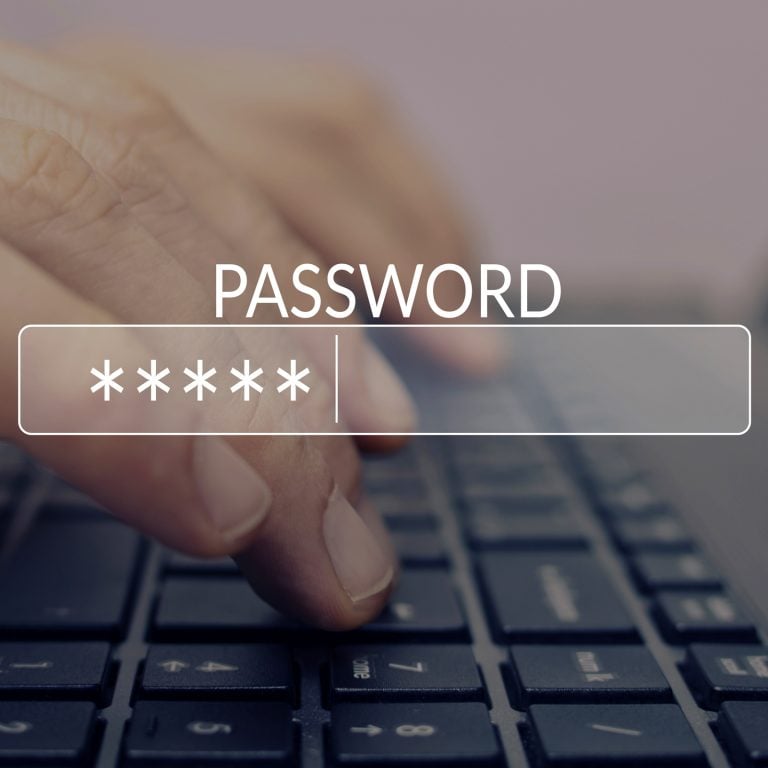
Over 70 percent of the leading cryptocurrency exchanges allow users to create accounts with weak passwords, a new study reveals. This leaves them exposed to financial theft due to unsafe password practices, the authors say. Less than half of the surveyed trading platforms provide password strength assessment tools.
Also read:
“12345” and “Password”
 Some of the most popular allow customers to use dangerously weak passwords, a new research has found. 43 percent of the platforms let users create accounts choosing passwords with fewer than 8 characters. 34 percent do not require alphanumeric passwords at all, the study reveals. In many cases testers were able to set up accounts with passwords using simple number combinations like “12345” and even words like “password”.
More than 70 percent of the surveyed exchanges allow you to create weak passwords, according to the annual Cryptocurrency Exchange Password Power Rankings, presented by Dashlane. The digital security company has tested 35 of the leading crypto trading platforms in the world, examining their password and account security.
Researchers also checked if exchanges provide password strength assessment tools, email confirmation or activation, and two-factor authentication (). They found that less than 50 percent of the exchanges provided account holders with tools like meters or a color-coded bars. Unsafe practices leave many customers’ accounts exposed to hacking and financial theft, conclude the authors of the study.
The fact that many exchanges allow their users to create weak passwords should “serve as a wake-up call to the entire industry,” Dashlane CEO Emmanuel Schalit said, quoted in a press release. He also noted that signing up for a cryptocurrency exchange is comparable to signing up for a bank account. “With your bank account, credit cards, bitcoin, and other digital assets potentially stored on the exchange, it’s critical that your account is locked down on the security front,” Schalit stated.
Two-Factor Authentication Is Critical
 Each exchange in the survey has been tested on five critical password and account security criteria and ranked according to the points it received. Only 10 platforms have met all five criteria. These are bitcoin.de, BitMEX, BTCC, Cobinhood, Coinbase, Cryptopia, Gemini, Huobi, itBit, and Paxful.
The study was conducted from March 12 – 19 this year. It is the first attempt by the password manager to rank cryptocurrency exchanges according to their password security procedures. Previously, the company has tested and ranked leading consumer websites in accordance with similar criteria.
Experts advise users to generate unique passwords with no less than 8 characters for each online account they open. Using numbers, case-sensitive letters, and special symbols also improves security. Passwords containing common phrases, places, or names should be avoided. Enabling two-factor authentication (2FA) is critical and should not be skipped even when you log in for the first time.
Do your online accounts meet the basic criteria in regards to the security of the passwords you use? Tell us in the comments section below.
Images courtesy of Shutterstock.
Want to create your own secure cold storage paper wallet? Check our section.
The post appeared first on .
