October 9, 2026

Capitalizations Index – B ∞/21M

Change.org Launches Screensaver That Mines Monero for Charity

Change. Org launches screensaver that mines monero for charity

Change.org Launches Screensaver That Mines Monero for Charity


Change. Org monero mining
Advertisement

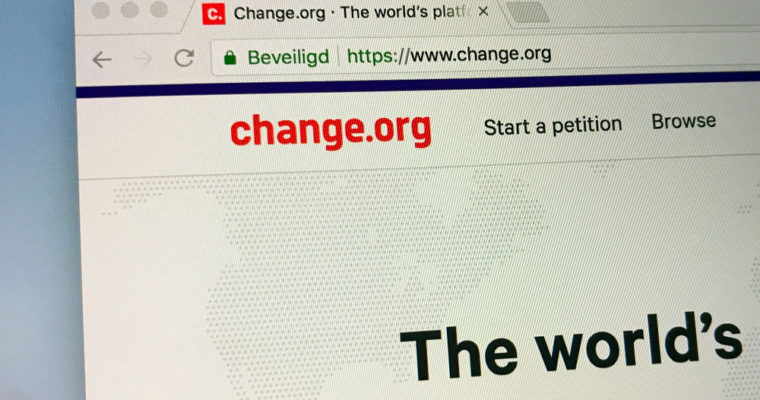
Popular social petition platform Change.org is asking its supporters to install a screensaver that will mine monero on behalf of the for-profit organization’s charitable foundation.

Change.org Asks Supporters to Mine Monero for Charity

Dubbed “The Mining Screensaver,” the tool activates whenever a user steps away from his or her computer for a set period of time. As long as the device remains powered on, the tool will use the PC’s idle processing power to run software that mines monero, a privacy-centric cryptocurrency that cannot currently be mined using specialized mining hardware called “ASIC miners.”

Even so, it’s still not very profitable for a user to mine monero on a single PC. However, if thousands of supporters pool their resources to mine on Change.org’s behalf, the organization could net a significant windfall to help fund its charitable arm.

The screensaver is currently only available for Windows devices, and it is not clear from the announcement whether Change.org will release it for other operating systems.

CPU-Based Monero Mining Grows in Popularity

Change.org isn’t the only organization that has asked its supporters to mine cryptocurrency to contribute to social impact projects. As CCN reported, UNICEF Australia created a dedicated website called “The HopePage” that harnesses the processing power of visitors’ computers to mine monero for the organization while they have the page open in their browsers.

Monero
Change. Org is the latest organization to ask its supporters to mine monero for charity.

For-profit companies have experimented with monero mining as well, primarily through CoinHive, a JavaScript-based mining script. Earlier this year, Slate conducted a trial in which it allowed readers to donate their computing power to mine monero in exchange for an ad-free browsing experience.

However, criminals have taken advantage of these JavaScript-based tools as well, which can easily be hidden in browser extensions or injected directly into the source code of websites with subpar security.

Nevertheless, Change.org wants supporters to know that, despite some nefarious associations, the project is above board and otherwise safe for users.

“This is legal, safe, simple and has nothing to do with hacker activities, viruses or any other digital threats. It’s actually an alternative economic system that has the potential to revolutionize the way money circulate[s] in the society,” the organization said. “So why not using (sic) this system to create something good?”

Images from Shutterstock

Follow us on Telegram or subscribe to our newsletter here.
• Join CCN’s crypto community for $9.99 per month, click here.
• Want exclusive analysis and crypto insights from Hacked.com? Click here.
• Open Positions at CCN: Full Time and Part Time Journalists Wanted.

Advertisement


Published at Wed, 18 Jul 2018 22:03:03 +0000

Altcoin Mining

Previous Article

CFTC Official to Congress: Don't Be 'Hasty' With Crypto Rules

Next Article

Car Key Transponder ID48 T6 Crypto Unlocked Chip For VW /For Audi /For Seat

You might be interested in …

AlphaBay Shut Down by Law Enforcement, Admin Commits Suicide in Jail

AlphaBay Shut Down by Law Enforcement, Admin Commits Suicide in Jail

AlphaBay, the most popular marketplace on the dark web, shut down on July 4. At first, many of the users suspected an exit scam; however, it has since become clear that law enforcement has taken down the underground market. According to the Wall Street Journal, an international police action took place in the United States, Thailand and Canada.

On July 5, law enforcement in Thailand arrested Alexandre Cazes, 26, a Canadian citizen who is believed to be one of the operators of AlphaBay. On the same day, the Royal Canadian Mounted Police (RCMP) executed a search warrant at a residence in Trois-Rivières, Quebec, where a high-technology crime unit seized computer equipment.

Melissa Sweeney, a spokeswoman for the U.S. Embassy in Bangkok, stated Cazes was taken into custody by Thai authorities “with a view toward extradition to face federal criminal charges in the United States.” According to the Wall Street Journal, it wasn’t immediately clear whether the defendant had legal representation.

On Wednesday, Cazes was found hanged in his prison cell at the Narcotics Suppression Bureau in Bangkok, Thailand. The death of the alleged AlphaBay operator was confirmed by a spokeswoman for Canada’s foreign affairs department on Thursday. However, she declined to comment further on the case due to privacy reasons.

According to the Bangkok Post, the body of Cazes was found by a duty officer who noticed a towel hanging from the toilet door in his cell. When the officer entered the cell, where the suspect was held alone, he found Cazes dead. Authorities believe the suspect used the towel to hang himself.

Cazes had been living in Thailand with his wife for eight years, working as a computer programmer. The Criminal Court in Thailand issued a warrant for the suspect’s arrest on June 30 at the request of U.S. law enforcement authorities. According to the Bangkok Post, during the arrest on July 5 in the Thawi Watthana district of Bangkok, investigators seized four Lamborghini cars and three houses worth approximately 400 million baht in total (nearly $12 million).

AlphaBay was founded in December 2014, taking the place of the Silk Road Marketplace, which was seized by the FBI in October 2013. Andrei Barysevich, a director at the threat intelligence company Recorded Future Inc., told the Wall Street Journal that AlphaBay not only focused on the sale of drugs, but also allowed the advertising of products and services that other underground markets banned, such as stolen credit card numbers and online fraud tutorials. The researcher stated that AlphaBay sold more than $5 million worth of stolen credit card information in the first half of 2017 alone.

Nicolas Christin, an associate research professor at Carnegie Mellon University studying underground marketplaces, said the total sales on AlphaBay had an average of $600,000 to $800,000 a day. That means the marketplace earned millions of dollars in commissions every year.

Some users on the /r/DarkNetMarkets subreddit blamed the vulnerabilities of AlphaBay for the shutdown of the website.

“An AB vulnerability leading to an IP leak or other de-anonymization issue would not be a surprise — how many bugs were there over the years reported here [in the subreddit]? Seemed like PMs were leaked every couple months … And for every bug you see, there’s a dozen you don’t. I started being surprised a long time ago that AB was still around outliving so many apparently better-run DNMs, having neither exit-scammed nor been hacked nor been raided. Perhaps its time was simply up,” Gwern, an independent researcher, wrote.

The post AlphaBay Shut Down by Law Enforcement, Admin Commits Suicide in Jail appeared first on Bitcoin Magazine.

GBC-Revolution

Recent Uploads tagged blockchain GBC-Revolution Gold Bits Coin posted a photo: more info…