May 14, 2026

Capitalizations Index – B ∞/21M

Central Bank Experiment: Blockchain for Cross-Border Payments

Central bank experiment: blockchain for cross-border payments

Central Bank Experiment: Blockchain for Cross-Border Payments

Central bank experiment: blockchain for cross-border payments
May 04, 2019 at 12:44 // News

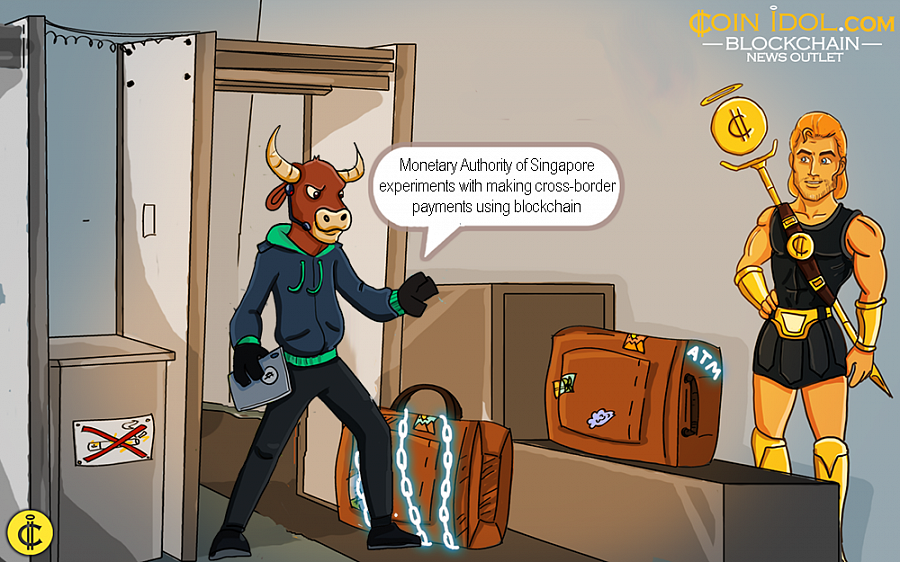
The Monetary Authority of Singapore (MAS), in collaboration with the Central Bank of Canada (BoC), experimented with making cross-border (international) financial payments using blockchain technology and CBDC, a digital fiat money created under the government’s regulation. This initiative will help increase payment efficiencies.


Today, the finance industry is facing a challenge of insecure, sluggish and expensive cross-border financial payments, and are contingent on a suitable banking fabric that is bound by risk from the other party to a financial transaction, unwieldy liquidity management. These two colossal central banking institutions have been working jointly to make the processes involved in financial payments cheap, quick and more secure.   


Jasper-Ubin   


BoC and

MAS have also been working on important blockchain and DLT-related projects e.g. Project Ubin and Project Jasper, utilising a modern technique known as HTLC in interconnecting these two particular systems and activate PvP settlement without the need for an intermediary (an agent).   


The BoC teamed up with JPMorgan, a company behind Quorum and Accenture, a firm behind Corda, successfully carried out a great project called Jasper-Ubin. These two colossal monetary institutions (MAS & BoC) have gone ahead to release a

report which suggests manifold design alternatives for international settlement methods.   


This very report outlines properly technical execution of HTLC, plus the likely limitations, drawbacks and possible challenges involved during the application of this model, proposes areas of research in blockchain tech interconnectivity mechanisms and other major system models.   


Is CBDC the Same as Cryptocurrency?   


BoC and MAS, strongly call for the international financial ecosystem to start from these particular findings and collaborate in order to make international financial payments easier, better, quicker and more economical.   


CBDC is not the same as a virtual currency, digital asset, or cryptocurrency. CBDC is issued by the government (state) and carries legal tender status, while other mentioned forms are not issued by the state and lack legal tender status from the government.   


This is not the first effort of Central banks to explore innovative techs. Earlier 2019,

Bank of Japan showed interest in CBCD, it even issued a report which ascertains the concept in question and the role of crypto in the general monetary system.   


Bank of England was the first to organize a global discussion on how best to establish CBDC. Other central banks including that of Sweden, Uruguay, Spain, etc., have however welcomed the prospect.   


Central Banks Ready to Embrace CBDC   


Actually,

central banks from around 15 great nations from different continents of the world are now more than ready to accept CBDC as a legal means of payment, according to an IMF report. These countries include Sweden, Bahamas, Ecuador, Senegal, Tunisia, China, Norway, Canada, Uruguay and others.  


It is now obvious that virtual currencies and banks are

inseparable. However, it seems that cryptocurrency exchanges are not willing to integrate with traditional banks in fear of losing and diluting their identity.


However, these two financial institutions need each other, the cryptoasset exchanges need the traditional banks to transfer money from one place to another, and banks need blockchain and DLT, the technology behind cryptocurrency.

Published at Sat, 04 May 2019 12:56:14 +0000

Previous Article

SuperRare.co, DadA.nyc, Blockchain Art Exchange and KnownOrigin join forces!

Next Article

Collaborating on the Strength of AI and IoT Technology

You might be interested in …

Chinese Bitcoin Exchanges Will Now Require Video Verification

Chinese bitcoin exchanges are gearing up to resume cryptocurrency withdrawals following the implementation of a video verification procedure.


Know-Your Customer via Video

Following the emails in which Chinese exchanges detailed the information required from clients in order to process their withdrawals, users are now receiving emails announcing video identity verification in accordance with the latest KYC/AML procedures imposed by the People’s Bank of China (PoBC).

The email reads:

In accordance to KYC / AML regulations and account monitoring procedures Huobi is subject to, we will initiate video verification at 17:00 Mar 28th (GMT +8), please cooperate to complete video verification as requested then, or it may affect your withdrawals.

bitcoinist_videoconfimation_cny_exchange

Namely, two of the so-called “Big Three” exchanges Huobi and OKCoin have started implementing video verification.

//platform.twitter.com/widgets.js

Recently, the PBoC proposed a draft that exchanges in the country considered acceptable except for one: on-site verification prior to opening an account, a practice that is common to traditional banks but not to bitcoin exchanges.

However, the latest move by the exchanges suggests that on-site verifications will not be implemented, at least for the time being. It also means that if the PBoC and exchanges have finally reached an agreement on AML (Anti-Money Laundering) procedures, cryptocurrency withdrawals should resume very soon. 

Chinese bitcoin Exchanges Now Heavily Regulated

The return of cryptocurrency withdrawals should help exchanges regain some of the customers that have been flocking towards peer-to-peer alternatives in recent months. However, with the removal of margin trading and zero fees, it’s unlikely that the Chinese market will regain its 90%+ share of the global bitcoin trading market.

Exchange operators will require users to provide their personal information along with explanations of the sources of the funds to be withdrawn and their intended withdrawal destinations.

Now, with the addition of video confirmation, China has become one of the most heavily-regulated countries for bitcoin exchanges.

China Withdrawals

While some traders may feel drawn to the clarity these regulations provide, others may choose to stick with p2p alternatives like LocalBitcoin and BitKan who offer greater privacy and which have experienced record trading volumes since the PBoC clampdown.

In the long-run, the regulations imposed on exchanges may make for a healthier, more decentralized bitcoin market and help boost bitcoin’s overall reputation within the country.

Furthermore, the introduction of clear rules and guidelines may make way for alternative cryptocurrencies to be added on these exchanges that have, so far, only dealt with bitcoin and Litecoin. 

//platform.twitter.com/widgets.js

Can Chinese exchanges recover from the blow dealt by the PBoC and return to their old selves? Will they add new cryptocurrencies? Let us know what you think in the comment section.


Images courtesy of Shutterstock, Twitter

The post Chinese Bitcoin Exchanges Will Now Require Video Verification appeared first on Bitcoinist.com.

Fidelity’s ₿itcoin trading is only weeks away

Fidelity’s ₿itcoin Trading Is Only Weeks Away

Fidelity’s ₿itcoin Trading Is Only Weeks Away Fidelity’s cryptocurrency subsidiary Fidelity Digital Assets will reportedly launch ₿itcoin trading for its clients “within a few weeks,” according to Bloomberg. According to the report, which cites an […]

FCA Issues Warning Against Scams 

FCA Issues Warning Against Scams  The FCA has announced that the amount lost to scams in 2018 reached $255 million in 2018 and urged investors to beware before they spend money on investors, as […]