bitcoin’s emergence over the past decade has prompted a fundamental question: can a decentralized digital currency supplant customary money as the primary medium of exchange,store of value,and unit of account? This article examines bitcoin’s potential to fulfill those monetary functions by reviewing its technological design,network effects,and appeal as a borderless,programmable asset,alongside the practical,economic,and institutional constraints that complicate wide-scale adoption.
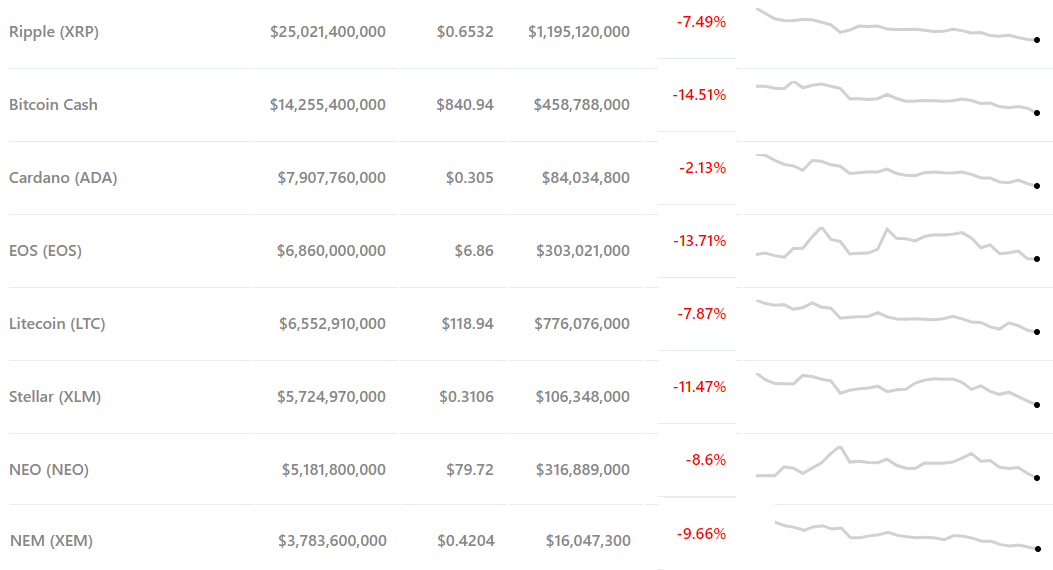
While bitcoin has led the cryptocurrency movement, it exists within a diverse and evolving ecosystem of option digital currencies and blockchain projects that compete on speed, cost, and functionality-factors that bear directly on any claim that bitcoin could become the dominant form of money , , . This introduction frames the central trade-offs: bitcoin’s strengths-decentralization, scarcity, and censorship resistance-versus its limitations, including price volatility, scalability, transaction costs, energy use, and regulatory uncertainty. The following sections will assess empirical evidence and theoretical arguments on both sides to determine in what ways, if any, bitcoin might replace traditional money and where it is indeed likely to remain complementary or niche.
Understanding Monetary Functions and How bitcoin measures Up
Monetary systems are judged by three core functions: serving as a medium of exchange, a unit of account, and a store of value. bitcoin’s architecture was explicitly designed as a decentralized monetary system and demonstrates clear strengths as a peer-to-peer electronic payment protocol and digital scarcity experiment, born from ongoing open development efforts and community-maintained implementations . Practically, it excels as a censorship-resistant medium and a programmable settlement layer, but price volatility and limited merchant price denominating mean it often falls short as a stable unit of account in everyday commerce.
Operational considerations shape how well bitcoin can perform monetary roles. On the positive side, it offers global settlement without intermediaries and predictable supply dynamics. On the constraint side, network throughput, confirmation times, wallet usability and storage requirements affect real-world adoption-initial node synchronization can demand substantial bandwidth and disk space (full blockchain storage exceeding 20GB), which influences who can participate as a full node . key practical trade-offs include:
- Accessibility – low for full nodes due to storage and bandwidth needs
- Finality – probabilistic but improving with higher confirmations
- Portability – strong for transfers but depends on user interfaces
Technical maturity and protocol evolution have improved bitcoin’s suitability for monetary use over time; software releases and community development continue to optimize security and performance . A compact comparison highlights how bitcoin aligns with monetary functions:
| Monetary Function | bitcoin – Short Assessment |
|---|---|
| Medium of exchange | Global, permissionless, varying user experience |
| Unit of account | Weak for daily pricing due to volatility |
| Store of value | Potential long-term store, high volatility short-term |
Limitations remain that prevent a clean one-to-one replacement of fiat money today: scalability, regulatory uncertainty, and user experience gaps. Yet ongoing protocol work,layer-2 solutions and broader ecosystem improvements target these exact pain points,suggesting an incremental path where bitcoin complements or augments existing monetary systems rather than instantly supplanting them . In sum, bitcoin measures up in innovation and certain monetary roles, but systemic, technical and social constraints mean adoption will likely be evolutionary, not revolutionary.
Volatility and Price Stability Challenges for bitcoin as a Medium of exchange
bitcoin’s price dynamics create a fundamental friction when it is used for everyday transactions: rapid, unpredictable swings make it difficult to set prices, plan budgets, or hold short-term balances without exposure to significant value changes. Market measures show this clearly – for example, bitcoin’s 30‑day implied volatility has remained unusually elevated (hovering above 50% after recent market shocks) while equity-market fear gauges like the VIX slipped back below 20% – a gap that signals persistent recalibration of crypto risk compared with traditional markets .
Volatility is driven by several structural and behavioral factors that distinguish crypto from established fiat systems. Key contributors include:
- Concentrated liquidity – order books are thinner on many exchanges, amplifying price impact.
- Speculative flows and leverage – derivatives and margin trading accelerate moves during news events.
- Event-driven shocks – regulatory announcements,exchange incidents,or large block trades can produce outsized reactions
These dynamics have been highlighted repeatedly in market commentary and intraday volatility reports,which document how news and microstructure combine to produce sharp intraday moves in BTC prices .
For merchants and consumers this translates into practical frictions: immediate conversion to fiat to avoid exposure, higher pricing spreads, and extra compliance or hedging costs.The table below summarizes a simple comparison of short-term price stability indicators between bitcoin and a commonly used market fear gauge to illustrate the scale of the challenge.
| Metric | bitcoin (30‑day) | S&P/VIX (30‑day) |
|---|---|---|
| Implied Volatility | ~50%+ | <20% |
| Typical intraday move | 2-8%+ | 0.5-2% |
| Merchant hedging need | High | Low-Moderate |
There are practical mitigations-instant fiat rails, merchant-side pricing in fiat with immediate settlement, and the use of stablecoins or derivatives for short-term hedging-but each introduces trade-offs in complexity, counterparty risk, or costs. Long-term, broader institutional adoption and deeper liquidity could reduce volatility, yet current implied-volatility metrics and frequent episode-driven spikes show that price stability sufficient for a universal medium of exchange is not yet a solved problem .
Scalability Transaction Throughput and Cost Constraints in the bitcoin Network
Throughput is fundamentally constrained by the protocol’s block interval and block capacity: bitcoin’s consensus is optimized for security and decentralization rather than high transaction-per-second (TPS) performance. the result is a practical ceiling measured in single- or low-double-digit TPS under typical conditions, which creates periodic congestion during demand spikes. Running and maintaining a full node requires disk space, bandwidth and time to sync the chain-factors that shape how scaling proposals are evaluated and adopted across the network . Historical client updates have improved efficiency and feature support, but they cannot alone rewrite the economic trade-offs inherent to block-based settlement .
Limited on-chain capacity drives a fee market, where users compete for scarce block space and prioritize transactions by paying higher fees. That dynamic makes small-value transfers uneconomic on-chain and shifts demand toward batch settlement or off-chain alternatives.Typical consequences include:
- Reduced viability of microtransactions – tiny payments become prohibitively expensive;
- Higher merchant costs and price rounding – discouraging retail acceptance;
- Volatile user costs – fees vary with network load, complicating predictable budgeting.
Layer-2 protocols and batching techniques are realistic mitigations: networks like the Lightning Network reduce per-payment cost and increase effective throughput by moving many transactions off the base layer,while on-chain settlement occurs only for channel opens,closes or disputes. These solutions trade immediate settlement finality for throughput and lower fees, and they require compatible wallet implementations and UX changes to be broadly useful . Operational trade-offs include liquidity management, routing reliability, and the potential for new custodial models if users prefer convenience over self-custody.
Scaling is ultimately a trade-off between capacity and decentralization. Increasing raw on-chain throughput can centralize validation and storage, while off-chain scaling preserves decentralization but introduces new layers of complexity. A simple comparison:
| Approach | Typical TPS | Cost per TX | Finality |
|---|---|---|---|
| On-chain (base layer) | ~3-100 | Higher during congestion | Strong, slow |
| Layer‑2 (payment channels) | Hundreds-thousands | Low per payment | Fast, channel-dependent |
Node resource requirements and design choices influence adoption and the balance between security and scalability .
Security Decentralization and Protocol Evolution in bitcoin
Security in bitcoin rests on cryptographic signatures, a distributed ledger, and an economic incentive structure that aligns miners with honest behavior.Core guarantees include transaction immutability and censorship resistance, but they are not absolute – they depend on hash power distribution and uninterrupted consensus. Key security attributes are:
- Cryptography: ECDSA/ Schnorr signatures secure ownership of funds.
- Consensus: Proof-of-work defends the ledger against many attacks.
- Open-source review: Public code and peer review reduce hidden vulnerabilities.
these foundations are described in primary bitcoin introductions and technical overviews that position it as a peer-to-peer electronic payment system.
Decentralization is multidimensional: protocol rules, full nodes, mining, and economic participation. True decentralization is measured by the distribution of validating nodes and mining power,but practical pressures – capital costs,pooled mining,and exchange concentration – create centralizing tendencies. Wallet diversity and user software choices help distribute control; resources that guide users on wallet selection reflect this role in the ecosystem. Community governance, technical debate, and improvements happen publicly through developer and forum channels, which are central to coordinating decentralized evolution.
Protocol evolution is intentionally conservative: changes are incremental, vetted, and often opt-in via soft forks to preserve network continuity. This cautious approach reduces upgrade risk but slows feature adoption (for example scaling or privacy enhancements). the evolution process balances backwards compatibility, economic incentives, and wide developer review. Public forums and developer discussions document proposals, debates, and implemented upgrades, underscoring a deliberate, community-driven path for protocol change.
Trade-offs between security, decentralization, and upgradeability determine bitcoin’s potential as money. A compact comparison:
| Aspect | Strength | Constraint |
|---|---|---|
| security | High integrity | Energy & latency |
| Decentralization | Resilience | Coordination costs |
| Evolution | Stability | Slower innovation |
These trade-offs mean bitcoin can function as a scarce, permissionless monetary layer in many contexts, but operational limitations (throughput, privacy, regulatory interface) and the need for continuous, careful protocol governance cap its ability to fully replace fiat money in every use case.Practical adoption will depend on ongoing security stewardship, measures to preserve decentralization, and a measured path for protocol evolution.
Legal Regulatory and Monetary Policy Barriers to Widespread bitcoin Adoption
Many governments treat decentralized digital currencies with suspicion because they sit outside traditional monetary control. The lack of a single issuer and the peer-to-peer architecture that underpins bitcoin complicate legal classification-some jurisdictions call it a commodity,others a currency,and some restrict or ban its use entirely. This legal uncertainty raises costs for businesses and consumers who might otherwise adopt it, and it also slows the development of clear consumer protections and dispute-resolution mechanisms.
Regulatory regimes impose concrete barriers: licensing,anti-money laundering (AML) and no-your-customer (KYC) obligations,transaction reporting,and tax treatment all burden institutions that would provide on-ramps and off-ramps between fiat and bitcoin. These requirements transform a permissionless protocol into a highly regulated service when intermediaries operate, increasing compliance costs and concentrating market power in licensed entities. Key regulatory pressures include:
- AML/KYC compliance: identity verification and transaction monitoring for exchanges and custodians;
- Tax and classification: capital gains treatment,VAT/sales tax questions,and recordkeeping;
- Licensing and supervision: business registration,consumer protection rules,and prudential oversight.
Operational constraints also matter: participating as a full node requires bandwidth and storage, which affects how decentralized the ecosystem remains and how regulators view systemic risk when activity concentrates in a few service providers.
Monetary-policy incompatibilities present another category of friction. bitcoin’s fixed-supply design limits central banks’ ability to conduct conventional interventions-interest-rate policy, quantitative easing or lender-of-last-resort functions-that many economies rely on to stabilize employment and prices. That divergence creates political resistance: governments may restrict or discourage alternatives that reduce the effectiveness of domestic monetary tools, or they may impose capital controls to preserve monetary sovereignty. Below is a concise comparison of how different barriers map to policy impact:
| Barrier | Policy Impact |
|---|---|
| Legal Status | Litigation risk, uneven protections |
| Regulatory Compliance | Higher costs, market concentration |
| Monetary Policy | Limits to macroeconomic tools |
The combined effect of legal fragmentation, regulatory burdens, and monetary-policy conflicts means adoption is highly likely to be uneven and contested rather than a simple unilateral replacement of fiat. Policymakers and market participants will need mutually intelligible frameworks to balance innovation, financial integrity, and macroeconomic stability-an outcome that hinges on coordinated regulation, clear legal definitions, and practical compliance pathways rather than technological capability alone. bitcoin’s open, peer-to-peer model informs this debate but does not remove the political and legal choices societies must make.
Economic Impacts on Banking Payments market Structure and Financial Inclusion
bitcoin’s peer-to-peer architecture can alter how payment rails are organized by reducing reliance on traditional intermediaries and centralized clearinghouses. Native on‑chain settlement and programmable transfers enable direct value exchange across borders, potentially compressing settlement times and lowering some transaction costs compared with legacy systems . Simultaneously occurring, the public, open design of the protocol encourages innovation in layers and services that sit atop the base protocol, which can reshape market offerings without a single owner or gatekeeper .
Rather than a single, wholesale replacement of existing banks, bitcoin is more likely to prompt structural shifts: new nonbank payment providers, hybrid bank-crypto partnerships, and competitive pressure on fees and cross-border capabilities. The ecosystem’s modularity-wallets, custodial services, layer-2 networks-creates a marketplace of specialized actors that can coexist with banks or compete for specific flows of payments .Regulatory clarity and interoperability standards will be decisive in whether incumbent banks become adapters or are displaced in particular segments.
Financial inclusion outcomes are mixed and depend on frictions beyond the protocol itself. Potential benefits include:
- Lower entry barriers: permissionless addresses and noncustodial wallets can provide basic access without traditional account onboarding .
- Cross‑border remittances: reduced intermediaries can shrink corridors for unbanked remitters and recipients.
But major constraints persist:
- volatility and unit-of-account risk: high price fluctuation undermines everyday purchasing power.
- On/off ramps and KYC: converting between fiat and crypto often requires regulated intermediaries, which can reintroduce exclusionary barriers.
- Digital access: reliable internet, device ownership, and basic financial literacy remain prerequisites for meaningful inclusion.
Below is a concise comparison illustrating where bitcoin changes dynamics versus traditional banking rails:
| Attribute | Typical bitcoin Effect | Banking Rail Baseline |
|---|---|---|
| Settlement model | Decentralized, on‑chain finality | Intermediated clearing |
| Transaction cost | Variable, can be low via layers | Fee schedules, interchange |
| Accessibility | Permissionless but needs tech | Requires banking onboarding |
| Price stability | Low – volatile | High – fiat stable |
bitcoin’s economic impact is to create alternative rails and new market entrants while exposing limitations-particularly volatility and on/off ramp dependence-that constrain immediate substitution for money in everyday payments. How broadly it reshapes market structure and advances inclusion will hinge on complementary infrastructure, regulatory adaptation, and layered innovations that address those frictions .
Practical Pathways for Partial Integration of bitcoin into Existing Financial Systems
Adopt incremental rails rather than an all-or-nothing swap. Financial institutions can pilot bitcoin by creating dedicated corridors for cross-border settlements, merchant settlement accounts, and corporate treasury allocations, keeping fiat rails active for retail liquidity. bitcoin’s peer-to-peer,open-source architecture makes these experiments technically accessible to developers and institutions that wish to interoperate without centralized gatekeepers . Such pilots reduce systemic risk while allowing real-world testing of custodian models, custody insurance, and operational playbooks.
practical building blocks for integration:
- Wallet selection and UX pilots: deploy custodial and non-custodial wallets with clear onboarding flows and merchant plugins for point-of-sale; choose well-supported wallets as the first user-facing layer .
- Layer-2 experiments: trial Lightning-like channels to improve throughput and lower fees while keeping on-chain settlement for large-value or final settlement events.
- Regulatory-compliant bridges: implement KYC/AML gateways and tokenized fiat corridors so regulators see auditable controls without halting innovation.
- Gradual treasury adoption: begin with capped allocations and clear rebalancing rules to protect capital and test volatility management.
Technical constraints and trade-offs to plan for. Any partial integration must account for storage, bandwidth and sync time for node deployments-running full nodes requires planning for blockchain data and initial synchronization times .The table below summarizes practical trade-offs institutions typically manage:
| Integration Focus | Benefit | Operational Cost |
|---|---|---|
| Custodial On-ramps | Fast UX, compliance | Counterparty risk |
| Self-Custody Nodes | Full control, censorship resistance | Storage, maintenance |
| Layer-2 Channels | Low fees, instant transfers | Liquidity management |
Governance, transparency and education form the final layer. Triumphant partial adoption relies on clear policy frameworks,public pilot reporting,and consumer education about wallet choices and custody models-leveraging bitcoin’s open-source nature to foster interoperable standards and shared tooling . Staged rollouts with measurable kpis (uptake, settlement time, fraud incidents) enable policymakers and firms to decide when to expand or contract bitcoin exposure without disrupting everyday financial services.
Policy Recommendations and Best Practices for Regulators Market Participants and Consumers
Regulators should pursue technology‑neutral frameworks that recognize bitcoin’s peer‑to‑peer, open‑source nature and avoid blanket prohibitions that stifle innovation. Clear, proportionate rules for market entry, licensing and cross‑border coordination can reduce systemic risk while preserving competition; sandbox environments and graduated compliance timelines help align supervision with fast‑moving technology. Policymakers should also promote standards for transparency and auditability that reflect how decentralized networks operate .
Market participants-exchanges, custodians, payment processors and miners-must adopt rigorous operational controls and customer safeguards.Best practices include:
- Proof of reserves and clear governance to build trust with users.
- Segregation of customer funds and multi‑signature custody to reduce single‑point failures.
- Robust security posture with regular audits, incident response plans and cold‑storage policies.
- Support for interoperable wallets and standards so users can choose secure custody solutions .
Consumers need plain‑language protections and practical guidance: understand volatility, use reputable service providers, keep private keys safe, and consider gradual exposure rather than large one‑time conversions. Educational campaigns should explain the difference between custodial services and self‑custody, and provide step‑by‑step resources for running or verifying a node (initial synchronization and storage requirements are nontrivial) to empower informed decision‑making . Financial literacy programs and dispute resolution channels will reduce scams and mis‑use.
Policy tools can be pragmatic and targeted. The table below summarizes recommended regulatory actions and expected outcomes.
| Objective | Regulatory Action | Expected Outcome |
|---|---|---|
| Financial stability | Risk‑based capital & reporting | Contain systemic spillovers |
| Consumer protection | Disclosure, insurance, dispute channels | Greater trust and lower fraud |
| Innovation | Sandboxes & open standards | Safe experimentation |
Q&A
Q: What is bitcoin?
A: bitcoin is an open‑source, peer‑to‑peer electronic payment system designed to enable value transfer without a central intermediary. It is widely described as a form of digital money or “P2P money.”
Q: What does it mean for bitcoin to “replace” money?
A: Replacing money means taking over the primary functions that money performs in an economy: (1) medium of exchange (used to buy and sell), (2) unit of account (prices and accounting denominated in it), and (3) store of value (preserves purchasing power over time). Any credible replacement must be widely accepted, stable enough to be used for pricing and accounting, and practical for everyday transactions.
Q: Can bitcoin serve as a medium of exchange?
A: Partially and under some conditions. bitcoin’s decentralized, censorship‑resistant design makes it useful for payments where intermediaries are unavailable or untrusted, and for cross‑border transfers. Though,on‑chain transaction throughput,confirmation times,and fees can limit practicality for everyday small,instant payments unless layer‑2 solutions (e.g., payment channels) are widely used.
Q: Can bitcoin be a unit of account?
A: Currently unlikely for broad, immediate use. High and sometimes rapid price volatility relative to goods and services makes pricing and contracts denominated in bitcoin difficult for many businesses and households. Widespread unit‑of‑account adoption would require much greater price stability.
Q: Can bitcoin be a reliable store of value?
A: It can function as a store of value for some users and investors, especially those seeking an asset outside of the traditional financial system. But bitcoin’s historical price volatility means its effectiveness as a store of value depends on the time horizon,risk tolerance,and alternatives available to the holder.
Q: What are the main technical limitations that constrain bitcoin replacing money?
A: Key technical constraints include network throughput (limits to how many transactions can be processed on‑chain per second), latency (confirmation times), and resource requirements for running full nodes. Maintaining a full node requires significant bandwidth and storage (initial blockchain synchronization can take a long time and the full chain is sizable), which affects how many people can independently validate the network.
Q: How do scalability solutions change bitcoin’s potential?
A: layer‑2 technologies (payment channels, sidechains) and protocol optimizations can greatly increase transaction capacity and speed, reducing fees for small payments and improving user experience. These solutions improve bitcoin’s practicality as a medium of exchange without changing the underlying base layer’s security model.
Q: What non‑technical limitations matter?
A: Important non‑technical factors include price volatility, legal and regulatory treatment, tax and accounting frameworks, merchant and consumer acceptance, financial system integration, and macroeconomic policy considerations (fiat currencies are backed by governments that set monetary policy).Network effects – the more people use a currency, the more useful it is – also heavily favor incumbent national currencies.
Q: What about energy use and environmental concerns?
A: Energy consumption associated with proof‑of‑work mining is a frequently cited concern. The impact depends on the energy mix used by miners and the broader context of energy system efficiency. This factor influences public policy, regulatory responses, and social acceptance.
Q: Could bitcoin coexist with fiat currencies?
A: Yes. A plausible near‑ and medium‑term outcome is coexistence: bitcoin serving niches (store‑of‑value, remittances, censorship‑resistant payments, digital settlements) while fiat currencies remain dominant for wages, taxes, and many everyday transactions.Coexistence allows benefits of bitcoin’s design to be realized without requiring full replacement.
Q: How does community development influence bitcoin’s potential?
A: Ongoing development, research, and ecosystem growth by developers, businesses, and users are crucial for addressing limitations and improving usability. Active communities and development forums are central to advancing the protocol and applications.
Q: What would need to change for bitcoin to replace money broadly?
A: Several conditions would need to be met: much lower price volatility or economic structures that can absorb volatility; considerably improved transaction scalability and user experience (including for small retail payments); broader merchant and consumer acceptance; predictable and supportive regulatory frameworks; and solutions for privacy, compliance, and interoperability with existing financial systems.
Q: Short summary: Is bitcoin likely to replace money?
A: Unlikely to fully replace fiat money in the near to medium term. bitcoin has clear strengths (decentralization, censorship resistance, programmability, global reach) and potential to displace or complement specific monetary roles. However, technical, economic, regulatory, and adoption barriers make full replacement improbable without major changes in stability, scalability, and institutional acceptance.Further reading:
– Overview of bitcoin as a peer‑to‑peer electronic payment system:
- Community and developer discussions:
– Technical notes on running bitcoin and chain size/initial sync considerations:
To Wrap It Up
bitcoin presents a novel, decentralized approach to money that can serve as a store of value and, under certain conditions, a medium of exchange; its design as a peer‑to‑peer electronic payment system underpins these potentials . However, technical and practical limitations - including price volatility, scalability challenges, user experience and wallet management, and infrastructure requirements such as bandwidth and storage for running full nodes – constrain its ability to fully replace traditional money at present .
Ultimately, whether bitcoin can replace money depends less on a single technical breakthrough and more on a confluence of improvements: clearer regulatory frameworks, enhanced scalability and usability, wider merchant and consumer acceptance, and resilient infrastructure. for readers interested in the technical foundations or practical steps to engage with bitcoin, authoritative resources on development and wallet choice are useful starting points .
Simultaneously occurring,a measured outlook - recognizing both bitcoin’s disruptive potential and its present limitations – offers the most constructive stance for policymakers,businesses,and individuals evaluating its role alongside,or in place of,existing monetary systems.