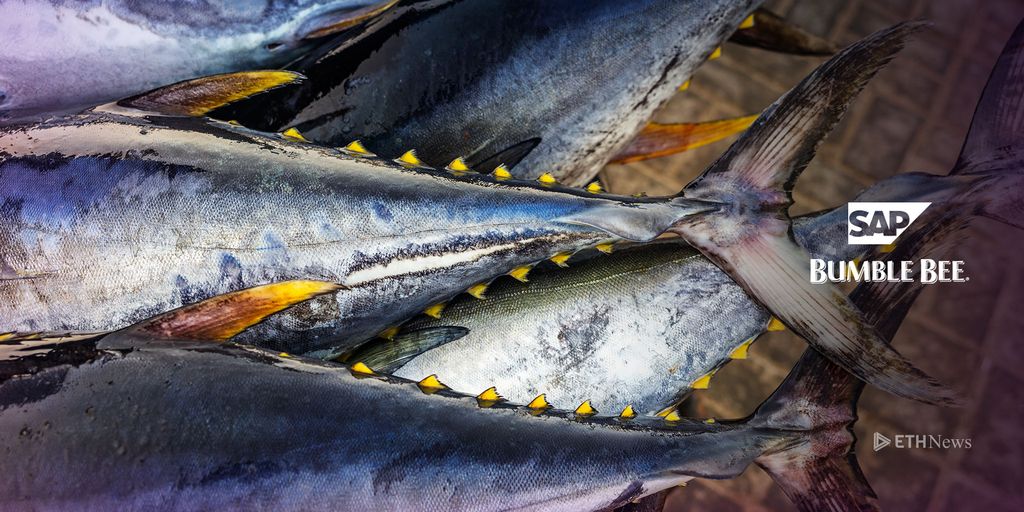
Customers may soon be able to get information about their tuna by scanning a QR code with a smartphone.
On Friday, March 8, Bumble Bee Foods, one of the biggest seafood providers in North America, announced it is using the to track its supply of yellowfin tuna.
According to a published by the enterprise application software company , the new permissioned platform will track the origin and journey of Bumble Bee Foods’ Natural Blue by Anova yellowfin tuna. This new platform will allow to pick up a 12-ounce bag of the brand’s fair-trade-certified ahi tuna steaks, scan the QR code on the back with a smartphone, and instantly receive information about the fish’s journey to the table, including “the size of the catch, point of capture and the fishing community that caught it, as well as valuable insights to verify authenticity, freshness, safety, fair trade fishing certification and sustainability.”
Per a subsequent published by SAP, once the fish is purchased at a local Indonesian “buying post,” it is shipped to a receiving plant where initial information – such as where the fish was caught, who caught it, and how much it weighs – is recorded on the platform. The next set of data comes from the quality testing site, which examines the safety of the fish for consumption. Once this data is uploaded to the platform, it is instantly available to participating restaurants and grocery stores. The final set of data is entered at the finished goods plant before being sent to various stores and restaurants.
Bumble Bee Foods CIO Tony Costa hopes the project will build trust in its product:
“Bumble Bee has long been an industry leader in tracing its seafood products, and the addition of SAP’s technology allows us to further elevate our efforts in complete transparency with consumers and , providing assurance that their fish is fresh and it’s been sourced fairly according to our commitments to the International Seafood Sustainability Foundation.”
The seafood industry has looked before to technology to help improve the quality of seafood and the transparency of the seafood supply chain. Last year, the World Wildlife Fund with ConsenSys, TraSeable, and Sea Quest Fiji to develop a platform that could help stop illegal tuna fishing. In December 2018, developer Darren Zal the creation of the platform Fishare for fisheries management, which makes sure fisheries are using sustainable methods and that their are receiving what they paid for.
Nathan Graham is a full-time staff writer for ETHNews. He lives in Sparks, Nevada, with his wife, Beth, and dog, Kyia. Nathan has a passion for new technology, grant writing, and short stories. He spends his time rafting the American River, playing video games, and writing.
ETHNews is committed to its
Like what you read? Follow us on to receive the latest Bumble Bee Foods, SAP Cloud Platform or other application .
Published at Mon, 11 Mar 2019 22:57:53 +0000

