May 19, 2026

Capitalizations Index – B ∞/21M

‘Bubble’ or Not, Billionaire George Soros is Set to Start Trading Cryptocurrencies

‘bubble’ or not, billionaire george soros is set to start trading cryptocurrencies

‘Bubble’ or Not, Billionaire George Soros is Set to Start Trading Cryptocurrencies

George soros billionaire
Advertisement

Join our community of 10 000 traders on Hacked.com for just $39 per month.

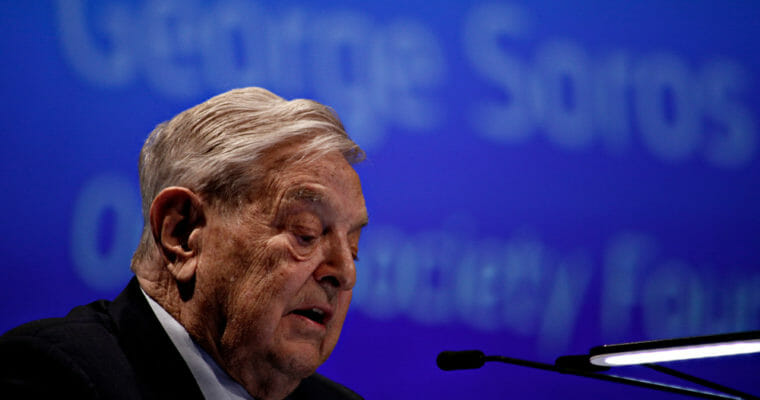
George Soros thinks cryptocurrencies are a bubble. He’s about to start trading them anyway.

The billionaire investors and business magnate won’t be trading them personally, of course, but Bloomberg reports that Adam Fisher — who runs Soros Fund Management’s macro investing operation — has secured internal approval to begin trading cryptoassets.

Fisher reportedly received the go-ahead to begin trading cryptocurrencies sometime during the last few months, which is notable given public statements Soros made about cryptoassets during the same period.

Soros was one of many prominent financiers to address cryptocurrencies as an asset class at this year’s World Economic Forum in Davos, and he did not strike an optimistic tone.

But though he denigrated bitcoin as a bubble, he also argued that cryptocurrencies would not have a “very sharp break” as most asset bubbles do.

“Normally when you have a parabolic curve, eventually it has a very sharp break,” Soros said. “But in this case, as long as you have dictatorships on the rise you will have a different ending, because the rulers in those countries will turn to bitcoin to build a nest egg abroad.”

Sources cited in the report said that Fisher had not yet begun trading cryptocurrencies through the $26 billion asset manager and is still weighing his options.

Last month, CCN reported that billionaire Alan Howard — a founding partner of Brevan Howard Asset Management — had begun making personal investments in cryptoassets and had even hired staff to assist him in this new venture. However, Brevan Howard made clear that the firm itself is still steering clear of the nascent cryptocurrency markets.

Indeed, institutional capital has by and large remained on the sidelines, despite predictions that it would wade into the cryptoasset space in recent months.

Now that Soros is about to begin trading cryptocurrencies, however, that tide could turn.

Featured image from Shutterstock.

Follow us on Telegram.
Advertisement

Published at Fri, 06 Apr 2018 17:37:32 +0000

bitcoin Trading

Previous Article

Vitalik Buterin and Nick Johnson Go Head to Head Over Ethereum Fixed Supply Cap Proposal

Next Article

“eBITCOIN CASH” token has been launched.

You might be interested in …

EU’s Bitcoin Database Could Make Privacy a Thing of the Past

The EU may set up a bitcoin database to keep track of crypto users’ identities and wallet addresses in its bid to combat terrorist financing and money laundering.


bitcoin has had its fair share of controversy, previously being seen as the preferred medium of exchange for criminals on the black market. In addition, its high level of anonymity has raised concerns that it could be used to finance terrorism, as well as to aid in money laundering schemes.

money laundering, euro

These negative associations are exactly why the European Union (EU) has been working towards to implementing regulatory processes with regard to cryptocurrencies. This year’s phenomenal increase in crypto prices and popularity might also have something to do with it though.

The crypto industry reached a record-breaking $600 billion market cap, with bitcoin being responsible for more than half of that. The most well-known digital currency has had an impressive year, peppered with drastic price surges and forays into mainstream adoption, thanks to futures contracts.

A Comprehensive Database for Crypto Users

The EU’s proposal mean that crypto exchanges will have to follow strict rules with regard to reporting any suspicious activity and will also have to adhere to customer identity regulations.

According to The Telegraph, the newest addition to the Fourth Anti Money Laundering directive states that the EU has the option of creating a “central database registering users’ identities and wallet addresses.”

The updated amendment went on to state:

The report shall be accompanied, if necessary, by appropriate proposals, including, where appropriate, with respect to virtual currencies, empowerments to set-up and maintain a central database registering users’ identities and wallet addresses.

This new proposal will have to wait until 2019 to be considered, the same time that the effectiveness of the new money laundering rules will be discussed. The information on these databases will be available to authorized institutions, such as the National Crime Agency and asset recovery authorities.

No More Hiding Behind bitcoin

These databases will completely rip off the veil of secrecy that shrouds bitcoin. This might be good news for regulators, but not for users. Even though their user information may be private, their transactions made with bitcoin are not.

In addition to exchanges, regulators also have their eye on ICOs for any related fraud or cybercrime. The IRS in America is also on the lookout for any sign of tax avoidance activity made possible with the help of digital currencies.

The irony is that bitcoin’s huge increase in popularity may actually be acting as a deterrent to cyber criminals as the currency’s network is under pressure, resulting in payment delays and high transaction fees.

Exchanges Could Embrace These Changes

Even with its secretive nature, some experts surprisingly believe that exchanges will be on board with the new regulations. Jacek Czarnecki, a lawyer specializing in digital currencies at the Polish law firm, Wardynski & Partners, had this to say:

The new regulatory framework might bring some civilization into the wild west of cryptocurrency and improve interconnections between the blockchain world and traditional financial systems, which have been rather shady so far.

Whether these new policies will have any effect on the popularity, and price, of digital currencies remains to be seen, as does the belief that it will possibly encourage faster mainstream integration.

What do you think about the recent increase in regulatory processes? Will it affect bitcoin’s price and popularity? Let us know in the comments below!


Images courtesy of Pexels, Bitcoinist archives, and Pixabay.

The post EU’s Bitcoin Database Could Make Privacy a Thing of the Past appeared first on Bitcoinist.com.