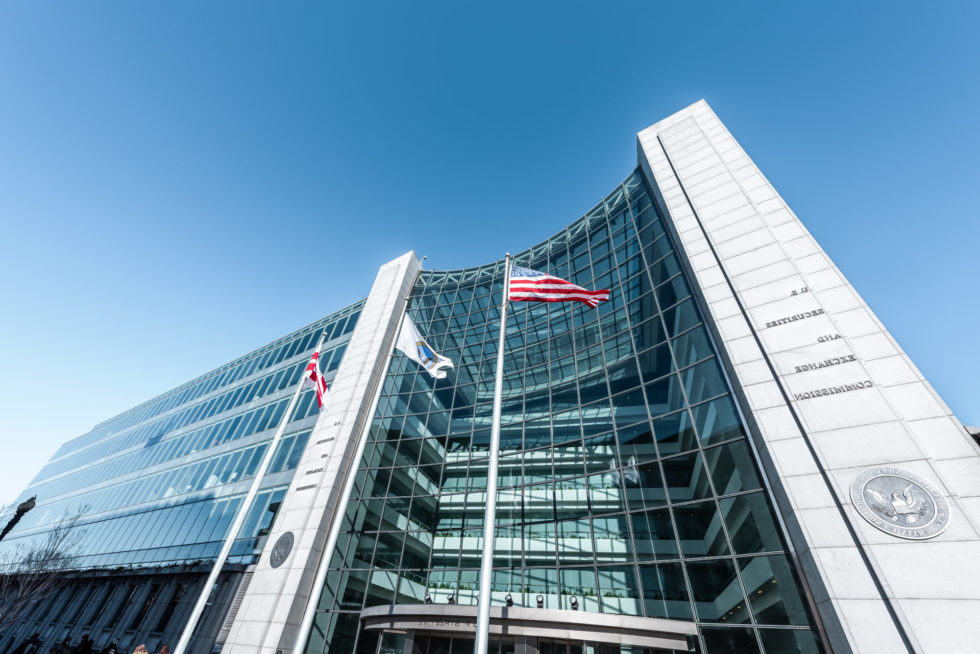
A report from the Economic Studies program of US think tank, Brookings, claims better regulation will benefit the crypto industry. It states that crypto-assets currently fall into a jurisdictional gap, and that the SEC should fill that role.
Don’t Hate The Game, Hate The Players
The immediately scores an own goal with the choice of title – “It’s time to strengthen the regulation of crypto-assets.”
This suggests that cryptocurrency itself is inherently insecure or in need of regulation, which is clearly not the case. The report actually discusses the regulation of cryptocurrency intermediaries, which, as , is an altogether different thing.
Anyway, the Brookings report suggests that better regulation of crypto-companies will:
benefit crypto investors, further the development of new technologies, curtail the use of crypto-assets used for illicit payments, and reduce the risk of cyber attacks.
In which case we should surely all be calling for it!
The Case For The Prosecution
Again, the report tries to pin this on bitcoin, claiming that it does not provide the ‘trustless’ environment it promised. It says crypto-assets ‘created’ new financial intermediaries that are less accountable than the big banks.
Not entirely true. A fledgling industry sprung up around crypto-assets, at a time when regulators didn’t want to touch it. That’s hardly the fault of bitcoin, which simply provides a trustless way to transact in peer-to-peer fashion.
Some of the players in this new industry have taken advantage of the regulatory vacuum. There are bad players who don’t record assets on the blockchain, who manipulate markets, and who trade against their customers. Which of course, has never happened in the ‘regulated’ banking industry.
The report also claims that inadequate regulatory oversight with respect to cybersecurity leads to hacks. Which may be true, but then it rolls out the old dark-web argument, which isn’t, and states that:
Crypto-assets are used increasingly to avoid government sponsored sanctions
Like those in Venezuela? Well that puts a whole new angle on those poor, starving, rule-breakers!
SEC? CFTC? WTF?
The report claims that “New crypto exchanges and trading platforms are not subject to the traditional standards required of securities and derivatives market intermediaries.”
However it follows that up by saying, “The SEC has jurisdiction over crypto-assets deemed securities,” and “Derivatives based on crypto-assets are subject to CFTC regulation… as are the platforms that trade such derivatives.”
So the Securities and Exchange Commission has jurisdiction over crypto-assets deemed securities, which is almost all of them (according to the SEC)? And the Commodity Futures Trading Commission (CFTC) has jurisdiction over any platform which trades derivatives such as futures or swaps?
So the gap is essentially… just the cash market for buying and selling bitcoin? The report’s author, Timothy G. Massad, recommends that no new regulatory agency is needed. Instead, the SEC should regulate this… or failing that, the CFTC.
The State Of Independence Shall Be
The very first page of the report proper, see’s Massad make a clear ‘Statement of Independence’.
The author did not receive any financial support from any firm or person for this article or from any firm or person with a financial or political interest in this article. They are currently not an officer, director, or board member of any organization with an interest in this article.
Hmmmm… Not currently, no. But he did serve as chairman of the CFTC under the Obama administration. And would perhaps be in line for a similar role the next time there is a Democrat in The White House?
Massad is also the author of on Brookings website, announcing the article, in which he repeatedly refers to himself in the third person. Surely they could have found somebody else to write the article? It’s all a bit self-promotional and slightly schizophrenic-feeling.
Knowing this, it seems likely that Massad has also had a hand in editing . Not that there is anything wrong with this, but it is hard to think that an independent observer would see fit to note:
Massad is an accomplished expert cook… He is known at Treasury for running a baking contest among his staff.
That’s not to say that Massad is wrong in suggesting that some regulation of businesses that handle cryptocurrency would be beneficial, he just goes about it all in a rather disingenuous fashion.
Do you agree with the Brookings report that the SEC should regulate cryptocurrencies? Share below!
Images courtesy of Shutterstock
Published at Wed, 20 Mar 2019 15:00:31 +0000