October 30, 2026

Capitalizations Index – B ∞/21M

British MP Says Blockchain Technology Can Save UK £8 Billion

British mp says blockchain technology can save uk £8 billion

British MP Says Blockchain Technology Can Save UK £8 Billion


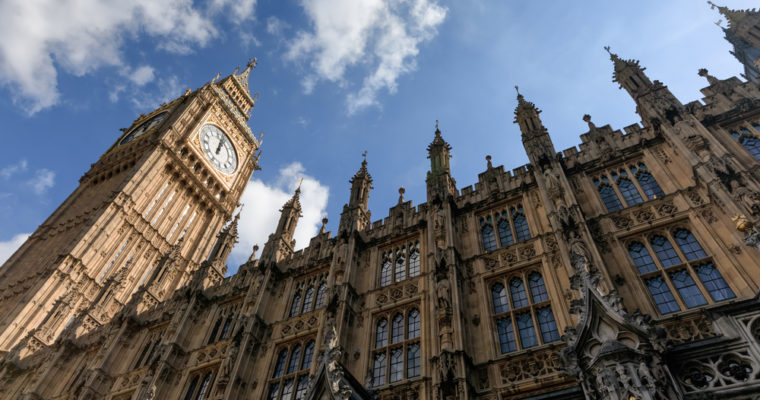
Parliament
Advertisement

Conservative member of the British Parliament Eddie Hughes has said that the British government needs a Chief Blockchain Officer to enable social freedom, increase efficiency and rebuild societal trust.

In a report issued today entitled ‘Unlocking Blockchain,’ MP Hughes  made a number of other recommendations including an international blockchain competition to encourage talented blockchain developers and proposed a UK blockchain developmental target described as “a longterm aim for government departments to make a 1 percent efficiency by embracing blockchain and other associated technologies.”

The 1 percent saving would amount to £8 billion or $10.5 billion and would be achieved by the chief officer overseeing the application of blockchain technology to UK public services databases.

The report was published by Freer, a think-tank connected with the British Tory conservative party, and suggests that businesses standing to benefit from increased adoption of blockchain technology could fund the international blockchain competition and benefit both themselves and the national economy as a whole.

It also discusses what Hughes calls a “trust deficit,” a lack of public trust in government institutions created after the 2008 financial crisis and “a series of serious public scandals ranging from the illegal misuse of parliamentary expense accounts to claims of harassment and abuse against charity workers.”

“After a never-ending litany of betrayals of trust and instances of overreach, the political and financial establishments, companies, and voluntary organisations that were once seen as pillars of the community, are often now held in little more than near contempt by citizens”

Hughes identifies DLT and blockchain technology as a way in which the government can increase transparency in government institutions and grow public faith and trust once more.

“Blockchain provides traceability and clear provenance. The blockchain holds all of the data from the start of the transaction, so the full history of any asset that is on the ledger can be known. There is no need to audit vast amounts of data, as the blockchain itself is the audit trail.”

Fintech

Hughes goes on to discuss the other applications of blockchain technology, stating that the retail industry had explored and positively identified the capacity to greatly increase operational efficiency through the automation of labor-intensive processes with 82 percent of retail professionals sharing that sentiment in a global survey.

He then cited a Santander Fintech report stating that banks could greatly reduce costs associated with cross-border payments, regulatory compliance, and securities trading through the application of DLT with a cost reduction of up to $20 billion by 2022. Sweden is predicted to save $100 million through the use of the technology in their national land registry by automating the processes involved in fraud prevention.

The report also details the environmental benefits – a report from the Dubai Blochain Strategy predicts that 25.1 million economically productive hours can be reallocated through reduced document processing times and 114 MTons of C02 emissions eliminated through reduced trips.

The report is particularly comprehensive in drawing on multiple sources citing the social and environmental benefits of blockchain application on government systems and databases, perhaps a significant indicator in the shifting tide of opinion towards the emerging technology.

At the recommendation of British Prime Minister Theresa May, a digital copy of the report will be sent to every member of British Parliament for their consideration.

Images from Shutterstock

Follow us on Telegram or subscribe to our newsletter here.
• Join CCN’s crypto community for $9.99 per month, click here.
• Want exclusive analysis and crypto insights from Hacked.com? Click here.
• Open Positions at CCN: Full Time and Part Time Journalists Wanted.

Advertisement


Published at Thu, 05 Jul 2018 00:30:23 +0000

Blockchain News

Previous Article

CLOAK coin interview with host John B. Wells, Jsnip4 and Deepend, March 15, 2018

Next Article

Bobby Trates “Using Smartphone For Echolink”

You might be interested in …

Localbitcoins to introduce new user verification rules

Localbitcoins to Introduce New User Verification Rules

Localbitcoins to Introduce New User Verification Rules Peer-to-peer crypto exchange Localbitcoins is preparing to implement updated requirements for the identity verification of its users. The company recently revealed it’s cooperating with regulatory agencies in Finland […]

NO2X: Next Week’s Hard Fork Has Been “Suspended” Due to a Lack of Consensus

b2xcancel

There will almost certainly be no bitcoin hard fork next week: the main organizers behind the SegWit2x project have “suspended” their efforts.

In an email to the SegWit2x mailing list, one of the main organizers behind the project, BitGo CEO Mike Belshe, explained that the proposed hard fork has not been able to gain sufficient consensus to proceed:

“Although we strongly believe in the need for a larger blocksize, there is something we believe is even more important: keeping the community together. Unfortunately, it is clear that we have not built sufficient consensus for a clean blocksize upgrade at this time.”

The New York Agreement was originally forged between a group of bitcoin companies in May of this year. An initiative by Digital Currency Group CEO Barry Silbert, the project — later dubbed “SegWit2x” — was to combine activation of the Segregated Witness soft fork with a hard fork to double bitcoin’s block weight limit. With Segregated Witness activated on the bitcoin network this past summer, arguably helped by the SegWit2x project, the hard fork was scheduled to take place next week.

However, the hard fork part of the New York Agreement was always controversial for a number of reasons. As a result, a growing number of signatories dropped out of the agreement over the past weeks and months, while developers, user communities, public polls, future markets and more all indicated limited support for the effort. And as the hard fork date drew closer, it become increasingly clear that SegWit2x would in fact spawn a new currency rather than constitute an upgrade of the bitcoin protocol.

And this was never the plan, Belshe wrote:

“Continuing on the current path could divide the community and be a setback to bitcoin’s growth. This was never the goal of Segwit2x.”

Belshe’s email was also signed on behalf of Xapo CEO Wences Casares, Bitmain CEO Jihan Wu, Bloq CEO Jeff Garzik, Blockchain CEO Peter Smith and ShapeShift CEO Erik Voorhees. In a separate blog post published just before Belshe’s email, BitPay CEO Stephen Pair also called for cancelation of the hard fork.

While the New York Agreement was signed by even more companies (and some individuals), and anyone can still deploy the hard fork, it is unlikely that anyone will proceed with the hard fork in any meaningful way.

Belshe does, however, note that a hard fork to increase bitcoin’s block weight limit might be needed in the future, writing:

“As fees rise on the blockchain, we believe it will eventually become obvious that on-chain capacity increases are necessary. When that happens, we hope the community will come together and find a solution, possibly with a blocksize increase.”

The post NO2X: Next Week’s Hard Fork Has Been “Suspended” Due to a Lack of Consensus appeared first on Bitcoin Magazine.