
A Brazilian court has ordered the reopening of cryptocurrency exchange bitcoin Max’s bank accounts, which were closed without explanation by Banco do Brasil and Banco Santander in September. The two banks have reportedly reactivated the accounts to avoid paying fines.
Also Read:
Threat of Fine Forces Banco Do Brasil and Banco Santander to Reactivate Exchange’s Accounts
According to local news site , Brazil’s Federal District Court promised to slap Santander with a fine of 5,000 real ($1,350) and Banco do Brasil with 20,000 real ($5,400) should both fail to comply with the preliminary judgement. Leonardo Ranna, a lawyer representing bitcoin Max, said that all of the exchange’s accounts “have been restored, including those of exchange partners.”
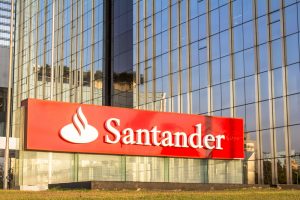
In September, the Administrative Council for Economic Defense (CADE), a transparency and competition body, started to six of Brazil’s biggest banks after they closed accounts belonging to digital currency exchanges without explanation and refused to discuss the decision. The probe centred around allegations of “monopolistic practices … that could be limiting the action of brokers” within the cryptocurrency industry.
Results of the investigation are not yet known. The ruling against Banco Santander may only be temporary, however. The bank only complied on account of a “kind of injunction” that compelled it to reopen bitcoin Max’s accounts within five days, Portal do bitcoin reported. The injunction had been previously denied by a judge at a lower court, forcing the exchange’s lawyers to appeal to the Federal District Court.
The latest ruling by Ana Catarino, a judge with the higher court, was based on Banco Santander’s unilateral decision to close the exchange’s accounts without explanation, something that the court described as “abusive conduct that is prohibited by consumer protection rules.”

When Banco do Brasil shut down bitcoin Max’s account, about $32,400 of the exchange’s money was stored in it. The exchange filed a lawsuit against the bank on Sept. 12. An injunction was turned down initially but a Federal District Court judge later gave the bank a 24-hour ultimatum to reactivate bitcoin Max’s accounts or face a fine of about $540 a day.
Arbitrary Bank Account Closures
Adriano Zanella, chief executive officer of bitcoin Max, said they were never made aware of the account closures and that he learned of the blockage via the manager of an agency. During the investigation by CADE, the transparency body accused major banks of “imposing restrictions or even prohibiting access to the financial system by cryptocurrency brokerages.” The banks denied the charge, saying accounts were closed as a security measure to prevent money laundering. Some of the banks under investigation include Banco Santander Brasil SA, Banco Bradesco SA, Banco do Brasil SA, Itau Unibanco Holding SA and Banco Inter and Sicredi.

Brazil is a hive of cryptocurrency activity in Latin America. The number of people trading bitcoin and other cryptocurrencies has soared from less than 100,000 two years ago to about 1.4 million today. More than $2.4 billion worth of BTC was traded in the country last year, up from just $160 million in 2016.
In January, Brazil’s Securities and Exchange Commission stopped local investment funds from buying digital coins because “cryptocurrencies cannot be qualified financial assets.” The commission, however, made a U-turn immediately after, allowing for indirect ownership, meaning Brazilians could buy into crypto-related investment funds. Even politicians in the country are talking about bitcoin; a candidate in the recent presidential election campaigned for formally legalizing bitcoin.
What do you think about the relationship between virtual currency exchanges and legacy financial institutions? Let us know in the comments section below.
Images courtesy of Shutterstock.
Verify and track bitcoin cash transactions on our , the best of its kind anywhere in the world. Also, keep up with your holdings, BCH and other coins, on our market charts at , another original and free service from bitcoin.com.
The post appeared first on .

On the eve of the 10th anniversary of the initial publication of the bitcoin whitepaper, the cryptocurrency markets recorded their weakest month for trading volume in all of 2018. Most of the leading markets saw a significant decline in trading activity throughout October, but NEO, TRX, QTUM and ZEC posted month-over-month volume increases.
Also Read:
BTC, USDT, ETH and EOS Hit
Lowest Points of the Year
 In the last , approximately $109.5 billion worth of has changed hands, resulting in an 11.9 percent decline in trading activity from $124.3 billion in September — the weakest monthly volume posted in 2018 thus far. The drop in BTC trading activity coincided with a similar plunge in trading volume. Despite fears of a widespread USDT “untethering,” as well as the eradication of 30 percent of Tether’s circulating supply, the trading volume of USDT fell by just 12.6 percent, from $86.5 billion in September to $69.5 billion.
October saw $41.2 billion in trade for pairings, down 30 percent from the $53.8 billion recorded in the preceding month. EOS, meanwhile, returned to its position as the fourth most-traded cryptocurrency, with a 30-day trade volume of $13.94 billion — down 30 percent from $20 billion in September.
XRP and LTC Hit Second-Strongest Levels Since May
has held its top-five volume ranking for the second consecutive month, despite seeing a 45 percent reduction in trading activity. October saw $13.6 billion in trade across XRP pairings, down from $24.7 billion in September.
was the sixth most-traded cryptocurrency in October, hitting $9.5 billion in trade volume over the past 30 days. BCH saw a 26 percent reduction in trading volume, down from $12.9 billion in the preceding month.
ranked as the seventh most-traded cryptocurrency for the third consecutive month. About $9.14 billion of LTC changed hands in October, down 4.8 percent from $9.6 billion in September.
posted a 30-day trade volume of 5.16 billion, settling at eighth place for the second consecutive month. Trading of the currency fell 20.6 percent from $6.5 billion in September.
NEO Breaks Into Top 10
saw a massive 76.25 percent increase in trade volume in October, to rank ninth for the month. Approximately $4.6 billion worth of the currency has changed hands in the past 30 days, up from $2.61 billion in September.
fell one position to rank 10th on the list of the most-traded cryptocurrencies in October. It hit a 30-day trading volume of $4.2 billion for the month, down 17.65 percent from $5.1 billion in September.
TRON, QTUM, and ZEC Post Modest Volume Gains
 hit $3.67 billion in trade volume this past month, up 4.25 percent over the preceding month’s 3.52 billion. TRX was the 11th most-traded cryptocurrency in October, moving up one rank from September.
CKUSD posted a 16.5 percent drop in trading volume at $3.4 billion, down from $4.07 billion in September. CKUSD ranked 12th for the month, sliding two positions from the preceding four-week period.
Despite recording a slight 2.5 percent increase in 30-day trade volume, fell two places to 13th on the list of the most-traded cryptocurrencies in October. About $3.73 billion worth of the currency traded hands for the month, up from $3.64 billion in September.
Trading of fell 4.16 percent month over month to $3.5 billion. Despite rising slightly by volume from $3.36 billion in September, the currency slid one place to rank as the 14th most-traded cryptocurrency in October.
climbed two places to rank as the 15th most-traded cryptocurrency over the past 30 days. The currency posted a monthly trading volume of $1.42 billion, down nearly 30 percent from $2.02 billion in September.
recorded a monthly volume of $1.33 billion, sliding one position to rank as the 16th most-traded cryptocurrency for October, following three consecutive weeks during which it ranked 15th. Trading of Stellar fell 42.17 percent by volume from $2.3 billion in September.
New Entrants in Top 20
 The declining trading volume across many leading markets saw several cryptocurrencies sneak into the top 20 rankings for the first time in recent months. ZB, for example, ranked 17th with a 30-day trade volume of $1.16 billion, following by at $988 million.
ranked 19th for the second consecutive month, with $920.8 million traded, despite falling 31.3 percent by volume, from $1.34 billion in September.
, meanwhile, settled at 20th place in October, with $853.6 million worth of the currency changing hands over the last 30 days.
Do you think that the 10th anniversary of the bitcoin whitepaper will drive greater trading volume across the cryptocurrency markets? Share your thoughts in the comments section below!
Images courtesy of Shutterstock
At bitcoin.com there’s a bunch of free helpful services. For instance, have you seen our page? You can even lookup the exchange rate for a transaction in the past. Or calculate the value of your current holdings. Or create a paper wallet. And much more.
The post appeared first on .


![The little known secrets to growing your wealth in bitcoins [calgary]](https://ohiobitcoin.com/wp-content/uploads/2018/05/pdUJcC.jpg "The little known secrets to growing your wealth in bitcoins [calgary]")