The emergence of blockchain technology has piqued the interest of a number of different sectors across global society. From , , , and technology, blockchain is starting to take root. It is now being seen that communications could be the latest sector to benefit from this technological revolution.
There has been a that came out on July 11 from that is suggesting that blockchain technology will contribute as much as $1 billion to the telecommunications sector in the next five years.
When delving deeper into the growth that is already being seen by the telecommunications sector thanks to blockchain — as well as the move toward things like phones — it is actually an unsurprising number.
If something like the automotive industry is already experimenting and discovering new use cases for blockchain technology — from , and safe-driving — then it should be expected that phones would soon follow suit.
Enter the blockchain-powered phone
Phone manufacturers are constantly on the cutting edge of innovation and technology. This is evident in the yearly releases of bigger and better iPhones and Samsung phones — for example, as these two giants of the space each other.
But, there are now phone manufacturers that are trying to leave the competitive battle behind and start a new blockchain-based battle, which will see companies creating phones that are purposefully built for cryptocurrency enthusiasts.
However, it is not only the hardware — i.e., the phones — that will have a touch of cryptocurrency about them, the manner in which business is being conducted by these new blockchain communications industry leaders will also be familiar.
Sirin Labs’ November offering
Sirin labs is a Swiss-based smartphone developer which has a project in the works that will see a blockchain-based phone of this year. The funding for such a project an .
Sirin in their ICO, with the majority of that — $110 million — coming in the first 24 hours. This shows there is quite a keen interest in this project and the potential it holds going forward for phone manufacturers.
Finney, as the phone will be known, will be on the shelves with a price tag of $1,000.
What makes this blockchain phone different from regular phones is that, although it will be Android, it will run on the Sirin OS and include a cold storage cryptocurrency wallet, a token conversion service and a store for blockchain-based apps.
However, the phone can only be purchased using Sirin's crypto token (based on the ), and total tokens it created during the recent ICO have already been sold.
HTC offering the first native blockchain option
Sirin is not the only company forging the way for a blockchain-based phone. HTC, the well-known Taiwanese consumer electronics company, is also looking at .
HTC call their offering the HTC Exodus, according to Phil Chen, who is responsible for all blockchain and cryptocurrency-related initiatives at HTC, including Exodus.
“We are excited to be supporting underlying protocols such as bitcoin, Lightning Networks, Ethereum, Dfinity, and more,” on the integration of blockchain applications with the phone’s hardware.
Like the Sirin Labs phone, the feature universal cryptocurrency wallets as well as a secure hardware enclave.
Huawei to enter the scene also
With HTC building their phone, and Sirin just a few months from releasing theirs, even Huawei is making their first steps
Again, looking to build a phone that will be able to support DApps, Huawei is allegedly seeking the license for the open-source operating system Sirin OS. This report comes from an unconfirmed , but is not outside the realm of imagination when looking at the way in which the space is building momentum.
Not just phones
It is not just phone companies directly who are looking to make the move into blockchain, but rather the entire telecommunications industry. While HTC and Sirin work on delivering their blockchain phones, the Opera web browser recently .
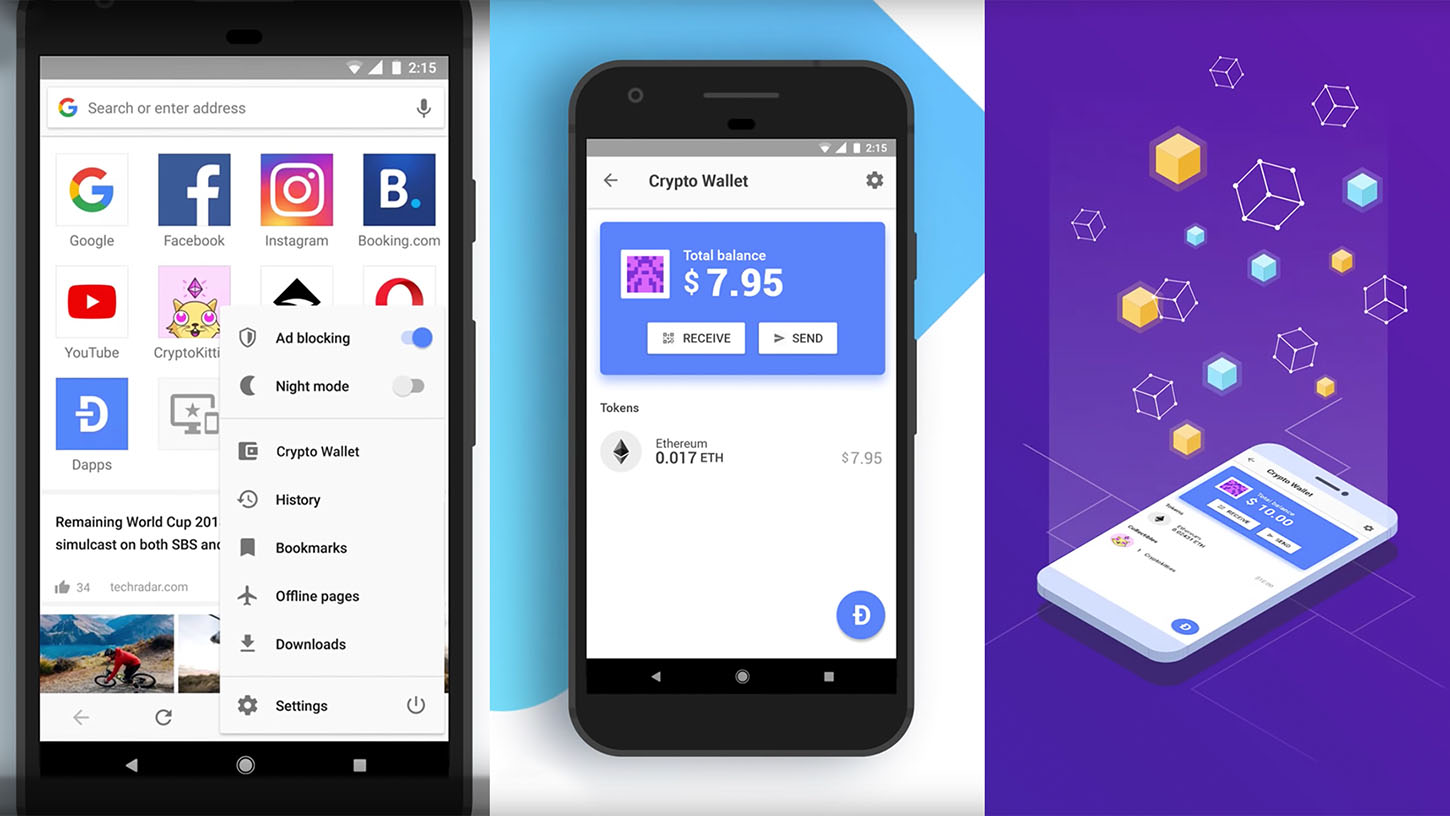
Image source: Opera YouTube
But even before the launch of a native blockchain product, the web browser was aware of the blockchain space and its challenges and promises when it included .
IBM, another leader in technology — as well as an emerging force in blockchain technology — is also for blockchain in the telecommunications space.
In January, IBM wrote a about how blockchain can help the telecommunications business, identifying its ability to streamline internal processes, build blockchain-based digital services, and provide trust, security and transparency in business ecosystems, :
“Blockchain is currently one of the most talked-about technologies. Across industries, organizations are exploring blockchain’s potential impact in their space and how they can benefit from this emerging technology. The communications service provider (CSP) industry is no exception.”
IBM even went so far as to conduct a survey of 174 C-suite executives from the telecommunications industry and of communications service-providing organizations are already considering or actively engaged with blockchains.
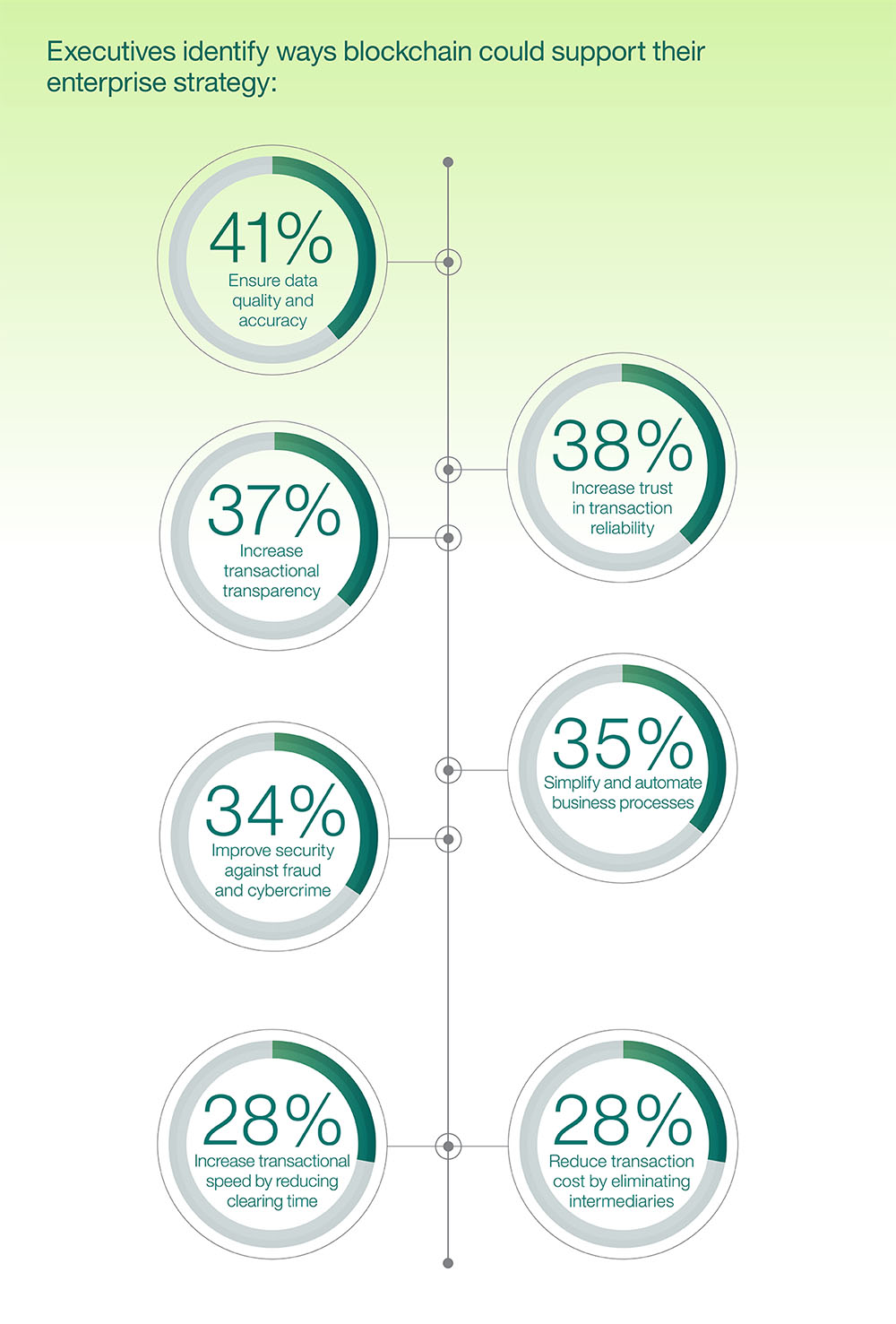
Other findings , which show where the executives have identified the potential for blockchain in their sectors, demonstrates a strong affiliation with transparency, trust and accuracy.
Image source: IBM
41 percent of the executives believed that blockchain could support their enterprise strategy by ensuring data control and accuracy, while 38 percent believed it would be good for increased trust in transaction reliability.
Furthermore, 34 percent identified its potential to improve security against fraud and cybercrime, while 28 percent of them said it would reduce transaction cost and increase transaction speed.
The time to enter the market
If the is correct, and blockchain technology in telecoms will explode from a $46.6 million industry in 2018 to one worth $993.8 million by 2023, then it would appear this is a good starting point for many companies.
The space is changing for telecommunications. — says the 132-page report — as well as the increasing support for OSS/BSS (operations support systems/ business support systems) processes.
There is a clear shift in the telecommunications sector that can be addressed with this burgeoning technology. But, as it is still a young technology, there are a lot of kinks that need to be worked out. However, being at the forefront with blockchain phones and implementing blockchains to help with security behind the scenes, a number of companies can become leaders in the space. as it moves beyond the likes of Apple and Samsung.
Published at Fri, 20 Jul 2018 21:19:00 +0000
Blockchain[wpr5_ebay kw=”bitcoin” num=”1″ ebcat=”” cid=”5338043562″ lang=”en-US” country=”0″ sort=”bestmatch”]
