
October 25, 2026

Capitalizations Index – B ∞/21M

‘Blockchain Island’ Malta Gets its First Two-Way Bitcoin ATM

‘blockchain island’ malta gets its first two-way bitcoin atm

‘Blockchain Island’ Malta Gets its First Two-Way Bitcoin ATM


‘blockchain island’ malta gets its first two-way bitcoin atm
Advertisement

The Maltese islands continue to be a hotbed for crypto activity.

After the enactment of three new crypto and blockchain laws that set the standard for regulation of these spaces, we have now had the launch of the first two-way bitcoin ATM by the innovative company MoonZebra. It’s situated at the flagship Quicklets offices on Tower Road in Sliema, an iconic location on the island.

Moon Zebra is a collaboration between Leon Siegmund (aka Lee Winmouth), a digital nomad and self-confessed bitcoin maximalist who has been assiduously working behind the scenes to create awareness on bitcoin and the crypto space in general and businessman Jonas Abrahamsson. Siegmund is one of the founders of Bitcoin Club Malta which regularly organizes events and meetups and which is an anchor point for the local bitcoin business scene.

In exclusive comments to CCN, Siegmund explained that the idea of a bitcoin ATM might not be so high tech, but this will definitely get people more interested in bitcoin and cryptocurrency in general according to his thinking.

“When I moved to Malta two years ago there was a not much happening regarding bitcoin and decentralized ledger technology. But within just 2 years and thanks to the collaborative effort of many individuals, something very special happened. In the beginning of 2017, I met Jonas Abrahamsson at the bitcoin Meetup in Gozo and we tried to find something that would be appreciated by the local bitcoin community in Malta and our first idea was to set up public trash bins on the island. These would be would be digital and would reward usage with tokens – a great idea I have to say but which never came to fruition. Another idea was a bitcoin ATM. It is very difficult to operate here because banks are very hostile and don’t want to support us but after much blood, sweat and tears, we are happy to launch”.
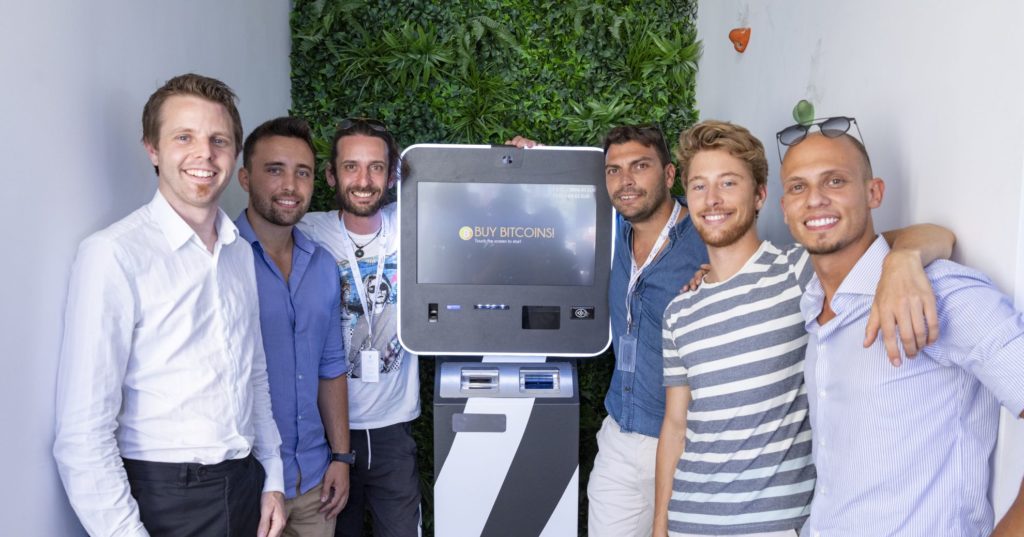
‘blockchain island’ malta gets its first two-way bitcoin atm
Crypto friendly Malta gets its first two-way bitcoin ATM

Leon believes that there is a massive potential for commerce and for society as a whole to flourish with Malta as a hub for bitcoin and crypto in general.

Malta has had a chequered history with regard to bitcoin ATM’s in general. In 2017 Malta’s first Bitcoin ATM went missing, and charities were scammed out of over €3000. However Moon Zebra are out to change that perception with this new ATM. With a team of 4 crypto specialists, it specialises in maintaining and installing crypto ATMs and plans to launch further projects in the not too distant future.

What is CryptoATM?

A Crypto ATM gives people the ability to get their hands on crypto similarly to how they would get cash. Users simply have to walk up to the ATM and deposit fiat cash, input their public key, and crypto will be sent to the wallet. Users can also convert crypto back into fiat with the two-way ATM. It also gives people the ability to bypass exchanges and – on some levels – crypto ATMs could solve the issue of exchanges being centralized. Moon Zebra’s crypto ATM will initially only work with bitcoin although that could change in the future.

Featured image from Shutterstock.

Follow us on Telegram or subscribe to our newsletter here.
• Join CCN’s crypto community for $9.99 per month, click here.
• Want exclusive analysis and crypto insights from Hacked.com? Click here.
• Open Positions at CCN: Full Time and Part Time Journalists Wanted.

Advertisement


Published at Sat, 14 Jul 2018 13:48:20 +0000

bitcoin Services

Previous Article

Mongo Worms vs Lice! Which is Worse?

Next Article

CoinonatX (XCXT) Price Alert, Chart & News on OhioBitCoin.com

You might be interested in …

SegWit or Not, Bitfury is Getting Ready for Lightning With Successful Bitcoin Main Net Test

BitfuryLN.jpg

While Segregated Witness (SegWit) activation is looking more likely by the hour, Bitfury is getting ready to deploy a version of the Lightning network with or without the protocol upgrade.

The blockchain technology company, perhaps best known for its bitcoin mining pool of the same name, successfully sent real bitcoins over a test version of the Lightning Network this week. Interestingly, Bitfury’s implementation of the technology is compatible with the current bitcoin protocol and is therefore functional even without SegWit.

“This is a major accomplishment by our technical team and an important step forward for the Lightning Network and the growth of bitcoin,” Valery Vavilov, CEO of The Bitfury Group, said in a statement.

Lightning Network

The Lightning Network is a highly anticipated second-layer scaling solution that allows for cheap and instant (micro)payments. Cleverly leveraging bitcoin’s basic scripting capabilities, Lightning users should be able to make a virtually unlimited number of transactions, where only a minimal proportion of them are recorded on bitcoin’s blockchain, thereby boosting bitcoin’s scalability. Meanwhile, all users remain in control of their own bitcoins at all times, maintaining the trustless properties of bitcoin itself.

“The Lightning Network has the potential to solve bitcoin’s scalability issue and provide instant payment functionality. By demonstrating that the Lightning Network can function now, Bitfury has cleared the way to increased transaction processing and further adoption of bitcoin,” Vavilov said.

Bitfury’s Lightning implementation is based on LND, which is being developed by Lightning Labs.

For its demo, the Bitfury software team created two Lightning transactions. One of these is a straight transaction from one Lightning node to the next, effectively simulating a payment channel between two users. Since it was only a test, Bitfury only made one transaction — but it could have made thousands back and forth at no extra cost.

The other test was a single-hop transaction, which better simulates the main purpose of the Lightning Network. Users pay each other through a mutual third party, without requiring any trust in this third party. While the Bitfury software team only made one transaction on this channel as well, it could, once again, have made thousands back and forth between all three parties, at no extra cost.

Since Bitfury’s test took place on the main net, the funding and settlement transactions are recorded on bitcoin’s blockchain and can be seen by any typical block explorer.

Tests and SegWit

Bitfury’s is not the first successful test of the Lightning Network. Several companies, including Lightning Labs, Blockstream, ACINQ as well as Bitfury itself have experimented with their implementations of the technology. But since most of these companies are working on versions of Lightning that rely on Segregated Witness, these tests were limited to bitcoin’s testnet and Litecoin. Likewise, major wallet service Blockchain has sent “Thunder” transactions over bitcoin’s main net. But while Thunder resembles the Lightning protocol, it isn’t quite as trustless or decentralized.

As such, Bitfury is the first company to get a version of the Lightning Network up and running on the current bitcoin protocol.

“We released this first experimental version of the Lightning Network for bitcoin because we think the Lightning Network is an essential technology for bitcoin and would love to see it made available as soon as possible,” Vavilov said. “We are proud that our developers found a way to adopt the Lightning Network for bitcoin without SegWit. It’s a huge step forward for bitcoin scalability.”

Regardless, the CEO noted that he is hopeful that SegWit will activate on the bitcoin network. With BIP91 currently getting close to its activation threshold, it seems increasingly likely that SegWit could be live within a month. This would allow for a version of the Lightning Network that offers an improved user experience.

Vavilov:

“The Lightning Network will be the most effective when used with SegWit, which is why we are fully committed to SegWit’s implementation, and we will continue working on a version of the Lightning Network that is compatible with SegWit.”  

Bitfury, which started out as a bitcoin miner, has grown to become one of the largest private infrastructure providers in the Blockchain ecosystem. Part of this effort, the company has been supporting the development and implementation of the Lightning Network for well over a year. Bitfury previously also co-designed and successfully tested Flare, a payment-routing solution for the Lightning Network.

Watch the video of Bitfury’s tests here:

[youtube https://www.youtube.com/watch?v=fqT-3xN8npA?feature=oembed&w=480&h=270]

The post SegWit or Not, Bitfury is Getting Ready for Lightning With Successful Bitcoin Main Net Test appeared first on Bitcoin Magazine.