The EU State Member Malta, has recently turned a hot destination for business in the cryptocurrency and blockchain space for its crypto-friendly rules. With growing regulations from around the globe, fintech companies are considering to shift their operations to Malta that provides a conducive environment to operate.
With the growing dilemma regarding which ICOs should be classified as securities, the country has proposed a new test that clearly helps to define whether the crypto assets being derived from ICOs can be classified as securities or not. In one of the latest that was published last Friday, April 13, the Malta Financial Services Authority (FSA) has set out a proposal for the Financial Instrument Test which if approved will ultimately become a part of the Virtual Financial Asset Act (VFAA).
The concept of this test was initially proposed back in November 2017, and based on the feedback from this discussion paper, the agency has recently formulated a methodology for the test. Now as per the latest paper, the test will comprise of a three-stage process in which the first stage will be to verify if any Distributed Ledger Technology (DLT) asset falls under the category of what the agency describes as “virtual tokens” commonly referred to as the Utility tokens in the crypto industry.
The paper states: “Virtual token is a DLT asset which has no utility, value or application outside of the DLT platform on which it was issued and that cannot be exchanged for funds on such platform or with the issuer of such DLT asset.”
The Malta FSA said that the tokens falling under this category will be exempted from the VFAA. Once the assets have been traded in the secondary market, they would then pass through the second phase of the test wherein securities will be determined based on the definition formed by European financial regulators which includes money market instruments, transferable securities or financial derivatives.
If the token falls under the definition of any of these assets, it will come under the regulatory scrutiny of the existing Markets in Financial Instruments Directive (MiFID) which is enforced in the European Union financial markets.
The negative outcomes would be followed by the third-stage of scrutiny where it will see ICO tokens that are regulated under the proposed VFAA. According to the FSA, this method will adopt a hybrid framework which takes into consideration both the regulations – EU regulations as well as the national ones.
Malta regulatory body has put the papers open for public feedback till the 5th of May which comprises of rules that aims to cover all the ICOs organized in the country.
Malta has often been termed as the Blockchain island by several companies that provides a blockchain-conducive environment while functioning within the ambit of legal rules of the country and the European Union. Due to this reason, last month in March, popular cryptocurrency exchanges like and announced plans to make Malta as their new home state of operations.
The post appeared first on .
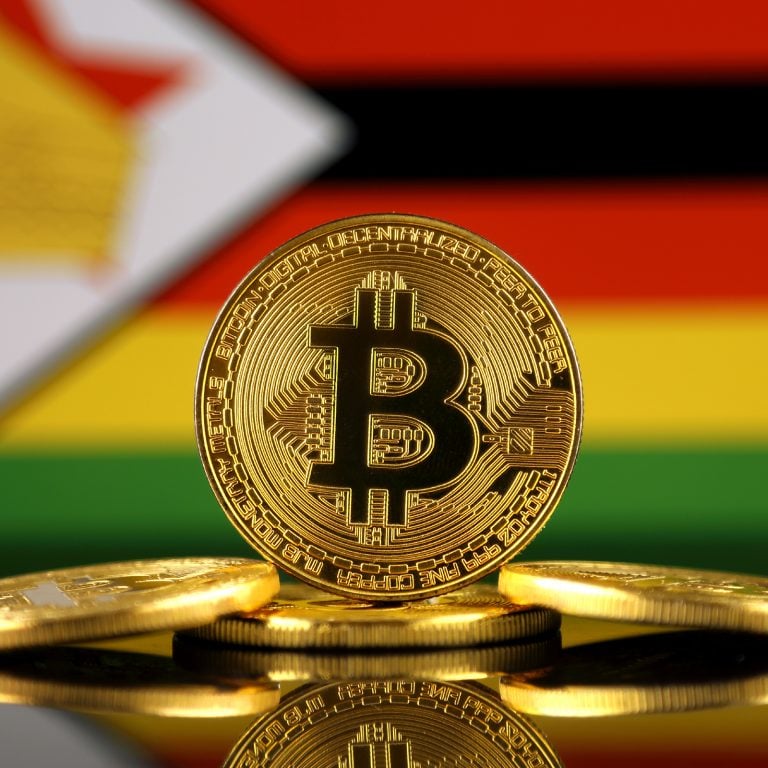
Just a few weeks ago, the Zimbabwean cryptocurrency exchange Golix gained its first national competitor when Styx24 opened its doors online. Almost simultaneously Golix introduced a bitcoin ATM to its customers, accessible inside their offices in central Harare.
Also read:
Need US Dollar Bills In Zimbabwe? Got BTC?
 Few countries have seen harder times economically, fiscally, and monetarily than Zimbabwe. No wonder bitcoin proponents have an easy time explaining bitcoin’s to Zimbabweans. After the government famously printed Z$100 trillion dollar bills, the general population have no trouble understanding the wonders of a fixed cap coin supply.
“Since we got the machine, lots of people have come to check it out, to touch it,” Golix representative Tawanda Kembo told . “At least 10-20 people walk in every day, since we launched it last Friday”.
Neither Golix, nor Styx24 have government licenses or permits to run these businesses, as the lawmakers still have not gotten around to regulating the space. “We actually don’t know what the government thinks,” Kembo said and added:
People can use it at their own risk as there is no licensing for any crypto business yet, even though we have met with regulators several times.
The teller machine is placed one floor up, in a mall in the center of the capital, welcoming customers between the hours of 8 am and 6 pm on weekdays. It takes your photograph, fingerprint, scans your passport/ID, and verifies your phone number.
There is an acute liquidity crisis In Zimbabwe, and so getting physical US dollars is both cumbersome and expensive (and illegal, the cash has to be bought on the black market). Also, the premium to convert into bitcoin is the highest in the world, at 40-60%. That means, if you want to buy 100 dollars worth of bitcoin in Zimbabwe, you have to pay 40-60% extra, plus fees, usually.
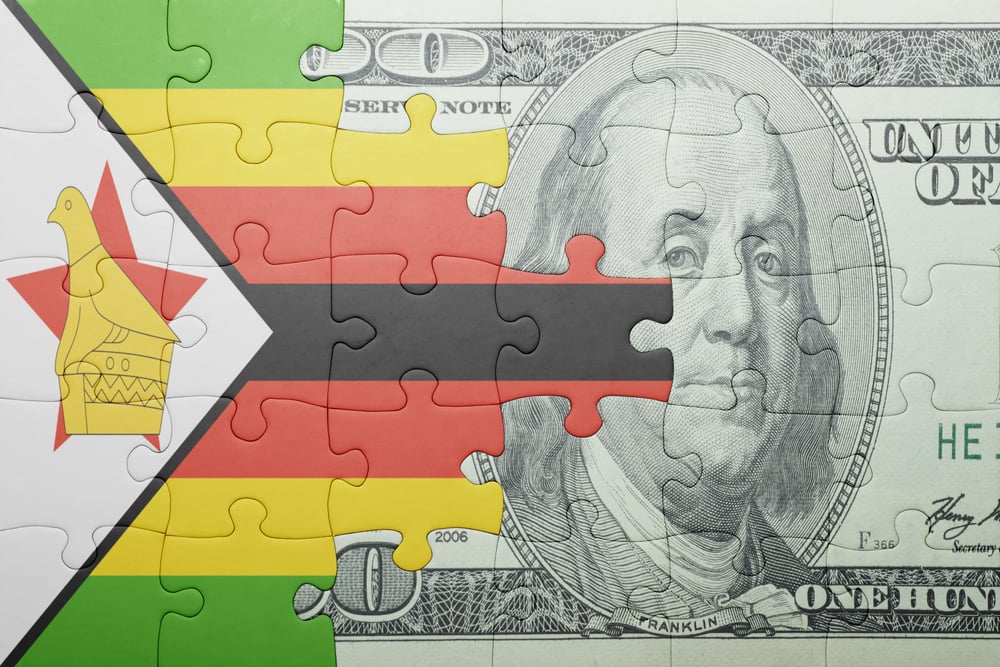
Since the national currency has more or less become worthless in Zimbabwe, everybody is using US dollars. Even the bank accounts are denominated in US dollars today. Few use real physical US dollars, however, due to the extra expenses involved. Salaries are typically transferred directly to bank accounts, and people use debit cards or mobile money services to do shopping.
Golix charges a 10% fee on all transactions to be able to afford to handle physical US dollars under these conditions. Total volumes are very low, compared to other countries. Golix may exchange 2-3 bitcoins per day in total, counting both their online outlet and the ATM.
has reached out to our contacts in the region and we’ve gotten eye-witness reports that the Golix office machine is actually dispensing some, though usually very small amounts, physical US dollar bills to clients visiting the office.
 We also talked to the founder and CEO of Golix’s newest competitor, Styx24.com, who has set up a shop only a few weeks ago. Styx24 CEO Tatenda Mubungu is currently in South Africa to fetch another ATM and set it up it in the offices in Gweru, a city situated about 30 km from Harare.
“I decided to open another exchange in my home country of Zimbabwe because monopolies are never good,” Mubungu says. With only one exchange customers have no options. Competition is beneficial for clients, it leads to lower fees and forces more innovation.”
Do you expect more entrepreneurs to join the race to bring bitcoin closer to Zimbabweans? Share your thoughts in the comments section below.
Images courtesy of Shutterstock.
bitcoin News is growing fast. To reach our global audience, send us a news tip or submit a press release. Let’s work together to help inform the citizens of Earth (and beyond) about this new, important and amazing information network that is bitcoin.
The post appeared first on .