May 18, 2026

Capitalizations Index – B ∞/21M

Black(Rock) Monday: Larry Fink and the $6.2 Trillion Liquidity Conundrum

Black(rock) monday: larry fink and the $6. 2 trillion liquidity conundrum

Black(Rock) Monday: Larry Fink and the $6.2 Trillion Liquidity Conundrum

Get Exclusive Analysis and Investing Ideas of Future Assets on Hacked.com. Join the community today and get up to $400 in discount by using the code: “CCN+Hacked”. Sign up here.

Get Exclusive Analysis and Investing Ideas of Future Assets on Hacked.com. Join the community today and get up to $400 in discount by using the code: “CCN+Hacked”. Sign up here.

By CCN: Amongst the litany of bearish naysayers, one bullish voice still screams louder. Larry Fink, the CEO of the world’s largest asset manager – BlackRock – is sticking firmly to his forecast that there is no bogeyman waiting to slaughter the US stock market.

BlackRock Not Worried About Recession Battering Stock Market
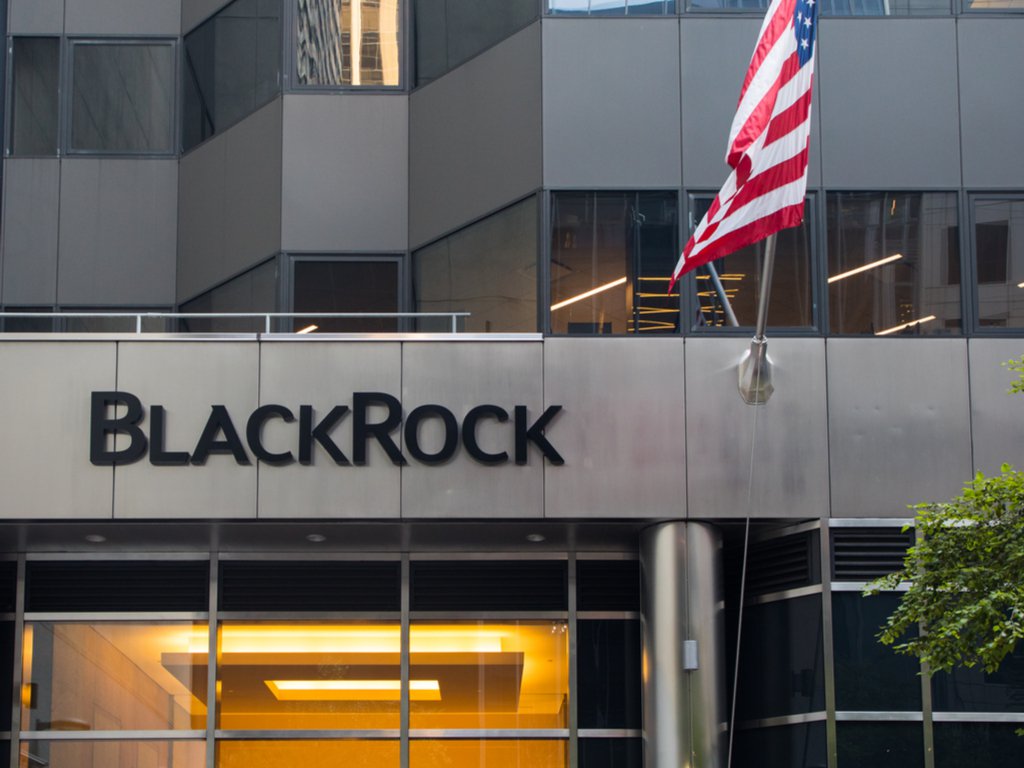
Blackrock stock market

BlackRock has 6.2 trillion reasons to downplay recession fears. | Source: Shutterstock

The billionaire investor made his comments to Handelsblatt. Mr. Fink, it seems, is not perturbed by the much-publicized “Fed Pause”:

“I see no signs of a global recession in the coming 12 months… The central banks have loosened their policy above all because of the weak fourth quarter of 2018. We will go through a phase in which things are not great but also not bad.”

This doesn’t mean he is unbridled in his bullishness:

 “But we are naturally in a late phase of the economic growth cycle.”

Clearly, Fink is hedging, aware that the stock market’s bull run is getting a little long in the tooth. Otherwise, investors might turn on him for being blind to growing equities risks.

Larry Fink Can’t Be Bearish When He Manages a $6.2 Trillion Oil Tanker of a Fund

Great stuff, but you can’t take these comments too seriously.

Yes, I do believe that Fink is bullish, but he doesn’t have a choice. BlackRock has $6.2 trillion in assets under management, and maneuvering during a period of thin liquidity would be practically impossible.

That’s a bit like an oil tanker that turns its engines off 20 miles before it wants to stop and has a turning radius of 2 miles. Fink will be screaming “buy!” before – and after – the next recession hits.

BlackRock owned some $60 billion of Apple and Microsoft stock at the end of 2018, along with roughly $50 billion worth of Amazon. This was after a stock market dip that was the worst since the Great Depression.

Engineering a stock market soft-landing is going to be extremely difficult. With the bulk of BlackRock’s institutional portfolio in financials and tech, they are the most overweight in areas of the highest liquidity, so as expected, they are well aware of their situation.

UK Client Outlines BlackRock’s Inflexible Approach

In fact, this problem becomes even more evident when you talk to their clients. Speaking on condition of anonymity, a current BlackRock client in the UK (~$80 million AUM) provided the following fascinating soundbites regarding the investing behemoth’s approach:

“Despite managing a segregated portfolio for us, BlackRock have been reluctant to vary our investment strategy from their global stance. For example, they were disinclined to discuss the introduction of ethical investments.”

This would tie into our hypothesis that the firm has quite an inflexible approach and only want to deal in the most liquid assets. Then there’s this:

“Questions about weakening our exposure to UK equities (Over 50% of our portfolio) have been met with BlackRock encouraging us to stay with our long term strategy of maximizing long term returns. We were dissuaded from converting our UK equities to cash due to the cost of doing it and the time it would take. “

On their own, these comments might tell us a little something about Fink’s firm, but in context, these are precisely the hallmarks we would look for to front-run a very dangerous liquidity situation that could be in the offing.

Jamie Dimon and Larry Fink Are Singing From The Same Hymnal
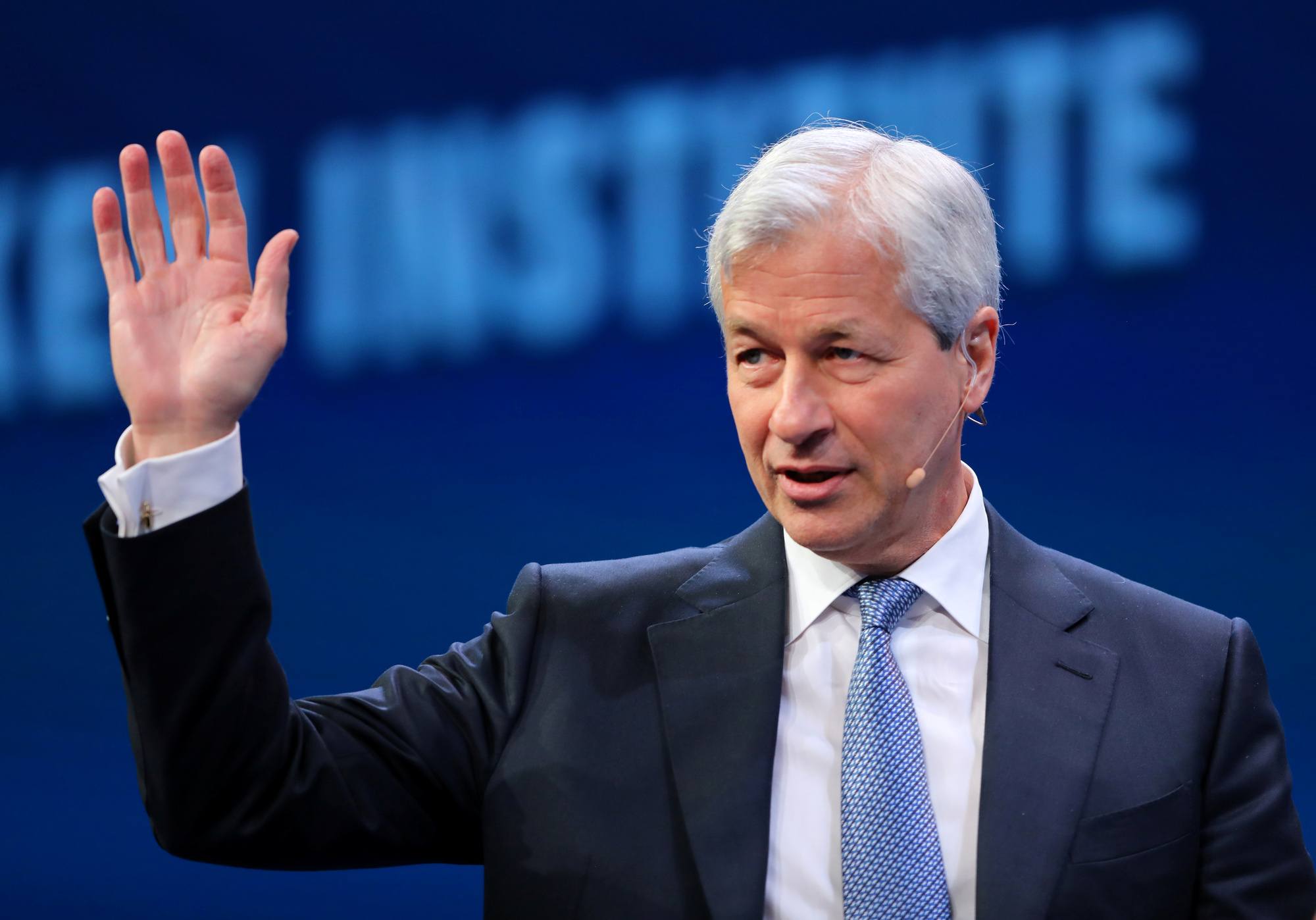
Jamie dimon jpmorgan stock market

Jamie Dimon and Larry Fink are singing the same tune on the stock market. | Source: REUTERS / Mike Blake

Larry Fink is a bit like a Bitcoin whale at this point. He can buy the dips and take profit when stock market momentum is strongly bullish.

The whale approach is excellent so long as the market eventually goes higher.

Jamie Dimon is peddling the same glass-half-full outlook as Fink, and we all know he would never have an agenda. BlackRock and JPMorgan wouldn’t be trying to manufacture late-stage liquidity to stabilize their heavily overbought positions, would they? Of course not! Billionaire Dimon is a blue-collar hero.

A more pronounced acceleration to the downside and BlackRock might look like Austin Powers making a three-point turn in his golf-cart.
Black(rock) monday: larry fink and the $6. 2 trillion liquidity conundrum


Published at Sun, 21 Apr 2019 21:15:03 +0000

Previous Article

Man Indicted in Israel over stealing of 9 Million USD worth of DASH

Next Article

Technical Indicator Signals That Bitcoin (BTC) May Be on the Verge of a Bull Run

You might be interested in …

Fedcoin Could Be Coming Soon, But Would It Really Challenge Bitcoin?

Watch out Bitcoin (and Cash), Fedcoin Could Be Coming Soon

The idea of Fedcoin,” a cryptocurrency sponsored by the U.S. government and managed by the Federal Reserve, has been around for quite some time. “Imagine that the Fed, as the core developer, makes available an open-source bitcoin-like protocol (suitably modified) called Fedcoin,” a Federal Reserve VP speculated already in 2015. The idea gained traction also in Europe in connection with the financial crisis in Greece, and was notably discussed in a “Eurocoin” context by former Greek Minister of Finance Yanis Varoufakis.

Earlier this year, Nobel Prize–winning economist Joseph Stiglitz said he believes “very strongly” that the U.S. could and should move to a digital currency and get rid of physical currency. While Stiglitz is persuaded that “the main use of bitcoin has been to circumvent tax authorities and regulation,” he appeared to be in favor of digital currency technology for government.

“The technology underlying bitcoin could fundamentally change the way we think of money,” said Campbell R. Harvey, a finance professor at Duke University’s Fuqua School of Business, in the Washington Post. “It is only a matter of time before paper money is phased out.”

Phasing out physical cash — the reserve of drug dealers and black marketers — would be one of the main advantages of a national cryptocurrency, according to Harvey, since it would make it far more difficult for criminals to hide and launder money if all transactions could be recorded on the government’s blockchain.

The potential for privacy isn’t considered a desirable feature for state-owned cryptocurrencies. On the contrary, as Harvey argues, the introduction of digital currencies would be partly motivated by the desire to eliminate the anonymity of cash. On the other hand, even in a future Fedcoin-like, all-electronic economy, it’s easy to predict that there would be a strong black economy on the side, powered by privacy-oriented cryptocurrencies, including bitcoin, ether, Monero and other emerging alternatives able to offer stronger privacy.

“Despite the negative press about bitcoin being used for illegal transactions, bitcoin is not anonymous, and criminals who use it often do not understand that their transactions are being recorded,” notes Harvey. In fact, while a bitcoin address isn’t explicitly associated with its owner, blockchain network analysis can often de-anonymize bitcoin users. To support law enforcement, companies like Chainalysis and Elliptic offer sophisticated blockchain network analysis tools and services to trace bitcoin transactions back to their participants and de-anonymize users.

In a recent presentation, Harvey defined Fedcoin as “a digital USD currency where the complete history of all transactions is visible to the Fed via a Fed blockchain.” That blockchain technology, initially thought of as a libertarian means to escape government control, could become a killer app for governments to have complete control over the citizens, and enforce compliance and tax collection, seems surreal to say the least.

Indeed, as Saifedean Ammous, an economics professor at the Lebanese American University, told bitcoin Magazine, “The importance of bitcoin is that it makes monetary policy and payment settlement according to predetermined software, free of third-party control. This defeats the point of having a central bank, and is anathema to central banks’ mission, to control monetary policy and supervise money flows.”

In the presentation, Harvey cited economist Kenneth Rogoff’s 2016 book “The Curse of Cash,” which proposes to gradually phase out cash, eventually leaving only small notes and coins in circulation, and move to electronic money, perhaps “a government-run version of the virtual currency bitcoin.”

While Rogoff is not persuaded that the “potentially disruptive” technology of today’s cryptocurrencies is sufficiently mature, he thinks a next-generation “bitcoin 3.0” could be a precursor to a government-controlled digital currency. “If the private sector comes up with a much better way of doing things, the government will eventually adapt and regulate as necessary to eventually win out,” says Rogoff.

Ammous disagrees with this sort of argument. “The only thing central banks can do with bitcoin is accumulate it as a monetary reserve asset. At some point, central banks around the world will start asking themselves if they might be better off holding bitcoin, with its apolitical monetary policy, than other countries’ national currencies.”

Central banks have as much to learn from bitcoin’s operation as horses have to learn from car engines. It’s a technology meant to displace central control of money.

“The Fedcoin idea was presented by David Andolfatto, Vice President, Federal Reserve Bank of St. Louis, at the first P2PFISY workshop that I organized at the Bundesbank in Frankfurt, 2015,” Paolo Tasca, executive director of the University College London Centre for Blockchain Technologies, told bitcoin Magazine.

“The idea of dispensing with cash in favor of alternative, more efficient means of payments is not new. Pre-1900 utopian thinkers devoted a lot of effort to finding a way to allow people to get rid of what Robert Owen called the ‘insane money-mystery.’ In more recent years, economists have also begun to study the implications of living in cashless societies, especially referring to the role of central banks and to the conduct of monetary policy.”

Other governments and central banks are considering their own versions of Fedcoin. Sweden’s central bank, the Riksbank, is considering whether the country should introduce a purely digital form of government-backed money, perhaps using distributed ledger technology (DLT). The proposed e-krona would be a digital complement to cash guaranteed by the state, and work as a means of payment, unit of account and store of value. It’s worth noting that usage of cash in Sweden is declining, and there are indications that the country could go entirely cashless in five years.

The Riksbank isn’t the only central bank to consider issuing its own digital currency. The central banks of Singapore, Papua New Guinea, Canada and others are considering similar moves. A recent research paper issued by the Bank of Canada, which considers a possible bitcoin standard similar to the gold standard, is especially interesting. A discussion paper published by the Bank of Finland, which describes bitcoin as a revolutionary, marvelous economic system, could indicate that the bank is considering with interest the possibility to someday launch its own digital currency. Even China’s central bank is cautiously testing a digital currency.

“Other central banks (Bank of England, Bank of Canada and European Central Bank, among others) are studying the idea of a Central Bank Digital Currency (CBDC) as a non-ordinary monetary tool that could improve the central banks’ ability to stabilize inflation and the business cycle, and as a new payment channel that could permit tracing the network of payments and record the payment history of each individual,” added Tasca.

Another reason for governments to like the idea of a national cryptocurrency, according to both Harvey and Rogoff, is the possibility to strengthen the power of monetary policy to help manage the economy, for example by making it easier to impose negative interest rates.

Harvey notes that, were the Federal Reserve to adopt its own cryptocurrency someday, it will become a major (and far less volatile) competitor to bitcoin and other digital currencies. “In fact, it’s not clear whether [F]edcoin would want that competition, and the Fed is in a position to impose a regulatory environment that tilts the playing field,” warns Harvey.

“So watch out, bitcoin.”


The post Fedcoin Could Be Coming Soon, But Would It Really Challenge Bitcoin? appeared first on Bitcoin Magazine.