One of the biggest mysteries in the cryptocurrency world at the moment is the location of the vast USD reserves meant to be backing Tether. The stablecoin is used by many exchanges as a proxy for fiat in trading pairs which makes its solvency a critical issue at the heart of the entire ecosystem. Now, new research indicates that we might be getting closer to getting answers about the operation of USTD.
Also Read:
Tether’s Primary Reserve Bank Found?
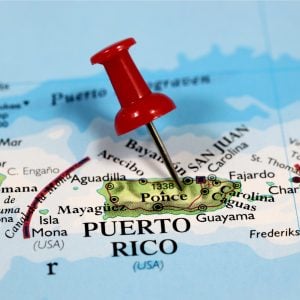 Bitmex Research has released an update today to its deep into Tether from last month. It shows that newly released data from Puerto Rico supports the speculation that Noble International Bank could be Tether’s primary reserve bank and that the island is a major hub for cryptocurrency business.
The Commissioner of Financial Institutions of Puerto Rico just aggregate financial-system data for 2017. Bank deposits in the International Financial Entities category, which includes Noble Bank, were $3.3 billion, up 248% in the quarter ended December 2017. Total assets in the category were $3.8 billion, up 161% in the quarter.
The researchers that this “extraordinary growth coincides with a large increase in value of cryptocurrency assets, which has likely resulted in large cash inflows into cryptocurrency-related banks. Over the same period, the value of Tether in issue has increased by 215% to $1.4 billion.” They thus conclude that: “This new data supports the thesis in our recent piece on Tether, in which we speculated that Noble Bank is Tether’s primary reserve bank.”
Noble International Bank
 When it promoted itself to the FX and OTC industry, Noble Bank International (NBI) that: “The state-chartered bank, based in the US Territory of Puerto Rico, is regulated under US federal law. NBI is a non-fractional reserve bank. This means that NBI does not lend or re-hypothecate client assets; rather, assets are legally segregated in the name of the client and bankruptcy-remote, held at NBI’s global custodian, BNY Mellon.” If this is also true under the same entity that serves Tether, it would suggest the stablecoin has direct exposure to US regulators.
As Bitmex Research pointed out in their previous , there is also anecdotal evidence for a possible link between the bank and the stablecoin. The founder and CEO of Noble, John Betts, was behind the 2014 Sunlot Holdings move to take over and potentially rescue MtGox. And Sunlot was backed by Brock Pierce, one of the founders of Tether.
A representative of the bank only had this to say to news.bitcoin.com today: “As a matter of company policy, Noble doesn’t disclose client information.”
Should the cryptocurrency community even want Tether’s reserve bank to be exposed? Share your thoughts in the comments section below!
Images courtesy of Shutterstock.
Do you like to research and read about bitcoin technology? Check out ’s page for an in-depth look at bitcoin’s innovative technology and interesting history.
The post appeared first on .