The company said that the new Crypto Index tracks the performance of some of the “largest and most liquid” cryptocurrencies, and is denominated in U.S. dollars.
The index publishes, a real-time spot price that is updated every second, and a daily reference price that is published once a day around 10:00 a.m. Hong Kong time.
It further lists spot prices on 17 top cryptocurrencies by market capitalization, as well as a combined Bitmain Big 10 Index (BLC10) based on 10 large-cap cryptos. The Big 10 is weighted by market cap and its member cryptos represent more than 90 percent of the wider market’s value.
In a methodology overview, Bitmain said the product was “developed to provide institutional and retail investors with a transparent, timely, methodology-based, and investable benchmark of the most active cryptocurrencies traded globally,” explaining:
“The Index is solely owned by Bitmaintech Pte. Ltd. and is administered by Bitmain Index Operating Committee (‘BIOC’) which will conduct regular review and engagement with external stakeholders for feedbacks to keep the Index methodology as updated and representative as possible.”
BCI forms the latest branching out for Bitmain as the company undergoes a significant period in its history.
Regarding hard forks, the BCI will treat fresh forks of cryptocurrencies covered using a ten-day grace period. The overview states:
“For the purpose of Index calculation and dissemination, a hard forked new token will be measured against a set of criteria on its 10th-day post-fork to determine whether it is a ‘significant’ one.”
Other requirements include the coin “trading on at least 2 constituent exchanges” with “at least 200 daily trades in the new token vs. USD or equivalent pairs on all constituent exchanges.”
Bitmain is sourcing its pricing data – that’ll cover the top 17 currencies – from a collection of exchanges.
Latest on Bitmain
Earlier this year, there were reports that the Crypto mining giant was planning for an IPO, but doubts still persist whether such an event will take place in the near future. The leading crypto mining giant has not been without its own share of controversies.
Just for a reminder, a lawsuit was filed, earlier this month, against Bitmain in the U.S. district court of Northern California. Gor Gevorkyan, the lead plaintiff in this case, used an Antminer S9 manufactured by Bitmain. Now he claims that the device mined bitcoin for the benefit of the crypto mining giant and not the intended user and he is claiming nearly $5 million in damage.
During the August this year, Bitmain, as one of the leaders of the mining industry, announced that its mining pool BTC.com is and will include Ethereum and Ethereum classic mining pools in the nearest future.
BTC.com was already widely known for its relative dominance over the bitcoin network. It was then said that this Bitmain-backed pool mined 21 % of all bitcoin blocks the previous year.
In September Bitmain has finally decided to by filing an IPO on the Hong Kong Stock Exchange. After being already embroiled in several controversies in the past, they said they were opening their books. A sneak-peek into the company’s books shows a massive growth of the company in the last few years.
Bitmain Technologies has been mulling for huge fundraising in the past. However, the application is currently under by HKEX and it remains unclear about the valuations at the time of listing. Let’s take a look into the costs and revenue structure and other details of the company, as provided.
Bitmain Revenues and Profits
No doubt that Bitmain is the market leading for crypto-mining equipment grabbing a whopping 75% of the total market share. Bitmain’s revenues and profits surged at an unprecedented rate during the crypto-mania of the last year.
In 2015, Bitmain revenues stood at $137.3 million which shot to $2.5 billion by 2017 end. This seems like a blistering annual compounded growth rate of 328% over the last two years. Additionally, by June 30, 2018, this year’s revenue has already past of the last entire year, standing at $2.8 billion.
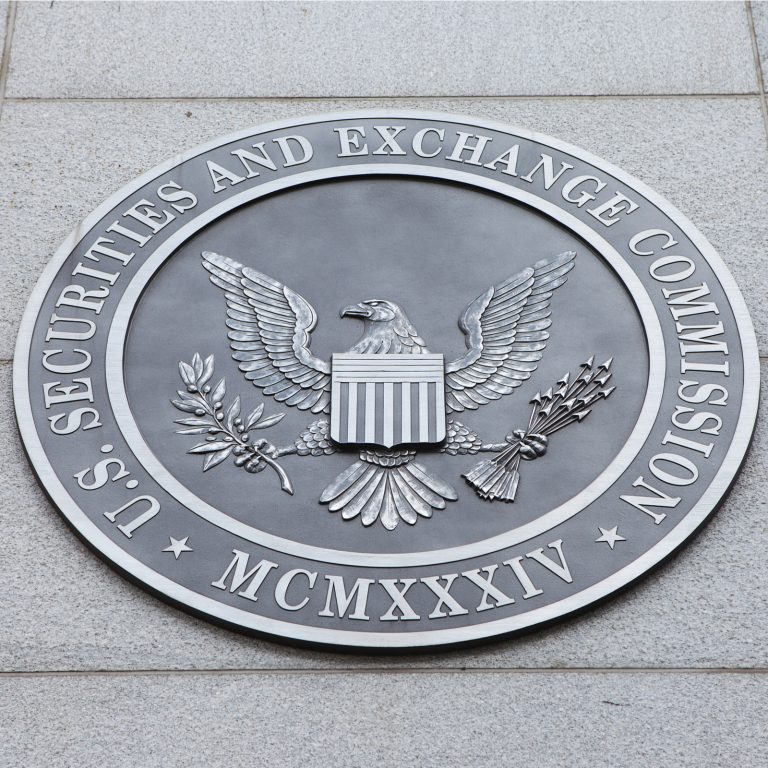
Jay Clayton, the chairman of the U.S. Securities and Exchange Commission (SEC), recently discussed the current regulatory climate surrounding initial coin offerings (ICOs). Clayton emphasized that all ICOs must register with the SEC to ensure compliance with U.S. law.
Also Read:
Requirements for Regulatory Compliance
 The SEC chairman reiterated that the SEC does not see bitcoin as a security. However, it does view the tokens that are offered in many ICOs as securities. “If you’re going to offer and sell securities, you have to do that in compliance with our laws,” Clayton said.
Recent regulatory moves by the SEC against ICOs “further emphasize that our securities laws do apply to the ICO space,” he . “If people are going to raise money using initial coin offerings, they either have to do so in a private placement, or they have to register with the SEC … when you register with the SEC, you’ve got to provide financial statements and disclosure along the lines that we would expect.”
When asked if all ICOs are noncompliant, Clayton responded by simply noting that he hasn’t seen any ICOs register with the SEC. He acknowledged that ICOs “conducted off-shore” or those that are “pursuant to a private placement exemption” could fall outside of the SEC’s regulatory purview. However, he added that “to the extent that you’ve conducted a public offering in an ICO, it’s noncompliant.”
No Comment on Timing of ETF
 When asked about the proposed Vaneck bitcoin exchange-traded fund (ETF), Clayton declined to “comment on timing.” However, he asserted that the SEC has been clear about several matters of regulatory concern. Among the issues it has identified are “whether there is reliable price information on trading markets.” The SEC has also looked at concerns about custody, particularly “whether people who hold those assets can count on those assets to be there in the same way you can with other assets that underlie an ETF.”
In a recent appearance on the “What bitcoin Did” , SEC Commissioner Hester Peirce discussed the SEC’s decision to reject nine proposed bitcoin ETFs earlier this year. She stated that the the commission has a tendency to “sometimes look at crypto and … say, ‘well it is very different from any other asset class’.” However, she added that while the notion is “to some degree true … there are similarities with other asset classes if you look at something like gold.”
Do you think that ICOs will begin to register with the SEC as cryptocurrency becomes more mainstream? Share your thoughts in the comments section below.
Images courtesy of Shutterstock
At bitcoin.com there’s a bunch of free helpful services. For instance, have you seen our page? You can even lookup the exchange rate for a transaction in the past. Or calculate the value of your current holdings. Or create a paper wallet. And much more.
The post appeared first on .