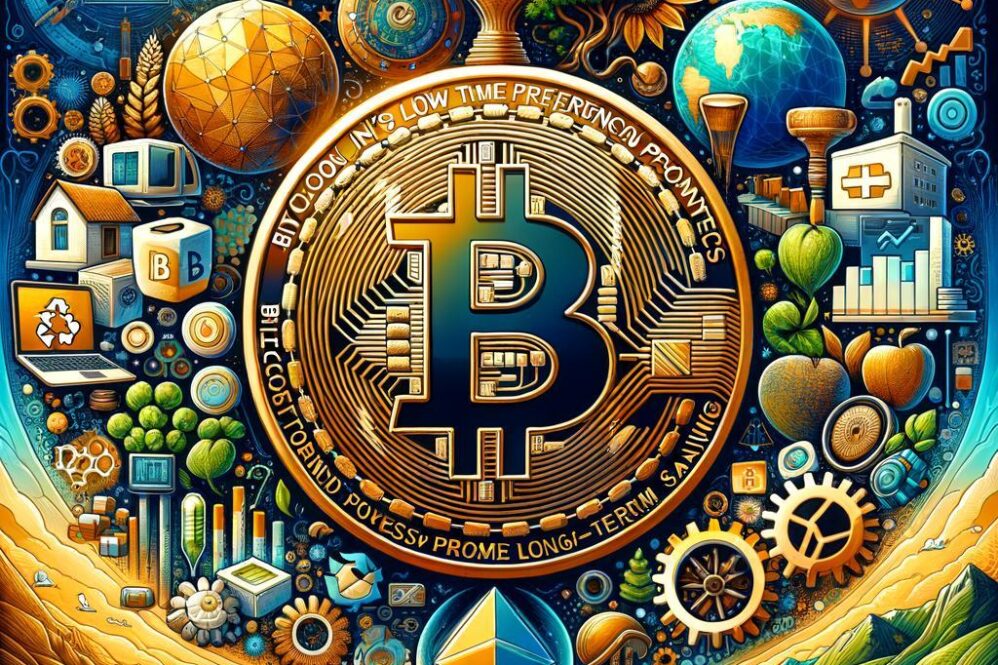
bitcoin, frequently enough described as digital gold, is distinguished not only by its decentralized nature and scarcity but also by its inherent encouragement of low time preference behavior. Unlike conventional fiat currencies, which can be subject to inflationary pressures and rapid spending incentives, bitcoin’s fixed supply and obvious protocol promote long-term saving and value preservation. This article examines how bitcoin’s structural characteristics foster patience and delayed gratification among its users, positioning it as a financial asset conducive to sustainable wealth accumulation over time.
Understanding bitcoin’s Low Time Preference and Its Economic Implications
bitcoin’s distinctive design encourages a low time preference among its users. Unlike fiat currencies that often experience inflation, bitcoin’s fixed supply and predictable issuance schedule incentivize holders to preserve their wealth rather than spend promptly. This inclination towards patience and long-term value retention fosters an economic surroundings where saving and investment take precedence over instant consumption.
Adopting a low time preference mindset leads to several important economic behaviors:
- Increased capital accumulation: Users are motivated to build reserves, strengthening financial stability.
- Higher productivity investment: Resources are more likely to be allocated to projects with long-term growth potential.
- Reduced volatility in spending: Stabilized demand helps create more predictable markets and sustainable price structures.
| Aspect | bitcoin | Traditional Fiat |
|---|---|---|
| Supply Growth | Fixed & predictable | Variable & inflationary |
| User Incentive | Save & hold | Spend quickly |
| economic Effect | Long-term wealth building | Short-term consumption |
The Role of bitcoin in Encouraging Delayed Consumption and Financial Discipline
bitcoin’s inherent design encourages individuals to develop a longer-term perspective when it comes to their finances. Unlike traditional fiat currencies, which often experience inflationary pressures that erode purchasing power over time, bitcoin’s fixed supply of 21 million coins creates a natural incentive to postpone immediate spending. This scarcity drives users to value future consumption more highly, fostering an environment where saving becomes an attractive, rational choice.
The concept of low time preference in economics refers to valuing future rewards more than immediate gratification. bitcoin’s deflationary characteristics align perfectly with this principle, compelling holders to resist impulsive purchases in favor of accumulating wealth. This shift in mentality promotes disciplined financial habits and the cultivation of savings portfolios geared toward long-term growth rather than short-term consumption.
To illustrate the behavioral impact, consider the following comparison between bitcoin holders and traditional fiat users:
| Aspect | bitcoin Holders | Fiat Currency Users |
|---|---|---|
| Inflation Impact | Limited supply, deflationary | Subject to inflation |
| Consumption Preference | Delayed, future-focused | Immediate or near-term |
| financial Discipline | Higher, encourages saving | Lower, prone to spending |
- Enhanced patience: bitcoin motivates users to resist instant gratification.
- Increased saving rates: The expectation of asset appreciation encourages accumulation.
- Greater financial duty: Users tend to plan and budget more strategically.
Long-Term Wealth Accumulation Strategies Using bitcoin’s Saving Incentives
bitcoin inherently encourages a mindset of patience and deferred gratification through its fixed supply and predictable issuance schedule. Unlike traditional fiat currencies subject to inflation and central bank policies, bitcoin’s scarcity creates a powerful incentive to hold rather than spend. this naturally cultivates a low time preference, meaning users prioritize future wealth accumulation over immediate consumption, which is fundamental for sustained financial growth.
Key long-term wealth accumulation benefits linked to bitcoin’s incentives include:
- Inflation resistance: Preserves purchasing power over time by protecting against devaluation.
- Compounding value: Holding bitcoin allows wealth to possibly increase as adoption and demand grow.
- Security and decentralization: Reduces counterparty risk, making it a reliable store of value.
To better understand how bitcoin compares with traditional assets in promoting long-term savings,consider the following simplified comparison:
| Aspect | bitcoin | traditional Savings |
|---|---|---|
| Inflation Impact | Minimal due to fixed supply | High exposure,erodes value |
| Long-Term Growth Potential | High,tied to adoption trends | Generally low,fixed interest rates |
| Access and Liquidity | Global,24/7 market access | Subject to banking hours and regulations |
Practical Recommendations for Integrating bitcoin into Personal Financial Planning
When incorporating bitcoin into yoru personal financial strategy,prioritize a disciplined approach that emphasizes long-term value preservation rather than short-term speculation. Given bitcoin’s inherent scarcity and deflationary design, it acts as a hedge against inflation while encouraging holders to delay immediate consumption. Start by allocating a modest percentage of your portfolio to bitcoin to balance risk while benefiting from its unique qualities.
To optimize the benefits of bitcoin’s low time preference, consider the following strategies:
- Dollar-cost averaging: Regularly invest fixed amounts to minimize market volatility impacts.
- cold storage solutions: Secure your holdings offline to protect long-term wealth from digital threats.
- Periodic portfolio reviews: Reassess your bitcoin allocation annually as your financial goals evolve.
| Financial Goal | Recommended bitcoin Allocation | Risk Adjustment |
|---|---|---|
| Wealth preservation | 5-10% | Low |
| Growth & Savings | 10-20% | Moderate |
| Aggressive Investment | 20%+ | High |
Q&A
Q: What does “low time preference” mean in the context of bitcoin?
A: Low time preference refers to the tendency to prioritize long-term rewards over immediate gratification.In the context of bitcoin, it means users prefer to save or hold their bitcoin for extended periods rather than spend or sell it quickly.
Q: How does bitcoin encourage a low time preference among its users?
A: bitcoin’s fixed supply and deflationary nature incentivize users to hold onto their coins as a store of value. Since bitcoin is designed to increase in value over time, users are motivated to save rather than spend immediately, fostering long-term financial planning.
Q: Why is low time preference important for saving?
A: Low time preference leads individuals to prioritize future benefits over present consumption, which is essential for accumulating savings and making investments that yield long-term growth. It promotes financial discipline and stability.Q: In what way does bitcoin’s protocol reinforce low time preference behaviors?
A: The protocol enforces a capped supply of 21 million Bitcoins, creating scarcity. This scarcity drives demand for holding bitcoin as a limited asset, encouraging users to adopt a long-term perspective rather than seeking quick profits through frequent spending.
Q: How does bitcoin’s low time preference contrast with traditional fiat currencies?
A: Unlike bitcoin, traditional fiat currencies often experience inflation, which erodes purchasing power over time. This encourages higher time preference-spending now rather than saving-because the value of fiat money diminishes. bitcoin’s deflationary characteristic counters this effect by preserving and potentially increasing value.
Q: What are some broader economic implications of bitcoin promoting low time preference?
A: If widely adopted, bitcoin’s low time preference could lead to increased saving rates and capital formation, fostering economic stability. It may encourage individuals and businesses to focus on long-term investments and sustainable growth rather than short-term consumption.
Q: Can bitcoin’s low time preference influence individual financial behavior?
A: Yes, individuals holding bitcoin often develop habits of delayed gratification and improved financial planning.the expectation of future value appreciation can reinforce saving and reduce impulsive spending.
Q: Are there any challenges to bitcoin’s role in promoting low time preference?
A: Despite its design incentives, external factors such as market volatility and speculative trading can sometimes encourage higher time preference behaviors. Additionally,not all users may fully understand or embrace the long-term savings beliefs.
Q: Summary: Why is bitcoin considered a tool for promoting long-term saving?
A: bitcoin’s fixed supply, deflationary design, and growing acceptance position it as an asset that rewards patience. Its low time preference nature encourages users to save and invest over the long term, contrasting with inflationary fiat systems and fostering economic resilience.
In Retrospect
bitcoin’s inherent low time preference encourages users to prioritize long-term value over immediate consumption. By design, its fixed supply and decentralized nature foster a savings mindset, promoting financial discipline and wealth preservation. As more individuals and institutions recognise these characteristics, bitcoin’s role as a store of value and a catalyst for sustainable financial behavior is likely to strengthen, underscoring its meaning in the evolving economic landscape.