bitcoin’s First Real-World Purchase Context and Significance
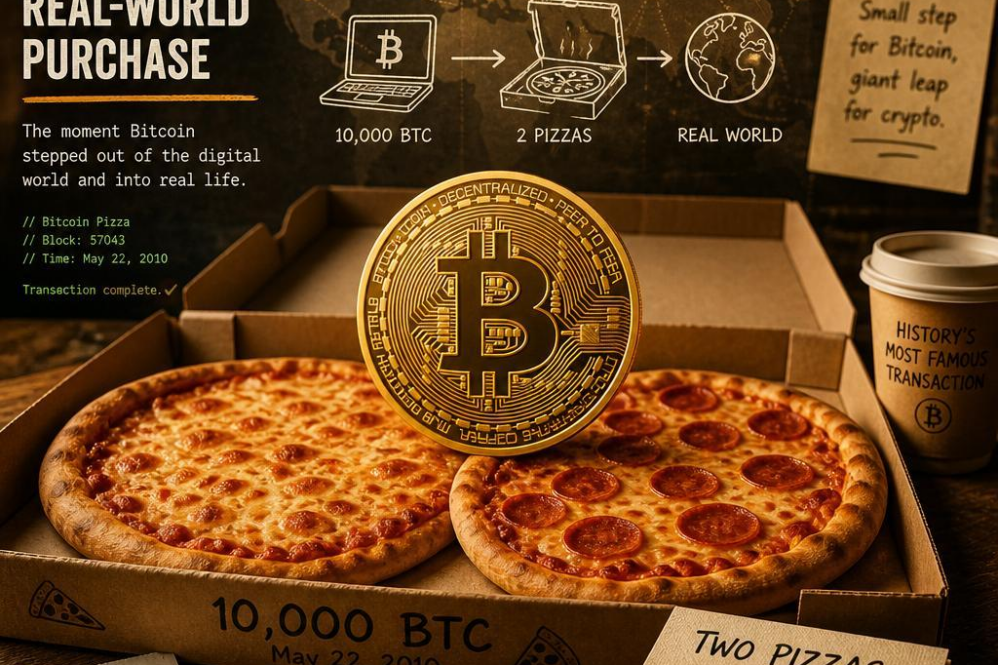
On May 22, 2010, a historic transaction took place that would forever change the way the world viewed digital currency. A programmer named Laszlo Hanyecz famously exchanged 10,000 bitcoins for two large pizzas, marking the first documented real-world purchase using bitcoin. This event is more than a quirky anecdote; it embodies the tangible value of bitcoin beyond theoretical discussions, serving as a pivotal moment that showcased its practical applicability. At the time, bitcoin was still an experimental concept, raising questions about its usability as a medium of exchange in everyday life.
The significance of this purchase extends beyond the simple act of buying food. It crystallized the concept of bitcoin being a viable currency capable of facilitating peer-to-peer transactions without intermediaries. This initial real-world usage provided a benchmark, illustrating a proof-of-concept that value coudl be transferred digitally without customary banking structures. It also sparked a surge of interest among tech enthusiasts and early adopters, who began to explore bitcoin as both a currency and an emergent technology with untapped potential.
Reflecting on the purchase in today’s context reveals a engaging viewpoint on cryptocurrency’s growth. At current market values, those 10,000 bitcoins would be worth millions, underscoring the extraordinary recognition of bitcoin’s value over time. Here’s a brief comparison of that initial transaction’s value then and now:
| Timeframe | bitcoin Amount | Value in USD |
|---|---|---|
| May 22, 2010 | 10,000 BTC | ~$41 (price of two pizzas) |
| 2024 (approx.) | 10,000 BTC | Millions of USD |
- Historical milestone: The first concrete example of bitcoin being used in commerce.
- Proof of concept: Showed digital currencies could function similarly to fiat money.
- Inspirational trigger: Motivated a global community to innovate around blockchain technology.
The Transaction That Changed Cryptocurrency History
In May 2010, a seemingly ordinary act of ordering pizza became a landmark moment for the digital currency world. laszlo Hanyecz, a programmer and bitcoin enthusiast, made the first real-world transaction using bitcoin by exchanging 10,000 BTC for two pizzas. This transaction is often celebrated as the moment bitcoin transitioned from a theoretical concept into a usable currency with tangible value. What started as an experimental trade has as skyrocketed in symbolism,highlighting the evolution of cryptocurrencies from niche tech experiments to mainstream financial instruments.
This exchange underscored the foundational cryptocurrency principle: peer-to-peer transaction without intermediaries. Before this, bitcoin’s value was largely speculative and confined to online communities. The pizzas not only satisfied hunger but also vindicated the idea that bitcoin could be used for everyday purchases. This event also serves as a reference point for understanding bitcoin’s dramatic appreciation over time,sparking countless discussions on value dynamics and market adoption within crypto circles.
| Date | BTC Spent | Item Purchased | Estimated Value Today* |
|---|---|---|---|
| May 22, 2010 | 10,000 BTC | 2 Pizzas | Millions of USD |
| *Value varies with market fluctuations | |||
- Pioneering Use Case: Proved bitcoin’s potential as a medium of exchange.
- Community Impact: Strengthened confidence and participation within early adopters.
- Cultural Icon: Forever etched in crypto history as “bitcoin Pizza Day.”
Economic Implications of Valuing bitcoin Through Tangible Goods
Assigning direct tangible value to bitcoin offers an intriguing lens through which to examine the cryptocurrency’s initial economic footprint. the famous transaction where 10,000 BTC purchased two pizzas reveals the stark contrast between the digital and physical worlds’ market perceptions at the time.This historic event isn’t just a quirky anecdote-it underscores the early volatility and speculative nature of bitcoin’s valuation before widespread acceptance and regulatory clarity emerged.
Understanding this landmark purchase highlights how bitcoin began as a purely speculative asset, struggling to anchor itself in everyday economic activities. When bitcoin’s worth was tied to physical goods, it revealed several economic implications:
- Relative Scarcity: The large amount of BTC needed to buy simple goods illustrated bitcoin’s then-extreme undervaluation and abundant supply.
- Market Fluidity: Tying bitcoin to tangible assets brought liquidity challenges as owners hesitated to trade what was viewed as a potential high-value investment.
- Price Finding: Physical purchases served as crucial reference points for assessing bitcoin’s real-world purchasing power beyond abstract digital trading platforms.
| Aspect | Impact | Modern Relevance |
|---|---|---|
| Volatility | Extreme price fluctuations made valuation arduous | Still a major factor in bitcoin’s investment appeal |
| Adoption | Slow as goods-for-bitcoin transactions were rare | Increasing but limited by merchant acceptance |
| Economic Utility | Initially minimal beyond speculation | Growing with DeFi and real-world payment integrations |
This tangible valuation moment, though primitive, paved the way for essential economic discussions on bitcoin’s role as both currency and asset. It also exposed the complexities of integrating a decentralized digital currency into traditional economic frameworks, a challenge that continues to evolve.
Lessons Learned from the Early bitcoin Pizza Purchase
One of the most important takeaways from bitcoin’s inaugural tangible transaction is the profound impact of perceived value versus real value. At the time of the pizza purchase,10,000 BTC seemed like a reasonable price for two pizzas – yet today,that amount translates into millions of dollars. This highlights how volatile and dynamic the valuation of cryptocurrencies can be, especially in their nascent stages. Early adopters frequently enough risk uncertainty, navigating a landscape where digital assets are still seeking mainstream trust and utility.
Another lesson emerges in the realm of user adoption and practical utility. The transaction wasn’t just about the money; it was about demonstrating that bitcoin could function as a real-world payment method. Until a currency or asset is used in everyday transactions, its broader acceptance remains theoretical. This pioneering payment illustrated the essential step of bridging the gap between digital currency networks and everyday consumers,proving that adoption grows not just from speculation but from tangible use cases.
the pizza purchase underscores the importance of long-term perspective over short-term gains. While the transaction is often recounted with amusement and hindsight regret given the currency’s skyrocketing value afterward,it epitomizes the pioneering spirit of embracing innovation despite uncertainty. The lesson here for investors and innovators alike is to maintain vision and patience, recognizing that disruptive technologies often require years-sometimes decades-to realise their full potential and transform industries.
Analyzing bitcoin’s Evolution Since Its Initial Use in Commerce
In the annals of cryptocurrency history, few moments are as iconic as the first documented transaction using bitcoin to purchase a tangible good. This pivotal event, where 10,000 BTC were exchanged for two pizzas, marked a profound milestone that validated bitcoin’s utility beyond a digital curiosity. At the time, this might have seemed like an extravagant expenditure, but it demonstrated the foundational concept that bitcoin could function as a medium of exchange in everyday commerce.
Since that groundbreaking transaction, bitcoin’s journey has been marked by exponential growth and increasing adoption. Initially, bitcoin was mostly mined and traded among a small community of enthusiasts, frequently enough limited to virtual exchanges. However, over the years, the ecosystem expanded dramatically to include:
- Retail acceptance in select stores and restaurants
- Regulatory scrutiny and evolving legal frameworks worldwide
- progress of refined digital wallets and payment processors
- Integration into institutional portfolios and financial products
| year | bitcoin price (USD) | Significant Milestone |
|---|---|---|
| 2010 | $0.003 | First pizza purchase documented |
| 2013 | $1,000 | Major media coverage and price surge |
| 2017 | $19,000 | Widespread public attention and peak price |
| 2024 | $30,000+ | Institutional adoption and mainstream integration |
This trajectory underscores bitcoin’s conversion from a niche digital token used for novelty transactions into a globally recognized financial asset. The evolution illustrates not just technological advancement, but a shift in how society perceives money, ownershipand trust. Each stage of growth continues to build on that very first exchange, proving the viability of cryptocurrency as more than an experiment but as a functional, revolutionary force in commerce.
Strategic Recommendations for Utilizing Cryptocurrency in Everyday Transactions
Embracing cryptocurrency for everyday transactions requires a strategic approach that balances convenience, security, and scalability. One key proposal is integrating user-friendly payment solutions that abstract the technical complexity of crypto. By employing wallets and point-of-sale systems optimized for instantaneous payments, businesses can facilitate smoother customer experiences and encourage higher adoption rates. additionally, choosing cryptocurrencies with low transaction fees and fast confirmation times is crucial to maintaining practicality in daily use.
Security remains paramount when handling digital currencies in real-world transactions. It is essential to implement multi-layered security protocols such as two-factor authentication, hardware walletsand encrypted interaction channels. Merchants should also maintain transparent refund and dispute resolution policies tailored to the unique aspects of cryptocurrency payments. Educating consumers on safe wallet practices and the irreversibility of transactions enhances trust and reduces the risk of fraud or loss.
Key factors for effective crypto adoption in retail environments include:
- Choosing stable and widely accepted cryptocurrencies to minimize price volatility risks
- Utilizing third-party payment processors that offer seamless fiat conversion options
- Incorporating loyalty rewards and incentives to enrich user engagement and retention
- Regularly updating compliance frameworks aligned with evolving regulatory requirements
| Recommendation | Benefit | Considerations |
|---|---|---|
| Instant payment gateways | Reduces wait time for transaction confirmation | Supports multiple cryptocurrencies |
| Hardware wallet integration | Enhances payment security and protects user funds | Requires initial setup and user education |
| Reward programs | Encourages repeat business and loyalty | Design must align with cryptocurrency volatility |