March 29, 2026

Capitalizations Index – B ∞/21M

Bitcoin’s Early 2018 Woes Written in the Stars and Moon?

Bitcoin’s early 2018 woes written in the stars and moon?

Bitcoin’s Early 2018 Woes Written in the Stars and Moon?

bitcoin has prided itself on not being moved by the normal market manipulators, such as global strife and socioeconomic activities. However, there are times when it fluctuates for obscure reasons.

According to some experts, the January downturn could be no surprise as he attributes it to the Lunar New Year and the significance it carries for the Chinese.

The lead up to Chinese New Year is one of high spending as people book all sorts of travel and holidays, not to mention buy presents. Thus, just like Christmas and December is a time for spending in the West, January has a similar pattern in the east.

Blame it on the moon

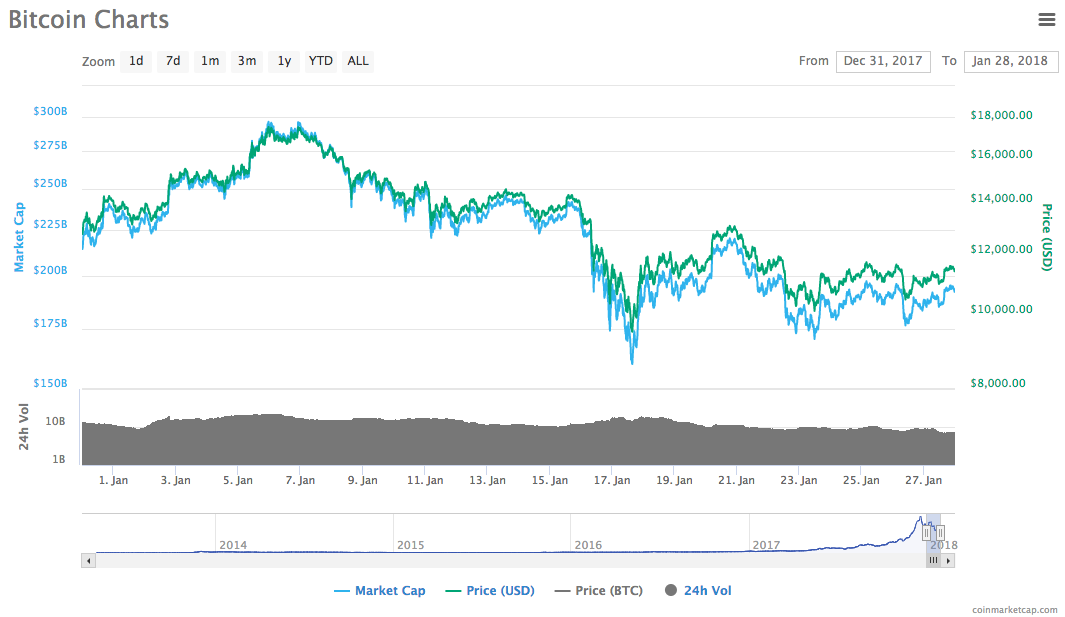
With bitcoin’s value almost halving from $20,000 in the middle of December to $10,000 at its worst in January, Wallin is both unperturbed or surprised.

“The January drop is a recurring theme in cryptocurrencies as people celebrating the Chinese New Year, aka Lunar New Year, exchange their crypto for fiat currency,” explains Alexander Wallin, CEO of trading social network SprinkleBit, as quoted by Bloomberg.

“The timing is about four to six weeks before the lunar year when most people make their travel arrangements and start buying presents,” he added.

The holiday takes place on Feb. 16; however, the build-up is where people start to spend their money. And with the Chinese population heavily vested in Bitcoin, it has a huge role to play on the movement of the market.

The thoughts are that people have been taking their profits into the build-up of the New Year, turning their bitcoin into fiat currency to use for gift buying.

Strange effects

bitcoin is steadfast in the face of other market influences, the likes that are seen to disturb the traditional stock market, etc. But this theory, if it is to be believed, highlights the way in which bitcoin moves separately from other assets.

In August, when tensions between Donald Trump and Kim Jong Un were reaching a fever pitch, the entire global market fell by an average of one percent. However, bitcoin was one of the only assets to report growth during that period.

A pattern emerging

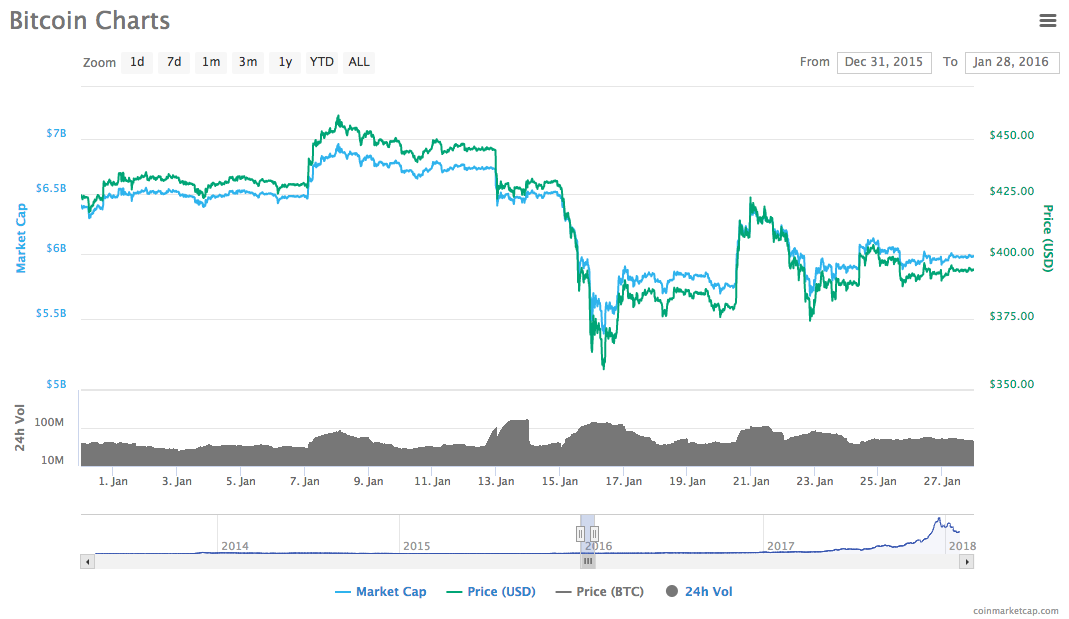
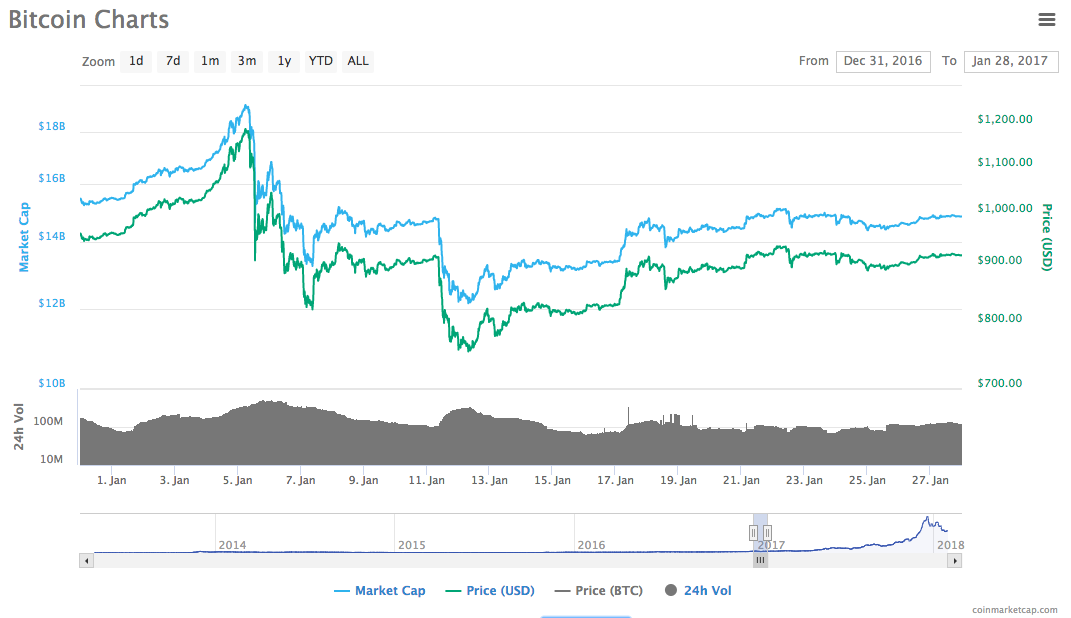
While it may be hard to blame the market decline on something as otherworldly as the moon, there is some evidence to suggest that January is not a good time to be invested in bitcoin.

Early 2015
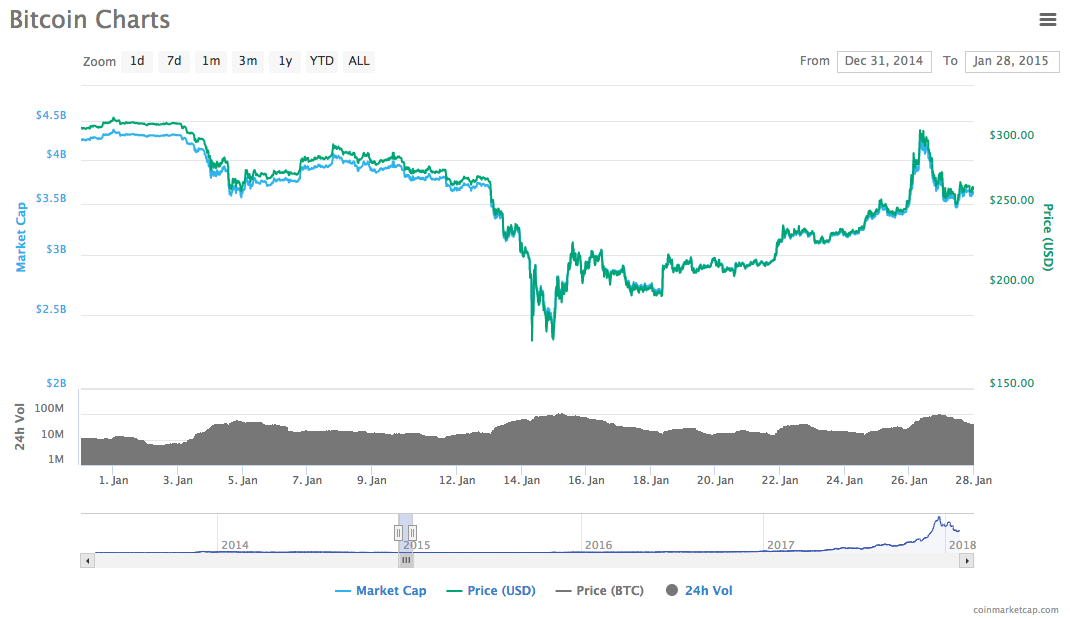
Chart1

Early 2016

Chart2

Early 2017

Chart3

Early 2018

Chart4

There are not too many patterns that have emerged in bitcoin’s price graph over its short lifespan. However, there does seem to be some sort of correlation between this time of year.

What is at least pleasing, if there is a pattern, is that a big rally often follows the January dip.

Published at Sun, 28 Jan 2018 17:31:15 +0000

bitcoin[wpr5_ebay kw=”bitcoin” num=”1″ ebcat=”” cid=”5338043562″ lang=”en-US” country=”0″ sort=”bestmatch”]

Previous Article

IMF’s Lagarde Says That Bitcoin Mining Consumes Too Much Electricity

Next Article

Russia Plans to Regulate Production and Control of Cryptocurrencies

You might be interested in …

IcyWallet Offers a Cold Storage Bitcoin Wallet for the Visually Impaired

IcyWallet Offers a Cold Storage Bitcoin Wallet for the Visually Impaired

Safely storing cryptocurrency can be confusing, especially for newcomers to the space, but for people with visual impairments, finding an accessible option is especially challenging.

IcyWallet is a cold wallet with a difference: it is designed to make it as simple as possible for people with visual impairments to manage offline bitcoin storage.

The project got its start when Adam Newbold and his wife took a braille reading course as a learning activity. Shortly afterward, Newbold struck up a Reddit conversation with a blind bitcoin enthusiast who expressed frustration with the lack of support for the blind community from bitcoin software developers. None of the wallets worked correctly in his reader and he required help to perform any functions with bitcoin.

“I learned even more about practical accessibility issues and the real-world challenges that the blind encounter every day,” Newbold told bitcoin Magazine. “This turned into a stronger personal interest that merged with my existing interest in bitcoin when I realized that there are pretty big opportunities for improving the state of accessibility in bitcoin software.”

He started a campaign in October 2017 to create a braille version of the original bitcoin white paper. That campaign was successful and the document is now available for anyone wanting to get a copy.

That first success led Newbold to create the IcyWallet. His goal is to provide a 100 percent free and open source bitcoin hardware wallet for the blind. Work is currently underway with early milestones achieved, the progress of which is tracked on their website.

“One of the points you hear a lot about bitcoin is that you can ‘be your own bank,’ which always sounds fun and empowering (and it is!),” said Newbold. “But it also means that you need to take responsibility for all of the things that banks do, like keeping your funds secure.”

He explained that even though today’s technology has solved a substantial number of issues that people with disabilities face, when it comes to bitcoin and security, there are still several missing pieces.

“There isn’t any kind of hardware wallet on the market today that’s fully accessible to people with blindness,” said Newbold, “and there are barriers to setting up secured, air-gapped solutions. This leaves people with blindness limited choices that all involve compromising security to some degree. With the IcyWallet, the private keys never leave the device.”

According to Newbold, here is how the device will work:

  • First, the transaction is generated on a (different) computer connected to the internet, so that the fee can be properly estimated;

  • Then, the transaction is signed by the IcyWallet device;

  • Finally, the transaction is broadcasted to the bitcoin network back on the internet-connected device. This keeps the IcyWallet device completely offline, ensuring that the private keys are safe at all times.

Users simply plug in headphones and a keyboard or a refreshable braille display. The device boots directly into the wallet app with functional audio and braille support.

“Refreshable braille display support means that it will even support someone with deaf/blindness right out of the box,” said Newbold.

IcyWallet generates hierarchical deterministic wallets with mnemonic seeds for safe backup. The code is developed using the BitcoinJS library and is intended to be run on an “air-gapped” Raspberry Pi, though Newbold points out that, in theory, the software can run on other hardware.

Newbold has plans to make a demo video/audio track available soon, as well as an early release of the software (probably limited to wallet generation only) so that he can start to get more feedback and code suggestions that will improve the IcyWallet.

As bitcoin in particular, and cryptocurrencies in general, see wider adoption, the implementation of greater accessibility systems will be important to their continued growth. IcyWallet is expected to launch at some point in 2018.

The post IcyWallet Offers a Cold Storage Bitcoin Wallet for the Visually Impaired appeared first on Bitcoin Magazine.