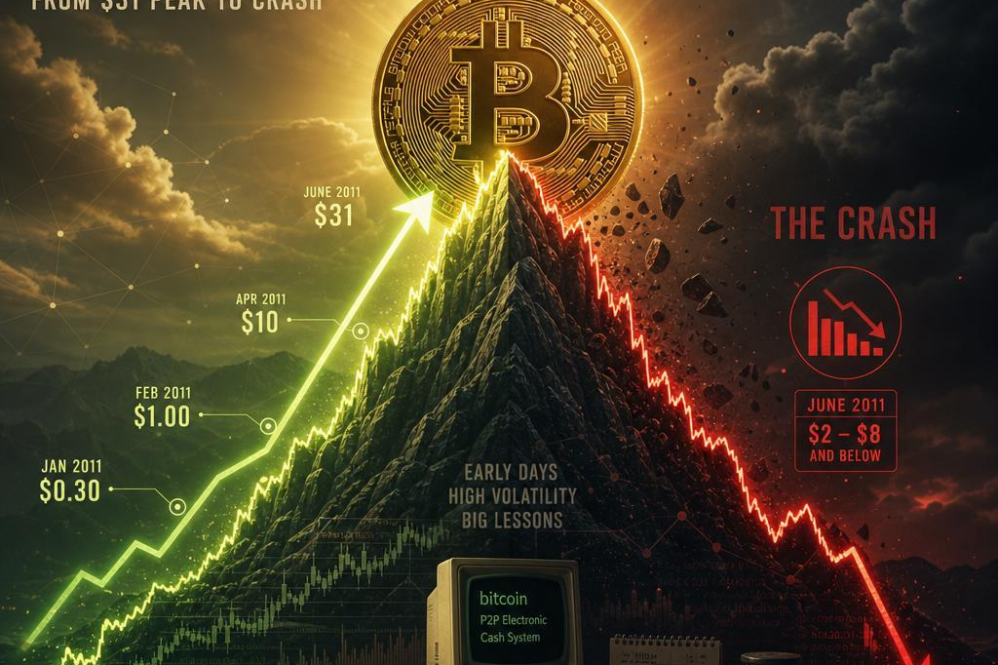
bitcoin Price Dynamics in Early 2011 and Market Context
In the early months of 2011,bitcoin experienced one of its most dramatic price trajectories in history. From a steady ascent, the digital currency propelled itself to an all-time high of around $31 by June. This meteoric rise was fueled by a surge of interest from early adopters who saw potential in bitcoin’s decentralized nature amid growing economic uncertainties worldwide. Key factors driving this momentum included heightened media attention, increased adoption by merchants, and speculative investment inflows, all converging to create a perfect storm for rapid price appreciation.
However, this peak was short-lived. The same factors that contributed to bitcoin’s rise also sowed the seeds for its swift decline. Security vulnerabilities emerged in prominent exchanges, with high-profile hacks undermining investor confidence. Additionally, regulatory ambiguity and market manipulation rumors generated panic, leading to a collapse that pushed prices back down to around $2 within the following months. Such drastic volatility underscored bitcoin’s nascent state and the need for stronger market infrastructure.
| Event | Date | Price Impact |
|---|---|---|
| Media Hype Peaks | May 2011 | Price rises to $31 |
| Mt. Gox Exchange Hack | June 2011 | price crashes to $17 |
| Regulatory Concerns surface | July 2011 | Price plummets to $2 |
Reflecting on this period illuminates the volatile foundation upon which bitcoin’s early market was built. Investors were navigating a novel financial ecosystem with minimal protections, which exposed them to both high rewards and notable risks. The 2011 price surge and subsequent crash highlight key lessons in market psychology, technological riskand the critical importance of robust regulatory frameworks in emerging digital asset markets.
Factors Driving bitcoin’s Surge to the Thirty One Dollar Peak
bitcoin’s meteoric rise to the $31 mark in 2011 was fueled by a confluence of distinct elements that captivated investors and tech enthusiasts alike. At its core, the surge was propelled by growing global interest in decentralized digital currency as an option to conventional fiat money, which was grappling with economic uncertainty and inflation concerns in various parts of the world.
Several key drivers contributed to this unprecedented momentum:
- Technological advancements enhancing bitcoin’s usability and security, which boosted confidence among early adopters.
- Media coverage that brought bitcoin into public consciousness, highlighting its potential as a revolutionary financial instrument.
- Speculative investment activity,where a surge of new investors sought quick profits,pushing prices higher in a relatively low-liquidity market.
To illustrate the comparative influence of each factor, the table below assigns approximate impact weights based on market analysis post-2011:
| Factor | Estimated Influence (%) |
|---|---|
| Technological Advancements | 40% |
| Media Coverage | 35% |
| Speculative Investment | 25% |
Analysis of Market Speculation and Investor Behavior During the Rally
During the dramatic ascent of bitcoin’s price in 2011, market speculation acted as a powerful catalyst yet also sowed the seeds for its downfall. Investor enthusiasm was predominantly driven by a mix of hype and the fear of missing out (FOMO), which led to rapid price appreciation well beyond intrinsic valuation levels. This speculative fervor was reinforced by anecdotal success stories and the burgeoning media attention that painted bitcoin as a revolutionary asset,attracting a wave of new entrants with varied market sophistication.
Behavioral patterns during this period highlight several key dynamics:
- Herd Mentality: Investors increasingly followed trends rather than fundamentals, amplifying price swings.
- Overconfidence: Many traders believed in sustained gains without fully understanding the nascent market’s volatility.
- Speculative Bubbles: Excessive buying spurred by optimistic future expectations detached the price from underlying utility.
| Investor Type | Behavioral Driver | Impact on rally |
|---|---|---|
| Early Adopters | Technological conviction and long-term vision | Provided initial price foundation |
| Speculators | Short-term profit seeking | Created sharp price surges and volatility |
| New Retail Investors | FOMO and herd behavior | Accelerated bubble formation |
Ultimately, the frenzy led to extreme price volatility, which eroded investor confidence and triggered the crash. This sequence not only underscores the risks involved when markets are driven by speculative sentiment but also provides a timeless lesson in the behavioral economics shaping early-stage financial ecosystems.
Underlying Causes and Immediate Triggers of the Subsequent Crash
The meteoric rise in bitcoin’s price to $31 in 2011 was not without its complexities. One of the primary underlying causes stemmed from an influx of early adopters and speculators attracted by the promise of a decentralized currency. This excitement,though,created a fragile market highly susceptible to volatility. The limited liquidity and nascent infrastructure of exchanges at the time amplified price swings as large buy or sell orders could dramatically shift market dynamics.
Another critical factor was the absence of robust regulatory frameworks. The lack of clear guidelines led to heightened uncertainty around security and investor protection. Hackers targeted exchanges, exploiting vulnerabilities which eroded investor confidence almost overnight.The infamous Mt. Gox breach, which compromised many users’ holdings, served as a stark wake-up call, triggering panic selling and undermining the bullish momentum.
Several immediate triggers accelerated the plunge once bitcoin hit its peak:
- Market Manipulation Suspicions: Rumors of price manipulation by a few dominant players sowed distrust.
- Technical Challenges: Network congestion and scalability issues frustrated users, casting doubt on bitcoin’s viability.
- Media Backlash: Negative press coverage created a widespread perception of risk and instability.
| Trigger | Impact |
|---|---|
| Market Manipulation | Rapid price swings, loss of trust |
| security Breaches | Investor panic, sell-offs |
| Scalability Issues | User frustration, slower adoption |
| Negative Media | Market sentiment turns bearish |
Together, these elements formed a perfect storm that swiftly reversed bitcoin’s trajectory, transforming excitement into widespread caution and setting the stage for a prolonged period of consolidation.
Lessons Learned from the 2011 bitcoin Price Volatility
The 2011 bitcoin surge and subsequent crash serve as a crucial case study for investors and enthusiasts alike. This event illuminated the inherent volatility of nascent digital currencies and underscored the importance of cautious optimism. The rapid ascent from mere cents to $31 within the year exemplified both the vast potential and the speculative frenzy that can grip emergent markets.
Key lessons include:
- Market Fragility: bitcoin’s sudden plunge revealed how quickly hype can turn to panic, especially when infrastructure and regulatory frameworks are immature.
- Media Impact: Intense media attention amplified price swings, demonstrating how perceptions can heavily influence cryptocurrency valuations.
- Security Risks: The Mt. Gox exchange hack during this period highlighted vulnerabilities that could exacerbate volatility and erode trust.
| Aspect | Impact | Takeaway |
|---|---|---|
| Price Peak | $31 (June 2011) | Sharp investor interest and speculative trading |
| Crash | $2 by November 2011 | Market correction and panic selling |
| Exchange Security | Mt. Gox hack | Necessity of robust security and transparency |
Understanding these dynamics is essential for anyone engaging with bitcoin today, as the lessons from 2011 continue to inform risk management and market behavior in the evolving crypto ecosystem.
Strategic Recommendations for Navigating Future Cryptocurrency Market Fluctuations
Understand Market Sentiment and Timing
The 2011 bitcoin surge to $31, followed by a rapid crash, exemplifies the volatile nature of cryptocurrency markets. Investors and traders must hone their abilities to interpret market sentiment signals such as social media trends, regulatory newsand macroeconomic indicators. Strategic timing-knowing when to enter or exit the market-plays a crucial role in mitigating risk. Avoiding impulsive decisions requires a disciplined approach to analyzing behavior patterns rather than solely relying on price movements.
Diversify Across Assets and Adopt Risk Management
Past flash crashes underline the importance of diversification beyond a single cryptocurrency.Establishing a balanced portfolio that includes various digital assets as well as traditional investments can shield against catastrophic losses. Furthermore, implementing strict risk management techniques – such as setting stop-loss orders and defining acceptable loss thresholds – ensures that downturns do not irreversibly damage capital reserves.
Leverage Technology and Data-Driven Insights
Staying ahead in the fluctuating crypto market requires harnessing advanced tools for real-time data analysis and automated trading. Utilizing algorithmic strategies and predictive models can definately help anticipate potential downturns and spikes with greater precision. Below is a simplified comparative overview of strategic actions to consider for future market swings:
| strategy | Benefit | Exmaple |
|---|---|---|
| Sentiment Analysis | Early identification of market trends | Monitoring social media chatter |
| Diversification | Risk spread across assets | Mixing bitcoin with altcoins and stocks |
| automated Trading | Swift, emotion-free execution | Stop-loss triggered orders |