April 3, 2026

Capitalizations Index – B ∞/21M

Bitcoin Price Tests $10,000 as Market Cracks $475 Billion

Bitcoin price tests $10,000 as market cracks $475 billion

Bitcoin Price Tests $10,000 as Market Cracks $475 Billion

Bitcoin price tests $10,000 as market cracks $475 billion
Advertisement

Get Trading Recommendations and Read Analysis on Hacked.com for just $39 per month.

The cryptocurrency market recovery continued on Thursday, with nearly every top 100-cryptocurrency rising in value against the US dollar. The bitcoin price headlined the advance, testing the $10,000 for the first time since Feb. 1. Ripple, meanwhile, surged on the surprising news that money transfer behemoth Western Union is trialing XRP integration in a pilot program.
Bitcoin price
Source: coinmarketcap

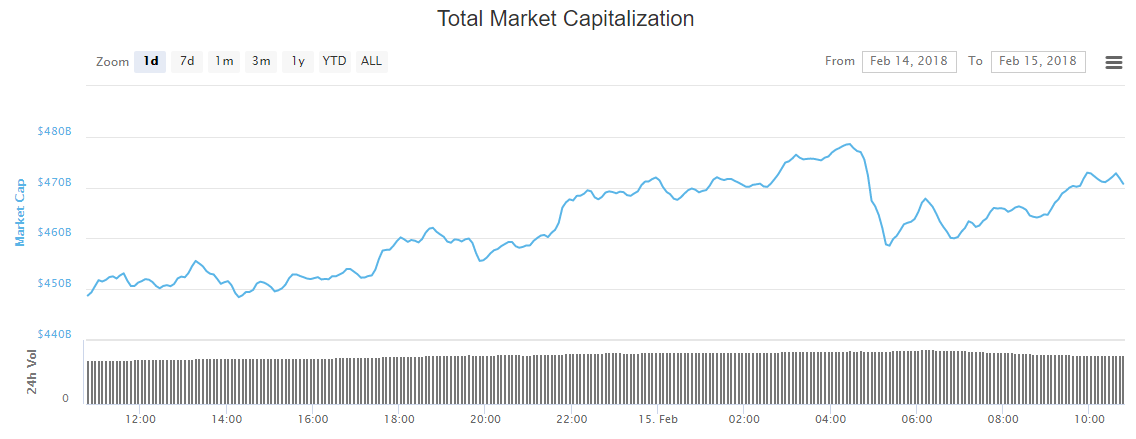
The rally briefly raised the cryptocurrency market cap above $475 billion, which constituted a two-week high, although it has since ebbed back to a present value of $471.6 billion.

bitcoin Price Tests $10,000

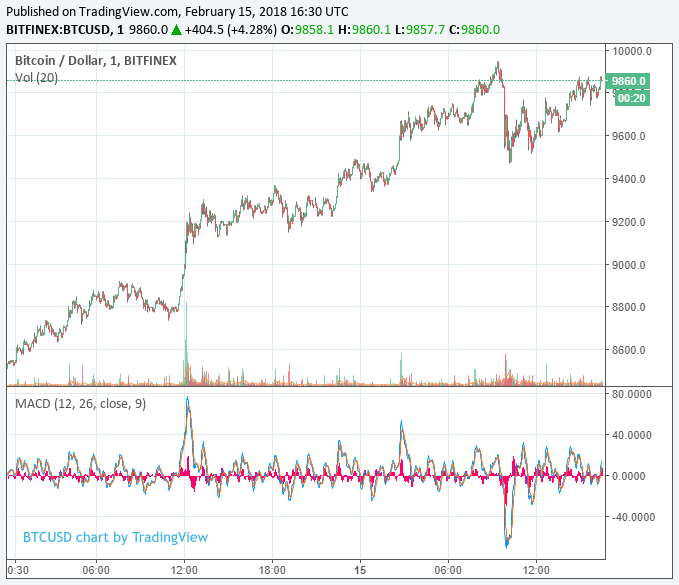
bitcoin continued to defy its critics on Thursday, posting a six percent advance and raising its price within striking distance of $10,000 for the first time since the beginning of February. However, the flagship cryptocurrency has thus far been able to break through that barrier and it is now trading at $9,860 after rising as high as $9,946 earlier in the day. bitcoin now has a market cap of $166.8 billion, which has enabled its market share to tick up to 35.3 percent.
Bitcoin price
bitcoin Price Chart

Ethereum Price Eyes $950

The Ethereum price joined bitcoin in its rally, although its advance could not quite keep pace with that of its older sister. At present, Ethereum is trading at $935 on Bitfinex, representing a 24-hour increase of about four percent. This provides Ethereum with a market cap of $91.8 billion, which translates into a 19.5 percent market share.
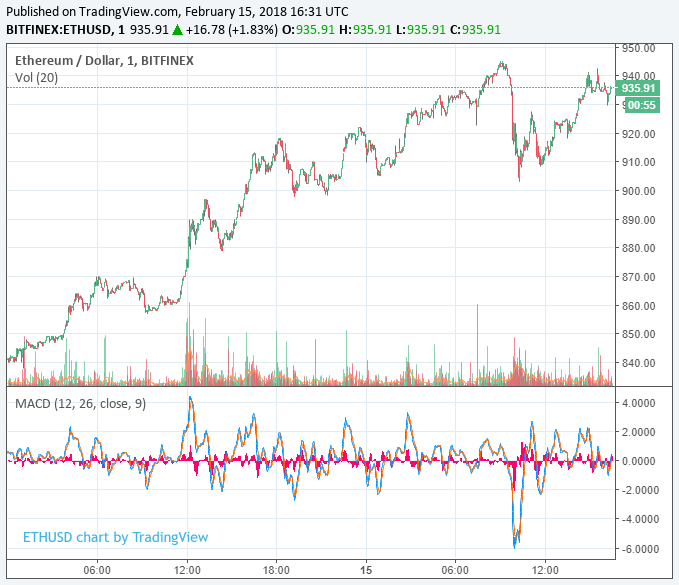
Ethereum price
Ethereum price chart

Altcoins Achieve Uneven Gains

For the most part, altcoins achieved positive movement against the dollar. However, these gains were uneven, and quite a few assets lagged the index.
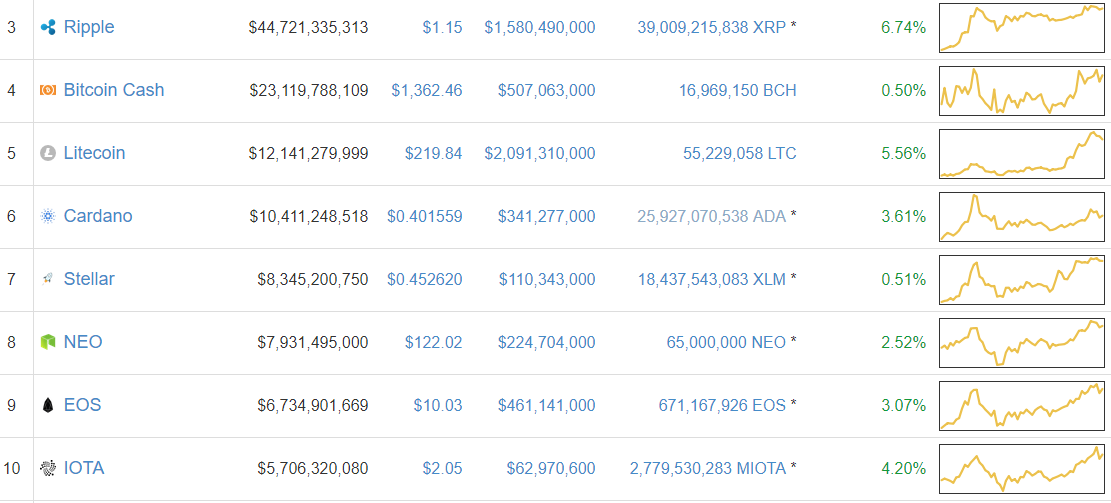
Bitcoin price
Source: coinmarketcap

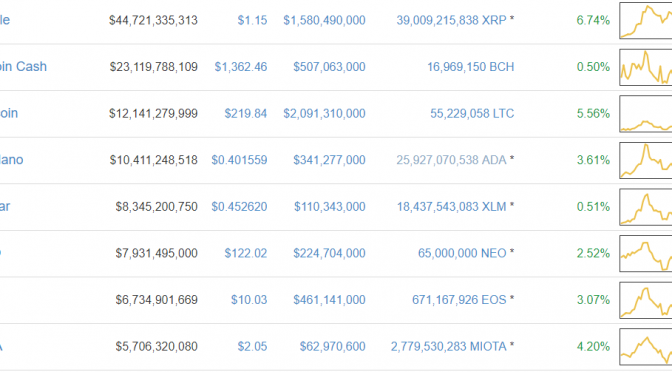
The Ripple price posted a top 10-best seven percent rally, which largely stemmed from the fact that money transfer giant Western Union has confirmed rumors that it is pilot-testing XRP integration in a new blockchain trial.

bitcoin Cash and Stellar, meanwhile, lagged the index with gains of about one-half-of-one percent.

Litecoin, ranked fifth, extended its surge by another six percent, bringing its price to $220 and market cap to $12.1 billion. Cardano, its closest competitor, rose by four percent but still lost ground in its quest to reclaim the fifth spot in the rankings.

Eighth-ranked NEO rose by three percent to $122, although it was not enough to raise its market cap above the $8 billion mark. The EOS price rose three percent to crack the $10 threshold, and IOTA rounded out the top 10 with a four percent increase to $2.05.

Featured image from Shutterstock.

Follow us on Telegram.
Advertisement

Published at Thu, 15 Feb 2018 18:29:34 +0000

Altcoin Prices

Previous Article

Videos for Cats to Watch : Birds in Birdville – ONE HOUR

Next Article

Sisa: Cocaine of the Poor (Part 1/2)

You might be interested in …

Bitcoin Companies Supporting SegWit UASF: 12, Opposed: 0

These companies are in favor of SegWit via a User Activated Sof Fork (UASF). No company has opposed it so far.


Who Supports UASF

Lately, there has been a lot of talk regarding the possible activation of a User Activated Soft Fork (UASF) in order to implement the SegWit proposal without the need to reach miner consensus. An early look at the companies that have so far taken a stand in regards to the UASF reveals that nine companies support the SegWit UASF, while two others are ready for it. The list is as follows:

So far, no company has opposed the User Activated Soft Fork, although most companies have yet to input their stance regarding the subject. BitPay, for example, is not included and they have already announced their support for the UASF. During an episode of Let’s Talk Bitcoin! Bitpay CEO Stephen Pair stated:

The most important thing, I think, are the users; I really like the idea of a user-activated soft fork followed by a miner activation.

It is likely that most companies that support the SegWit soft fork or that are ready for it will take the same stance regarding the UASF since it seems to be the only plausible method of activating SegWit.

//platform.twitter.com/widgets.js

With large mining pools like Bitmain supporting Bitcoin Unlimited, it is highly unlikely that SegWit will ever reach the required 95% miner approval threshold unless these pools change their mind on the update. And If the latest accusations regarding the Bitmain’s secret advantage are true, it is unlikely that they’ll even change their stance on SegWit.

What is a UASF?

A User Activated Soft Fork is a soft fork that does not require miner approval but counts instead on the nodes (users) to activate the soft fork themselves. This is done by releasing a new version of a bitcoin Client, in this case, Core. The client gives a block height limit in which the upgrade will become active.

Once the predetermined block height is reached, the nodes that have updated to the new client will stop accepting blocks that don’t support SegWit. Given that SegWit is a soft fork, the nodes that don’t upgrade to the new version of the bitcoin Core client (with UASF) will still count SegWit blocks as valid.

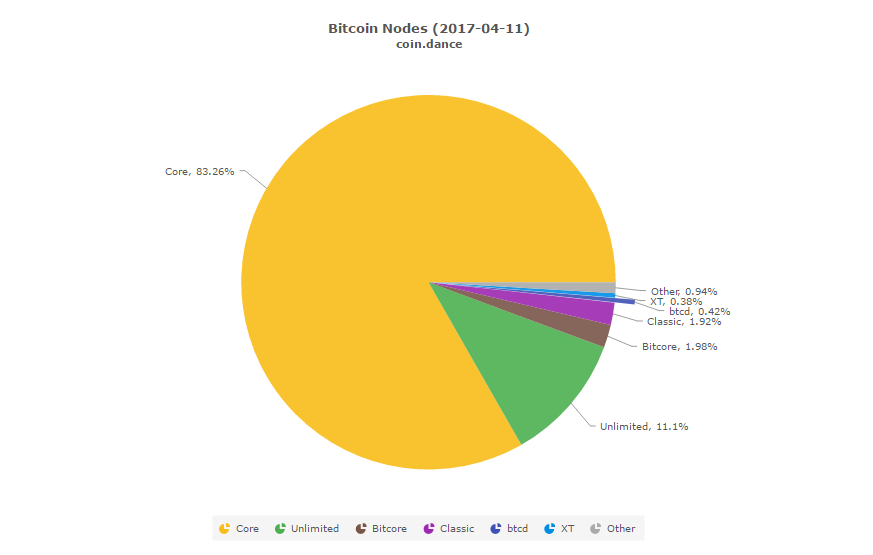
This method makes SegWit much more likely to be adopted when you consider that, currently, more than 83% (5774) of all Bitcoin nodes are running the bitcoin Core client.

If all of these nodes update to the new UASF client, miners will have no choice but to start mining blocks that support SegWit as these will be accepted by all the nodes, rather than only the ones that haven’t updated to the new bitcoin Core client.

UASF Risks

Although the UASF seems like a more effective strategy on paper, it comes with some risks for the community. For example, if the majority of miners don’t start mining SegWit blocks after the UASF is activated, a chain split will take place.

Different nodes will see different blockchains, according to the client they are running. Nodes that have not upgraded to the newest bitcoin Core client will see the blockchain without SegWit and the upgraded nodes will see the blockchain that supports SegWit.

//platform.twitter.com/widgets.js

This scenario is problematic for bitcoin Core, which has gone a long way to ensuring that SegWit could be introduced via soft fork. It would also mean that the blockchain with the majority of users (nodes) would be the most vulnerable one due to the lack of miners.

Another issue with the UASF is that the cost of setting up nodes is not nearly as good of an anti-Sybil system as bitcoin’s Proof of Work is, meaning that certain members of the community could start hosting nodes in order to support a UASF or to offer resistance to it. To some degree, this brings back the issue of economic power centralization that has been previously raised with regards to bitcoin Unlimited.

Will the UASF be successful, bringing SegWit to bitcoin once and for all? Or will something else get in the way once more? Let us know what you think in the comments below.


Images Courtesy of Coin.Dance, Twitter, AdobeStock

The post Bitcoin Companies Supporting SegWit UASF: 12, Opposed: 0 appeared first on Bitcoinist.com.