
bitcoin is a peer-to-peer electronic payment system whose design is open and publicly available, allowing anyone to participate in the network and run the software that secures it. Securing the network and issuing new units of the currency requires computational work-commonly known as mining-which consumes critically important electrical energy.
In recent years, a growing share of that energy has come from renewable sources as miners respond to economic incentives, regulatory scrutiny, and corporate sustainability commitments. Access to low-cost, surplus renewable power (for example, curtailed hydro, wind, and solar generation) and investments in on-site clean energy are increasingly cited by operators as ways to lower costs and reduce carbon intensity. This shift has implications for the environmental footprint of digital-currency infrastructure, local electricity markets, and broader debates about the sustainability of distributed ledger systems.
The shift in bitcoin mining energy mix toward renewable sources
Large-scale miners are increasingly locating facilities where renewable generation is abundant or where excess clean power can be procured cheaply, a change driven by both operational economics and public pressure for lower carbon intensity. This geographic and contractual reorientation has led to more frequent use of hydro reservoirs, wind farms, and solar arrays-sometimes in hybrid setups or paired with battery storage-to smooth variability and capture curtailed energy that would otherwise be wasted. Miner communities and operators share lessons, operational data and regional intelligence through industry forums and networks, helping accelerate best practices across the sector .
Key drivers behind the shift include price arbitrage, grid-service opportunities (demand response, frequency control), and corporate sustainability commitments. The transition is also shaped by practical infrastructure needs: miners still require robust bandwidth and considerable local storage capacity to run full nodes and validate the blockchain, so site selection balances clean power availability with network and storage logistics .
- Economic: lower LCOE and flexible pricing windows
- grid value: use of curtailed or balancing energy
- Regulatory & reputational: emissions reporting and investor pressure
Operational outcomes are already measurable: some mining pools and firms report higher percentages of renewable-sourced energy in their mixes, and the broader bitcoin ecosystem-from wallets to node operators-has incentives to highlight cleaner power use as part of product positioning and governance dialogue .Below is a concise snapshot of how common renewable sources are being deployed by miners.
| renewable | Typical miner use-case |
|---|---|
| Hydro | Stable baseload & seasonal versatility |
| Wind | Curtailment capture and variable dispatch |
| Solar | Daytime peak shaving, paired with storage |
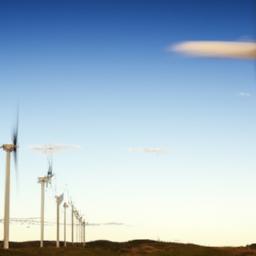
Regional case studies showing successful integration of wind and solar with mining operations
In regions with abundant wind resources-most notably parts of West Texas and northern Europe-bitcoin miners have been deployed as flexible loads that absorb curtailed wind generation and provide grid-balancing services. Operators use automated controls to ramp hashing power up and down in response to negative pricing or oversupply events, turning what was previously wasted energy into productive compute. Benefits frequently reported include higher renewable utilization, improved revenue for wind producers, and reduced curtailment through dynamic demand response:
- Increased capacity factor for nearby wind farms
- Short-term grid stabilization via fast-reacting loads
- Commercial offtake models tied to real-time pricing
Market intelligence and dispatch scheduling-often drawn from dedicated data platforms-play a key role in aligning miner operations with wind generation patterns .
In parts of China and Australia, hybrid projects that combine utility-scale solar arrays with wind farms and on-site battery storage show a second common model: behind-the-meter mining clusters co-located with renewables and storage to smooth intermittency. these deployments use a layered approach where solar covers predictable daytime load, wind supplies variable night-time or seasonal energy, and batteries shave peaks or bridge lulls-reducing reliance on diesel or grid imports.
- Co-location minimizes transmission losses and permitting complexity
- Hybrid control systems prioritize battery SOC and miner uptime
- Contracts often mix fixed capacity payments with spot-grid arbitrage
| Region | Renewable mix | Typical arrangement | Peak renewable share |
|---|---|---|---|
| West Texas | Wind + battery | Curtailment-responsive miners | 60-80% |
| Inner Mongolia | Solar + wind | Behind-the-meter clusters | 50-75% |
| Western Australia | Solar + diesel + storage | Hybrid microgrids for remote sites | 40-70% |
Practical lessons across these case studies converge around three themes: robust automation, commercial alignment, and grid partnership. Successful projects deploy predictive generation models and automated throttling to match miner demand to renewable availability; they negotiate flexible commercial terms with generators or utilities; and they participate in local grid services markets where possible. Outcomes typically reported are lower effective carbon intensity for compute, improved revenue stability for renewable plants, and demonstrable reductions in curtailment when miners are treated as programmable, dispatchable loads.
Technological innovations that increase renewable utilization in mining farms
Advances in distributed energy controls and power electronics let mining operations act as flexible loads that absorb surplus renewable generation and help balance grids. Modern inverters and microgrid controllers coordinate on-site solar and wind with utility signals to perform rapid ramping, frequency response, and energy shifting, turning intermittent resources into reliably dispatchable power for miners.These capabilities build on core renewable technologies such as solar,wind and hydro while improving utilization rates and reducing curtailment .
Cooling and hardware innovations further increase renewable uptake by lowering overall demand and smoothing profiles. Liquid-immersion cooling and custom ASIC power management reduce waste heat and energy draw, enabling tighter coupling to variable generation. Coupled with heat-recapture systems that feed district heating or industrial processes, mining farms convert what used to be waste into value streams, making on-site renewables and intermittent off‑grid supply more economically attractive .
Practical deployment strategies and automation tools accelerate adoption: predictive dispatch algorithms, battery buffering, and demand‑response contracts allow miners to follow renewable availability while preserving uptime. Typical innovations include:
- Battery buffering - smooths short-term variability and provides fast response.
- Dynamic load shifting – aligns mining intensity with high-renewable periods.
- Waste-heat utilization – offsets other site energy needs or revenue streams.
| Technology | Primary impact |
|---|---|
| Battery storage | Peak shaving / grid services |
| Immersion cooling | Lower PUE, higher renewable fraction |
| Microgrid controls | Optimized dispatch of on-site renewables |
As miners integrate these innovations, renewable utilization rises not only as cleaner supply expands, but because operational design increasingly treats mining as a grid-balancing asset rather than a fixed, inflexible load .
Quantifying the impact on carbon intensity and lifecycle emissions of bitcoin
Quantifying carbon intensity requires combining electricity consumption with the carbon profile of the specific grid and the operational overhead of mining facilities. Key inputs are the local grid carbon intensity (gCO2/kWh), the facility power usage effectiveness (PUE), and the time-resolved share of generation from renewables versus fossil sources; adding an explicit lifecycle layer captures manufacturing, transportation and end-of-life impacts of mining rigs. Transparent, auditable datasets and clearly stated assumptions are essential so that comparisons (such as, per MWh, per TH/s or per block) remain reproducible and comparable across studies.
- Grid mix: hourly CO2 intensity and renewable curtailment
- Operational losses: PUE, transmission losses, and cooling inefficiencies
- Lifecycle factors: embodied emissions from hardware manufacture and logistics
- Attribution rules: marginal vs average emissions and time-of-use accounting
Simple scenario modeling makes trade-offs visible. The table below illustrates how increasing renewable share reduces effective emissions once PUE and lifecycle contributions are included. Numbers are illustrative to show directional change: effective carbon intensity scales with grid intensity multiplied by PUE, while lifecycle emissions add a fixed amortized burden per unit of compute or energy consumed.
| Metric | Baseline (30% renewables) | Renewables-heavy (70% renewables) |
|---|---|---|
| Grid intensity (gCO2/kWh) | 450 | 180 |
| PUE (operational) | 1.20 | 1.20 |
| Effective intensity (gCO2/kWh) | 540 | 216 |
| Emissions per 1,000 MWh (tCO2) | 540 | 216 |
Policy and investment decisions are sensitive to the chosen boundaries and temporal granularity: short-term estimates that use marginal hourly grid intensity will favor miners that operate during high-renewable periods, while lifecycle-aware assessments highlight the importance of extending hardware lifetime and improving recycling. For the bitcoin ecosystem-an open peer-to-peer payment network-clear metrics and reporting standards will be critical to demonstrate real emissions reductions as renewable penetration grows.
Economic drivers and comparative cost analysis of renewable and fossil fuel powered mining
Miners are increasingly guided by a mix of operational cost pressures and policy-driven incentives when choosing power sources. large-scale procurement deals, such as power purchase agreements (PPAs), allow mining operations to lock in long-term, low-cost electricity from solar and wind, reducing exposure to fuel price swings that burden fossil-fueled sites. Governments and corporate net-zero commitments further tilt capital toward low-carbon electricity, while grid dynamics – including access to curtailed renewable output and seasonal hydropower – create location-specific arbitrage opportunities for high-load operations.
When comparing the levelized cost drivers, renewables and fossil fuels show contrasting profiles: renewables typically feature higher upfront capital but very low marginal costs, while fossil plants have lower capital but ongoing fuel expense and price volatility. The simple comparative snapshot below highlights those trade-offs in miner-relevant terms.
| Metric | Renewables | Fossil Fuels |
|---|---|---|
| Marginal cost | Near-zero after build | Variable fuel cost |
| Capital intensity | High, front-loaded | moderate |
| Price volatility | Low (contractable) | High (fuel-linked) |
These broad patterns – widely observed in energy economics – are central to mining operators modeling hourly profitability and forecasting payback on mining hardware.
For bitcoin miners, the economic case for renewables strengthens beyond pure kilowatt-hour price: reduced carbon exposure, predictable long-term pricing, and opportunities to monetize flexibility (demand response or curtailment-backed discounts) boost returns and lower risk. Tactical approaches that miners use include:
- Hybrid PPAs that combine baseload and intermittent supply
- Co-location with generation (e.g., wind farms, solar parks)
- Battery or hydro storage to firm intermittent output
With policy trends and continued technology-driven cost declines for solar and wind, many operators see renewable-backed power as a reliable route to both lower operating costs and improved investor signaling.
Ensuring grid stability through demand response and co location of mining with variable renewables
Flexible, controllable load is a key attribute that makes bitcoin mining a strong partner for grids with high shares of wind and solar.By siting compute clusters adjacent to generation - from utility‑scale solar fields, wind farms or hydropower reservoirs – miners can absorb or else curtailed energy during peak production and quickly reduce consumption when supply tightens, smoothing net load profiles and lowering system costs.This operational synergy is already being explored by the bitcoin developer and operator community, which documents practical deployment patterns and software tools for load orchestration .
Practical demand response measures rely on automated, market‑aware controls that treat mining equipment as a dispatchable resource: ramp-down/ramp-up commands tied to dispatch signals, price-responsive hashing, and pre-defined curtailment windows to support frequency and voltage stability. Common actions include:
- Immediate throttling during grid emergencies to free capacity.
- Soaking excess generation during oversupply periods to reduce curtailment.
- Scheduled shifting to align high consumption with predictable renewable peaks.
These techniques require both software stacks that can respond in seconds and contractual or market frameworks that compensate miners for grid services .
Integration benefits are succinctly captured in simple operational metrics and can guide project economics and permitting. The table below summarizes core advantages and the immediate grid impact of co‑located, demand‑responsive mining facilities:
| Benefit | Mechanism | Grid Impact |
|---|---|---|
| Reduced curtailment | Absorb surplus generation | Higher renewable utilization |
| Fast reserve | Automated throttling | Improved frequency response |
| Local support | Coordinated dispatch | Lower transmission stress |
Policy clarity and transparent market signals are essential so that miners can be reliably scheduled as grid partners rather than ad hoc loads, a point reflected in operational discussions and release notes across the bitcoin ecosystem .
Policy instruments incentives and best practices to accelerate decarbonization of mining
Public policy should create clear market signals and reduce barriers for renewable integration in energy‑intensive mining operations. Effective instruments include carbon pricing, renewable portfolio standards, and streamlined permitting and grid‑connection rules that allow miners to site, expand, or co‑locate generation quickly. Policy can also enable flexible tariffs and demand‑response frameworks so mining loads provide grid services rather than destabilize them. These levers mirror broader decarbonization strategies that shift activity away from fossil fuels and toward cleaner energy systems, accelerating emissions reductions across sectors .
Targeted incentives and financing mechanisms lower the upfront cost of transition and mobilize private capital.Examples include investment tax credits, accelerated depreciation for clean assets, long‑term power purchase agreements (PPAs) with renewables, and green bonds to fund on‑site generation and grid upgrades. Practical regulatory supports-such as priority interconnection, standby tariff reform, and risk‑sharing for transmission build‑out-make projects bankable.
- investment tax credits: reduce capex burden
- PPAs: secure revenue for developers and price stability for miners
- Green finance: unlocks lower‑cost capital
| Incentive | Typical Benefit | Best Fit |
|---|---|---|
| Tax credits | Lower upfront cost | Large-scale builds |
| PPAs | Price certainty | Mid/large miners |
| Green bonds | long-term capital | Corporate portfolios |
| Capacity payments | Revenue for flexibility | Grid-interactive sites |
Evidence from private‑equity-owned firms shows that disclosure, targets and finance alignment can deliver measurable Scope 1 and 2 reductions when paired with these instruments .
Operational best practices translate policy and incentives into real emissions cuts: implement continuous energy monitoring, set time‑of‑use operational protocols to chase renewables, and adopt standardized reporting for transparency and investor confidence. Embrace flexible load management (seasonal shut‑downs,automated curtailment) and pursue co‑location with wind or solar plus storage to minimize curtailment and maximize renewable capture. Commitments to public disclosure and science‑based targets, supported by finance and regulatory clarity, have driven measurable progress in other sectors and are essential for mining to decarbonize at scale .
Actionable recommendations for miners investors and policymakers to maximize renewable adoption and transparency
For miners: prioritize direct procurement of low‑carbon energy and operational transparency to make renewable pairing practical and verifiable.Actions include:
- Sign long‑term PPAs with wind/solar providers or co‑locate with curtailed renewables to reduce energy cost volatility.
- Invest in storage and demand flexibility so mining loads can act as grid‑responsive sinks for surplus clean generation.
- Publish hourly energy‑mix and uptime data on public dashboards to prove renewable usage and attract climate‑conscious counterparties.
For investors: embed renewable and transparency metrics into capital allocation, monitoring, and governance practices. Key due‑diligence steps are:
- Require standardized disclosure (hourly energy source, REC retirement, grid emission factors) as a covenant in investment agreements.
- Prefer projects with blended revenue from mining and grid services (frequency response, capacity) to de‑risk returns and improve grid decarbonization.
| Metric | why it matters | Target |
|---|---|---|
| Hourly Renewable % | Shows true real‑time carbon intensity | ≥70% |
| REC Retirement | Ensures additionality and claims integrity | On‑delivery |
| grid Services Revenue | Improves economics, reduces curtailment | ≥15% of ops revenue |
For policymakers: design clear, technology‑neutral rules and incentives that reward demonstrated emissions reductions and transparency. Practical policy levers include:
- Incentivize verifiable clean consumption (tax credits, accelerated depreciation) only when accompanied by independent, timestamped energy‑source reporting.
- Facilitate grid integration by enabling mining facilities to register as flexible loads and participate in ancillary‑service markets.
- Mandate standardized reporting and third‑party audits for large‑scale crypto mining to prevent greenwashing and support investment certainty.
Monitoring standards certification and reporting protocols to verify renewable energy use in mining
Robust verification is no longer optional for mining operations claiming renewable energy use; it is indeed the backbone of credible emissions reductions and investor confidence.Renewable sources such as solar, wind, hydro and geothermal supply the baseload and variable generation miners rely on, and tracking their contribution requires standard measurement, transparent certificates, and auditable records . Verified reporting helps prevent greenwashing by linking actual generation and consumption – not just procurement contracts – to a mining facility’s energy ledger,supporting verifiable reductions in CO₂ and other greenhouse gases . Core verification elements include:
- Metered energy flows and timestamped telemetry
- Energy Attribute Certificates and contractual evidence
- Independent third‑party audits and reconciliations
Industry protocols and certification schemes are converging around a few practical approaches that enable comparability across projects and jurisdictions. Standards provide consistent metrics for MWh attribution, residual mix handling, and grid baseline adjustments, while reporting platforms translate those metrics into investor‑grade disclosures . The table below summarizes commonly used verification tools and their primary purpose in mining operations:
| Protocol / Tool | Primary purpose |
|---|---|
| Energy Attribute Certificates (EACs) | Attribute tracking per MWh |
| Real‑time metering & telemetry | Operational verification and balancing |
| Independent audit | Assurance of claims and methodology |
For mining operators, the practical path to credible claims combines contract design, on‑site measurement, and transparent disclosure: negotiate clear PPAs or direct ownership, install certified meters with tamper‑proof telemetry, and publish reconciled reports that reference recognized standards and certificates. Integrating these elements into routine reporting-backed by independent assurance-creates a defensible trail from renewable generation to energy consumption, enabling miners to substantiate lower carbon intensity in line with broader renewable energy definitions and climate objectives .Best practices include public dashboards, periodic third‑party verification, and alignment with market‑accepted certificate systems to maximize transparency and comparability.
Q&A
Q: What is bitcoin mining?
A: bitcoin mining is the process by which transactions are validated and added to the bitcoin blockchain and by which new bitcoins are issued. Miners run specialized hardware that solves cryptographic puzzles; successful solutions allow miners to create new blocks and receive block rewards and transaction fees. bitcoin as a peer-to-peer electronic payment system is the broader protocol miners secure and maintain.
Q: Why is bitcoin mining energy-intensive?
A: Mining uses proof-of-work, which requires continuous, high-throughput computation. Competitive mining incentivizes using more and more computing power to increase the probability of finding a block, producing high electricity demand and concentrated energy use.
Q: How are renewables entering the bitcoin mining mix?
A: Renewables enter mining through direct procurement (miners colocating next to wind, solar, hydro sites), power purchase agreements (ppas), partnerships with renewable providers, and using grid services that prioritize renewable generation. Some miners deploy behind-the-meter solar or pair with curtailed renewable output that would otherwise go unused.Q: What evidence shows renewable use by miners is increasing?
A: Industry reports, project announcements, and reported PPAs indicate growing renewable procurement. Additionally, miners have been locating facilities in regions with abundant renewables (hydro in scandinavia or Canada, wind in parts of the U.S., solar in deserts), and some companies publish energy source mixes and carbon-intensity data.
Q: Do miners actually use clean energy or just claim to?
A: practices vary. Some operations legitimately run on directly contracted renewables or curtailed renewable energy. Others rely on grid electricity and claim matching renewable attributes (e.g., renewable energy certificates) without direct physical pairing. Transparency and independent verification differ by operator; credible claims are supported by on-site generation data, PPAs, and third-party audits.
Q: Can bitcoin mining help integrate renewable energy into the grid?
A: Yes. Because mining load is flexible, miners can increase or decrease consumption rapidly, helping absorb variable renewable output, reduce curtailment, and provide demand-side flexibility. When co-located with renewables, miners can buy curtailed or excess generation that would otherwise be wasted.
Q: What are the environmental concerns despite renewable adoption?
A: Concerns include: miners still using fossil-fuel-heavy grids in many regions, lifecycle emissions from mining hardware manufacture, and the scale effect-total energy demand can grow as mining activity expands, potentially offsetting renewable gains unless renewables scale commensurately.Q: How does mining on renewable-heavy grids compare to mining on carbon-heavy grids?
A: Mining located on renewable-heavy grids (e.g., hydro or high wind/solar penetration) typically has lower carbon intensity per MWh than mining on grids dominated by coal or gas. The net climate impact depends on how much incremental fossil generation is displaced versus how much new demand prompts additional fossil generation.Q: Are there geographic trends in renewable-powered mining?
A: Yes. Historically, miners clustered where cheap, abundant electricity existed-often hydropower regions or areas with stranded renewable resources. Geographical shifts follow changes in policy, electricity prices, and grid carbon intensity.
Q: How do economics affect the shift to renewables?
A: Renewable electricity costs have declined, making renewables more attractive for miners. long-term PPAs can provide price stability. the ability to use curtailed renewable energy at very low cost also attracts miners focused on minimizing operating expenses.
Q: What technical or operational challenges exist when pairing mining with renewables?
A: Challenges include intermittency (need for battery storage or grid backup), grid interconnection constraints, permitting and siting, and ensuring miners can ramp load up or down quickly without damaging equipment or violating contracts.
Q: How is the carbon footprint of mining measured, and are there standards?
A: Carbon footprint is estimated using electricity consumption multiplied by the grid or source-specific emissions intensity (CO2e per MWh). Standards and reporting practices vary; some industry groups promote voluntary disclosure frameworks, but universally adopted, audited standards remain limited.
Q: what policies or regulations influence renewable use in mining?
A: Policies include renewable energy incentives, carbon pricing, grid access rules, permitting regimes for generation and data centers, and any mining-specific regulations (e.g., licensing or environmental requirements).Regulatory environments that favor clean power procurement and flexible demand can accelerate renewable adoption by miners.
Q: What is the outlook for renewable-powered mining?
A: The outlook is for continued growth in renewable use as renewables get cheaper,miners seek lower-cost and lower-carbon power,and pressure from investors,customers,and regulators increases transparency and sustainability expectations. Though, the net climate benefit will depend on where new mining demand is placed relative to the grid mix and whether incremental demand is met by clean energy additions rather than fossil fallback.
Q: Where can readers get software or blockchain data if they want to explore bitcoin directly?
A: Readers can download bitcoin Core client releases and related software from official distribution pages. Initial synchronization of the full blockchain can take a long time and requires significant bandwidth and storage (historically noted as tens of gigabytes), so follow instructions for bootstrap options or use up-to-date clients to manage sync .
to sum up
As bitcoin mining shifts toward a greater share of renewable generation, the net environmental footprint of securing the network is poised to improve even as hashpower grows; this transition reflects technological, economic and policy drivers shaping an evolving payment system . Greater use of wind, solar and hydro – paired with demand-response strategies and co-location at curtailed or stranded renewable sites – can reduce emissions intensity and improve the industry’s energy profile, while variability in energy sources underscores the continuing importance of grid integration and storage. Monitoring, transparency and standardized accounting for energy sources remain essential to validate claims of decarbonization and to guide investors, regulators and communities.In short,renewables are becoming an increasingly significant part of bitcoin mining’s energy mix,but ongoing measurement,policy clarity and technological innovation will determine how substantial and durable that shift proves to be .
