January 29, 2026

Capitalizations Index – B ∞/21M

Bitcoin Mining Could Use 0.5% of World’s Electricity Energy in 2018

Bitcoin mining could use 0. 5% of world’s electricity energy in 2018

Bitcoin Mining Could Use 0.5% of World’s Electricity Energy in 2018


Bitcoin mining could use 0. 5% of world’s electricity energy in 2018
Advertisement

Join our community of 10 000 traders on Hacked.com for just $39 per month.

A recently released peer-reviewed article by blockchain evangelist and financial economist Alex de Vries deployed a novel methodology to determine bitcoin’s energy usage a few years from now, and the estimated results are certainly astonishing.

Pay with bitcoin or Power a Home?

Published on May 16 on Joule,  de Vries made use of complex economic models, coupled with publically available electricity costs and mining statistics, with the intentions of producing a scientific paper that companies and individuals can base their research on.

According to de Vries, the worldwide minimum current requirement of bitcoin is 2.55 gigawatts, equivalent to the electricity usage of Ireland, the world’s 118th largest country by landmass. The researcher also states that this amount equals to half a percent of the world’s total electricity usage.
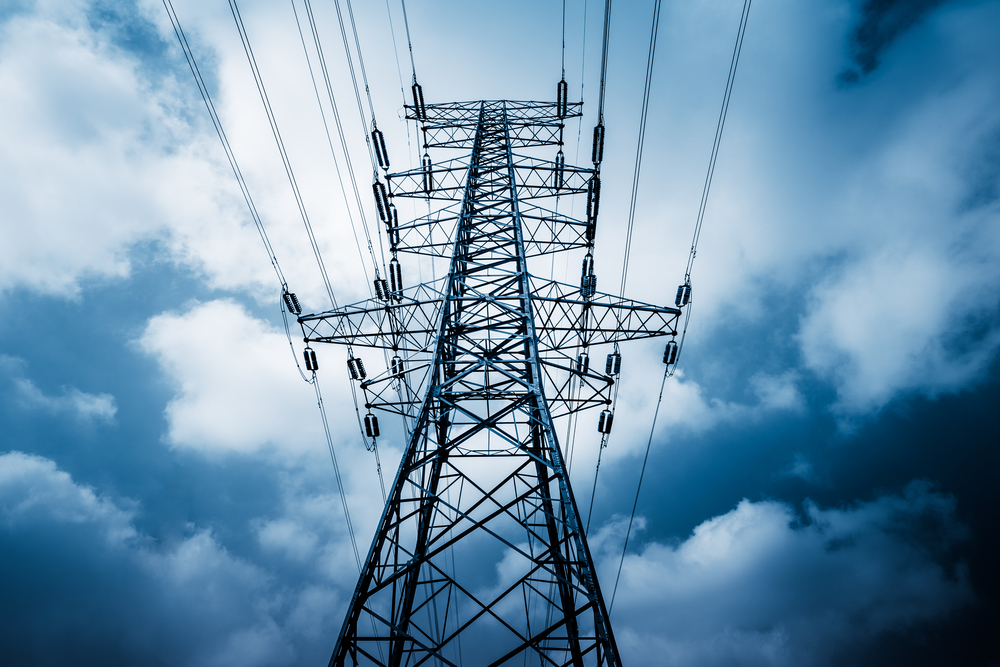
Bitcoin mining could use 0. 5% of world’s electricity energy in 2018
The report suggests that bitcoin mining power consumption this year could equal the usage of Austria.

Furthermore, every transaction via the bitcoin network uses up enough electricity to power an average home in the Netherlands.

De Vries, who currently works with PwC Netherlands, believes that the world’s pioneer cryptocurrency may end up using 7.7 gigawatts to power its network by the end of this year, a figure equal to the electricity usage of Austria!

Bad for bitcoin, Bad For Climate

The huge costs associated with bitcoin mining – a process that “timestamps” transactions and performs extensive calculations – has been a subject of criticism since years. And with the increase in the network’s size, the costs are further poised to grow, possibly consuming 5 percent of the world’s total electricity in the future.

De Vries notes:

You are generating numbers the whole time and the machines you’re using for that use electricity. But if you want to get a bigger slice of the pie, you need to increase your computing power. So there’s a big incentive for people to increase how much they’re spending on electricity and on machines.

Applying economic principles to the bitcoin protocol highly suggests the network reaching a point of equilibrium, which would see the miner’s bitcoin incentives become equal to the computing, hardware, and electricity costs involved.

With that in mind, de Vries extrapolated present data to that of the equilibrium point, to determine electricity costs and economic implications in running the bitcoin network during that period

Sources May Have Skewed Results

A telling point remains that of utilizing public data, which de Vries feels could be misleading. Mining companies like Bitmain are highly secretive operations, and official documents pertaining to their operations are largely unavailable.

However, de Vries is confident of his prediction, and says:

Sometimes the best information we’ve got is really shaky eyewitness accounts. That’s the stuff we have to work with.

The researcher believes that his paper can be referred to by governments and regulatory bodies prior to placing restrictions or introducing laws, as its peer-reviewed, scientific nature supersedes that of anecdotal evidence and weakly researched publications.

Featured image from Shutterstock.

Follow us on Telegram.
Advertisement

Published at Thu, 17 May 2018 13:41:29 +0000

bitcoin Mining

Previous Article

Bitcoin Mining Could Use 0.5% of World’s Electricity Energy in 2018

Next Article

E-Commerce Giant Alibaba's Jack Ma Says Blockchain Is Not A Bubble, Bitcoin Is

You might be interested in …

Bitcoin Gets Technology Theory Backing, Can Reach $100,000 by 2021

“Moore’s Law” has been identified by a Harvard Scientist in bitcoin, and as such the belief is that the digital currency can reach $100,000 by February 2021, according to this theorem.


With bitcoin reaching a big milestone in its scaling debate, an issue that has dogged the digital currency for some time, it is now once again breaking records with little slowing it down.

Fear and speculation ran rampant leading up to the August 1 hard fork, which saw the creation of a new digital currency called bitcoin Cash – a fork of the original bitcoin. However, even since its creation, and rise to third-largest digital currency for a while in regards to market cap, it has not slowed bitcoin’s growth.

Gordon Moore - Moore's Law

Moore’s Law

Moore’s Law is a theorem and a formula that was created by the co-founder of Intel’s Gordon Moore Processor. It states that, on a processor, the number of transistors on the new microprocessor models will increase approximately twice every 18-24 months.

This law has been identified by Denis Porto, and investor, as well as a Harvard Scientist. It is his opinion that bitcoin has become the first digital currency to show signs of this law, even though it is not specifically aimed at this form of technology.

In a recent interview with Markets Morning, Porto said:

Moore’s law is specifically applied to the number of transistors per circuit, but it can be applied to any digital technology. […] Any technology that grows exponentially (i.e. following Moore’s Law) has a doubling moment.

Bitcoin's price surge last week sparked renewed confidence and optimism

Contributing Factors

In the wake of bitcoin reaching its latest all time high last week, optimism and confidence have skyrocketed once again for the original digital currency. There have been a number of factors that have pushed bitcoin’s growth, and those same factors have seen it follow the trajectory of Moore’s Law as identified by Porto.

bitcoin’s ability to scale through SegWit, and suffer no ill effects from the hard fork, and instead grow to new heights has set this path to $100,000 in the next four years.

There are other factors in the pipeline as well that can also help bitcoin to stick to this trajectory of $100,000 as on Tuesday it was reported that Russia is looking to take over the mantle as the king of bitcoin mining.

Dmitry Marinichev, one of Russian President Vladimir Putin’s advisors, is preparing to boost Russia to be the global power of bitcoin mining, in an attempt to compete with China.

Are these prediction far too high? Can an asset really reach such prices or is there a real threat of a bubble? Let us know your thoughts in the comments below!


Images courtesy of Pixabay, Texas Instruments, Cryptocompare

The post Bitcoin Gets Technology Theory Backing, Can Reach $100,000 by 2021 appeared first on Bitcoinist.com.