bitcoin Regulatory Landscape Across Global Jurisdictions
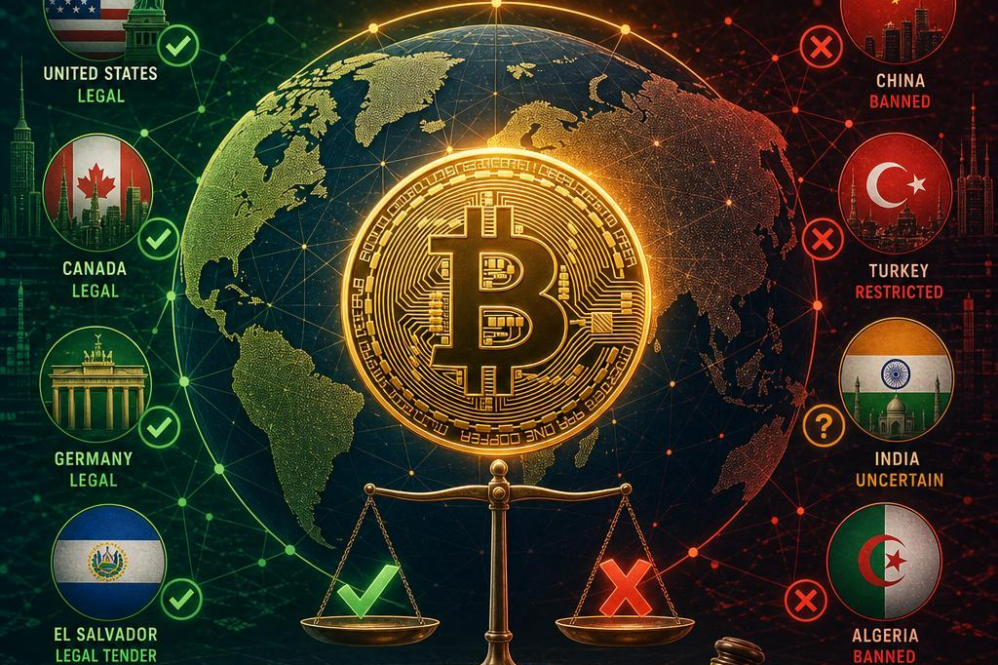
The legal status of bitcoin exhibits notable divergence across the globe,shaped by each jurisdictionS economic policies,technological outlook,and regulatory priorities. Some countries have embraced cryptocurrency as a legitimate medium of exchange and an investment vehicle, integrating it within their financial systems.In contrast, others impose strict restrictions or outright bans to curtail perceived risks such as money laundering, fraudand market volatility. This dynamic landscape reflects the ongoing balancing act between fostering innovation and protecting consumers.
Key regulatory approaches include:
- Full legalization and regulation: Countries like Japan and Switzerland have established thorough frameworks that regulate bitcoin exchanges, enforce anti-money laundering (AML) standards, and provide legal clarity for users.
- Partial acceptance with restrictions: Nations such as the united States employ patchwork policies, where bitcoin is legal but subject to extensive financial regulations including taxation and securities laws.
- Prohibition or heavy crackdown: China and bangladesh exemplify jurisdictions that have banned bitcoin trading and mining activities due to concerns over financial stability and illicit use.
| Jurisdiction | Regulatory Status | Notable Policy |
|---|---|---|
| Japan | Legal & Regulated | Licensing of crypto exchanges |
| United States | Legal with restrictions | IRS taxation and SEC oversight |
| China | Prohibited | Ban on all crypto trading |
| Germany | Legal & Regulated | Classifies bitcoin as private money |
Detailed Analysis of Cryptocurrency Legislation in key Economies
Across the globe, the legal treatment of bitcoin and other cryptocurrencies varies significantly, reflecting differing national priorities and economic strategies. In some jurisdictions,bitcoin is embraced as a legitimate payment method and investment vehicle,while others impose strict controls or outright bans. As an example, countries like Japan and Switzerland have developed comprehensive regulatory frameworks that recognize cryptocurrencies as legal tender or assets under financial law, fostering innovation and consumer protection simultaneously.
Conversely, a number of countries maintain a cautious or prohibitive stance, aiming to mitigate risks related to fraud, money laundering, and financial instability. These include nations where cryptocurrency is heavily restricted or completely banned, frequently enough coupled with severe penalties for violations. Others fall somewhere in between, permitting the use and trade of bitcoin but regulating exchanges and requiring stringent compliance measures from operators.this patchwork of regulations creates a complex international landscape, especially affecting cross-border transactions and global market integration.
| Country | Legal Status | Regulatory Approach |
|---|---|---|
| Japan | Recognized Legal Tender | Strict Exchange Licensing, Consumer Protection |
| United States | Asset Classification | Regulations Vary by State, SEC Oversight on ICOs |
| China | Ban on Crypto Transactions | Prohibition on Exchanges and Mining Activities |
| Germany | Recognized as Financial Instrument | Registration Required for Service Providers |
Key factors shaping legislation include:
- Economic impact: How cryptocurrencies integrate with or disrupt existing financial systems.
- consumer protection: safeguarding investors against scams and market volatility.
- Compliance and security: anti-money laundering (AML) and counter-terrorism financing (CTF) regulations.
Implications of Legal variances for International bitcoin Transactions
When engaging in bitcoin transactions across borders, individuals and businesses must navigate a complex labyrinth of legal frameworks that differ significantly from one jurisdiction to another. These variances impact how bitcoin is classified-whether as currency, propertyor a commodity-and influence the regulatory obligations related to taxation, money laundering, and consumer protection. Understanding these distinctions is crucial for ensuring compliance and minimizing risks associated with international transfers and conversions.
In practice, some countries adopt a progressive approach by providing clear regulatory guidelines that encourage innovation and investment in cryptocurrency technologies. Others maintain stringent controls or outright bans, creating challenges for cross-border use. For example, jurisdictions with strict Know Your customer (KYC) and Anti-Money Laundering (AML) laws may require extensive documentation, thereby slowing down transaction times and increasing operational costs for businesses.Conversely,regions with more permissive regulations may present opportunities but also expose participants to higher legal uncertainty and potential enforcement actions.
| Region | Regulatory Approach | Impact on Transactions |
|---|---|---|
| North America | Regulated as property; strict AML/KYC | high compliance costs; clear tax reporting |
| Europe | Currency treatment varies; EU directives apply | Moderate regulation; cross-border harmonization underway |
| Asia | Mixed; ranging from crypto-kind to bans | Varied access and risk level; compliance complexity |
- legal clarity fosters trust and wider adoption of bitcoin.
- Variation in tax obligations can lead to unintended liabilities if overlooked.
- Risk of sanctions and penalties increases in strict regulatory environments.
Strategic Recommendations for Compliance and Risk Mitigation in bitcoin use
To navigate the complex landscape of bitcoin legality, it is paramount for users and businesses to implement comprehensive compliance frameworks.This includes adhering to local anti-money laundering (AML) regulations and know-your-customer (KYC) protocols, which are critical in jurisdictions with stringent financial oversight. Prioritizing openness in transaction reporting and staying updated with evolving regulatory announcements will minimize legal exposure and build trust with authorities.
Risk mitigation must also encompass diversified operational strategies. This entails conducting thorough jurisdictional risk assessments before initiating bitcoin transactions or services. organizations should establish clear policies for transaction limits, enforce multi-factor authentication, and regularly audit their cryptocurrency holdings. Such proactive measures reduce vulnerabilities associated with cyber threats and regulatory crackdowns.
Consider the following core pillars to strengthen compliance and risk management:
- Regulatory Intelligence: Continuously monitor bitcoin regulations across relevant countries.
- Internal Controls: Implement robust governance structures and audit trails.
- Education and Training: Equip teams with up-to-date knowledge on legal obligations and security practices.
- Technology Integration: Utilize blockchain analytics tools and compliance platforms to detect suspicious activities.
| Country | Compliance Focus | Risk Mitigation strategy |
|---|---|---|
| USA | AML/KYC Enforcement | regular reporting to FinCEN, Transaction monitoring |
| Japan | Licensing and Consumer Protection | Mandatory exchange registration, User education |
| Germany | Custody Regulation | Stringent custodian accreditation, Capital reserve requirements |