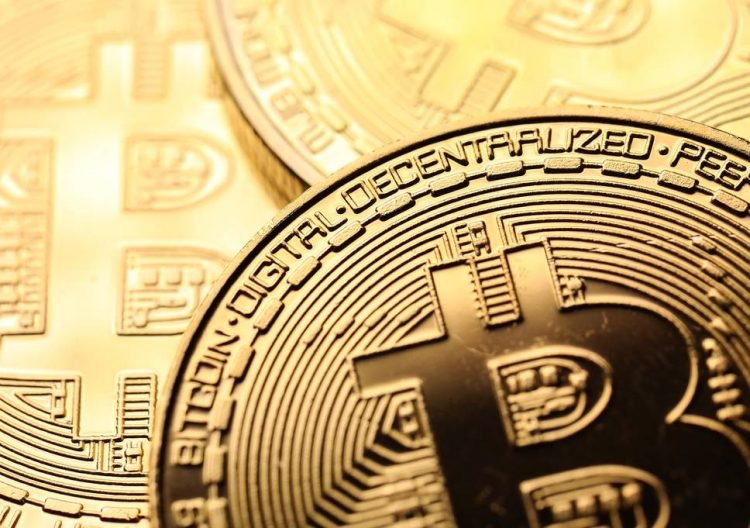
bitcoin is going to be having an inflation rate of 1.8% in over a year. In 2020, bitcoin (BTC) daily issuance is going to drop 50% and reduce the new bitcoin released to the market. This is something that could play a very important role in bitcoin’s future price.
bitcoin Inflation Rates Will Fall Under 2% Per Year
According to , bitcoin is going to be halving once again. This is the third time in history that the digital asset is going to be experiencing a new issuance reduction. At the moment, there are 1,800 new coins generated every single day. Miners process transactions and receive 12.5 BTC for each block they find.
In 455 days, bitcoin block mining reward will be decreasing down to 6.25. This is equal to 900 BTC per day. Thus, the inflation rate of the most popular digital asset is going to be falling from 3.81% to 1.8%.
This is going to have a very important effect on the market and the whole crypto community. For the first time, bitcoin is going to have a smaller inflation rate than the target imposed by central banks in developed countries. The central banks from the most important economies in the world limit their inflation rate to close to 2%. Ideally would be to have an inflation rate as close as possible to 2% per year but not larger.
In some cases, countries surpass the inflation target and central banks tend to increase reference rates. If the inflation remains under the goal and does not seem to be reaching that target, reference rates drop.
In developing countries, inflationary policies tend to be more flexible. There are some countries that establish an inflation rate per year of 4% or 5%. Thus, they are more flexible when it comes to handling inflation. There are also some other nations such as Venezuela or Zimbabwe in which the governments do not have any target for their inflation rates.
bitcoin works in a different way. There is nobody deciding which is going to be the inflation target for the upcoming year. The inflation rate is pre-determined to fall every four years. This provides predictability and makes of bitcoin a scarce digital currency. bitcoin has a fixed supply. If the demand for the asset increases, the supply remains the same.
There are going to be issued 21 million BTC. Now there are 17,555,263 BTC in circulation, 83.6% of the total Bitcoins mined. Thus, in the four years after the halving, there are going to be issued 1,312,500 BTC more, reaching 90% of the total bitcoin supply mined.
Individuals are going to be able to start thinking about bitcoin as a of value against inflation. Its issuance will be falling over time, which is clearly going to have an effect on its price. With a stable or increased demand, the price of the most popular virtual currency should start growing once again. There are several experts already explaining how this can affect bitcoin’s price.
bitcoin, Gold and Banks
Banks the common way for a normal person to their cash. For people with a massive wealth, the portfolio is usually distributed among 5-10 assets or more that that lose value in time. In fact, most of the millionaires search for assets that could increase in price over time – even for a profit or barely to cover the losses from inflation. And most millionaires search for banking alternatives as banks are not the safest place to your wealth.
Most of them use Gold for that as its an finite asset that cannot be reproduced by a chemical process. It can only be mined and in a few years or hundreds of years – there would be no more gold. That’s one of the similarities between Gold and – both are mineable, limited and cannot be reproduced. But why would people chose in the future and not Gold? Especially that we see that is dropping.
Pretty simple, if we check the gold graph – we could see that gold has its periods where its value dropped a lot. 1982, 1985 and even 2015. And many other times. But, if we take the ideal case where there is an investor who’d purchase it monthly for a certain amount of cash – he’s be on a profit on the long term.
is similar here. If you purchased it in 2017 after July – there would probably be a long time until you’d get on breakeven. But someone who’d been purchasing it for years – he’s still on a profit, even now. There are a lot of short term opportunities – is not one of them. is a long term investment that you need to invest carefully and not go all-in on a price that you consider great – as it might dip further.
Another important reason – keeping it safe. You can keep you safe pretty easy – it on a paper and don’t tell anyone your private keys. You can your private keys in book or a place that you consider safe. With Gold, its much more hard as you need to it in an institution or in a safe in your house that would probably take a lot of space.
The Halving
The block reward halving of will also have an impact on the price. The miners run a business. They mine using the devices that they invested in and energy to earn . They need to sell those in order to maintain the business going. Right now, around 1800 are mined everyday and most of them are sold in order to cover the expenses.
When the halving will occur – there will be a way smaller sell pressure on and this should probably lead to a small increase in price. Let’s see what happen when the latest halving occurred. The latest halving was on 9th July 2016 – but started increasing in November 2016. The price increase with at least 50% in 2016 – and we all know what happened in 2017 and 2018.
Reducing the block reward means that there would be less Bitcoins available for . Assuming the miners will always sell 70% of they mine to cover the expenses, that leaves us with around 630 sell presure per day from miners. There would also be a lot of businesses buying and selling on a daily basis. The halving could probably lead to an increase in the ’s price as the demand will keep the same or grow – but the supply will decline;
There are many other factors that we should take into consideration regarding the evolution of ’s price pre and after the block reward halving. But, if we take into consideration the last block reward halvings – the price seems to have an uptrend movement after the halving. Nothing’s guaranteed, of course, but the next halving will surely be the most important & interesting one to watch.
Published at Sun, 24 Feb 2019 18:13:01 +0000


![Fasten your seatbelts!! Is bitcoin [btc] headed to 10k!!?! [cryptocurrency, altcoin news]](https://ohiobitcoin.com/wp-content/uploads/2019/01/kBirvM.jpg "Fasten your seatbelts!! Is bitcoin [btc] headed to 10k!!?! [cryptocurrency, altcoin news]")