In a discussion about the US Treasury Department Office of Foreign Asset Control’s addition of cryptocurrency addresses to the “no pay list,” bitcoin speaker and celebrity called the move “completely useless” and “fundamentally fascist.”
US Treasury Blackballs bitcoin, Petro Addresses
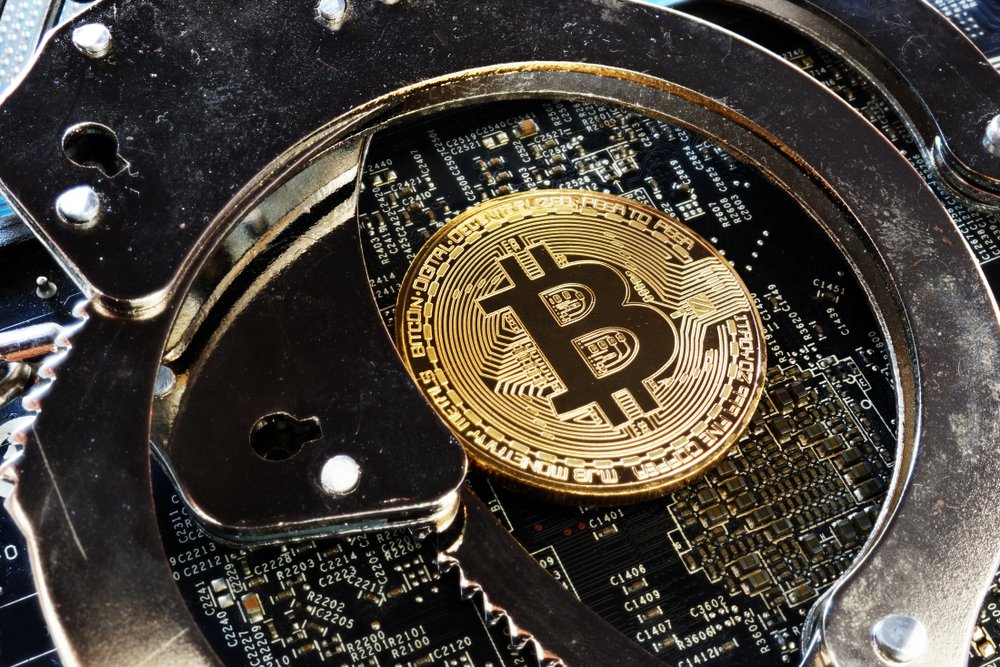
The US Treasury has blacklisted a variety of crypto addresses. | Source: Shutterstock
Not just Iranian bitcoin addresses have been added to OFAC’s list, , including the Petro. OFAC’s database is not searchable by address, which led the Let’s Talk bitcoin host to suggest that it should somehow be fed into crypto nodes so that wallets can automatically warn users.
Antonopoulos pointed out that a typical user can generate infinite addresses and use them. Blocking one address just leads to the creation of another. Specifically, the author of “Mastering bitcoin” said:
“Keep in mind, this is not a technological control. The reason it’s not a technological control is because it’s so absurd it couldn’t ever possibly work as a technological control. Your average laptop computer can generate billions of bitcoin addresses per second on a single seed. And use any and all of them. So blocking an address is completely useless, if you consider that a technological control.”
Antonopoulos believes the purpose of adding cryptocurrency addresses to the “no pay” list is an effort to scare people away from using bitcoin. After all, it’s both illegal to send and receive transactions to people on the list. If you receive a random payment or donation, you have no way to be sure of its origin.
Crypto Blockchains: More Draconian Than Fiat?

Blockchain analytics companies have raised to snoop on crypto transactions and then sell the data to the government. | Source: Shutterstock
Then there is the issue of “blockchain surveillance,” which monitors later use of cryptocurrencies after an initial transaction. A policy of , for example, is to monitor for several hops after coin leaves a user’s account. If they determine that something untoward happened with the crypto later on, they can revoke your account (and freeze your assets, in some cases).
The way bitcoin works, a transaction is valid as long it conforms to the rules of consensus. bitcoin has no built-in censorship mechanisms. If an Iranian business sends you a bitcoin transaction, or the inverse happens, the transaction isn’t subject to the laws of man. It’s subject to the laws of bitcoin. But if you break the laws of the US government, you can find yourself in hot water. Antonopoulos went on:
“If you consider it a political control whose intent is to have a chilling effect on the ability of US citizens to use cryptocurrencies – just like the capital gains tax was designed very similarly – then it all makes sense. This has zero effect as a technical control. It has an enormous effect as a political control.”
‘It Will Only Be Enforced By Selective Prosecution’
Antonpolous said the only way to enforce the bitcoin blacklist was through “selective prosecution.” | Source: Shutterstock
The burden is on the user of the money, not the government, Antonopoulos said.
“[B]y shifting that burden, whereby you have to not only have access to this database but you have to keep it up to date, and then you have to be able to prove that at the time that you did the transaction and checked the database, that name wasn’t there. But oh, 17 seconds after you did the transaction, that address was added. How could you possibly know? But look, it’s in the computer. Therefore you should have known. It gets impossible to enforce and it will only be enforced by selective prosecution.”
The famous bitcoin speaker called the policy “fundamentally fascist.”
“So the whole point of this is to create a sledgehammer law that can be smashed on the head of anybody who steps out of line and chill the activity of everybody else. It’s fundamentally fascist in nature.”
After OFAC added the bitcoin addresses of two Iranians, . They embedded political messages in the bitcoin blockchain, as well.
Meanwhile, when it comes to money laundering and illegal activity. It’s fundamentally easier to bankroll crime with cash than it is with cryptocurrency. If the government asserts that cryptocurrencies essentially sponsor illegal activity or are a (as Chuck Schumer once said), then they should acknowledge that the currency they issue does so more efficiently and more often.
Listen to the whole talk .
Featured Image from Shutterstock
Published at Fri, 22 Feb 2019 18:27:27 +0000
