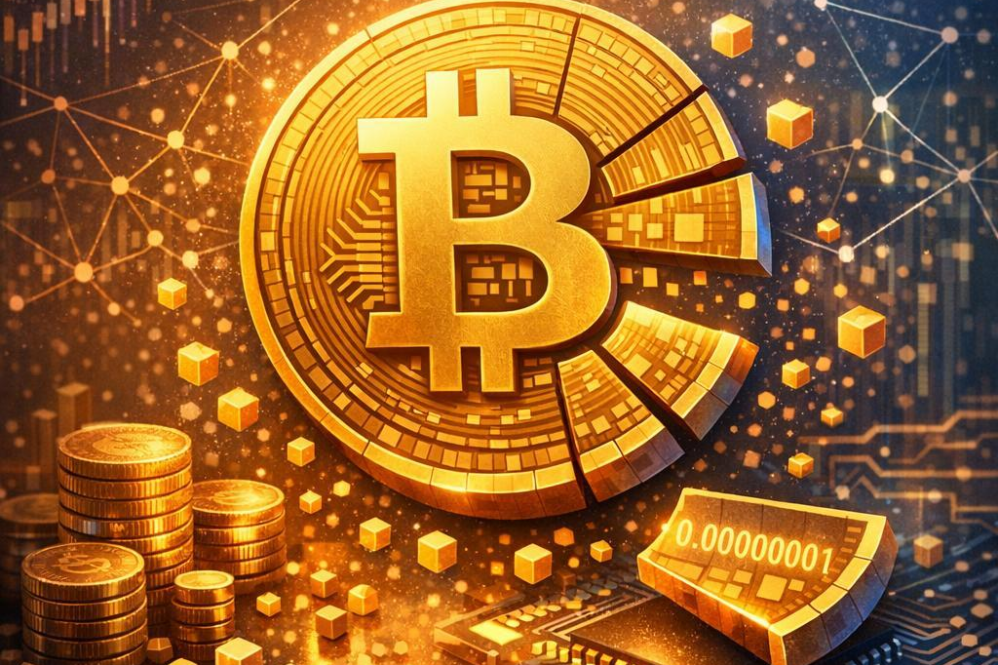
bitcoin Divisibility and Its role in Cryptocurrency Transactions
The ability to divide bitcoin into extremely small units has been a crucial factor in its widespread usability and adoption. Unlike traditional currencies, where the smallest unit often limits transaction granularity, bitcoin’s smallest fraction-a satoshi-represents one hundred millionth of a single bitcoin (₿0.00000001). This atomic level divisibility allows users to conduct microtransactions and facilitates bitcoin’s role as both a store of value and a medium of exchange. It essentially bridges the gap between large-value transfers and tiny everyday purchases in a seamless manner.
Understanding the value of satoshis is essential for grasping bitcoin’s economic functionality.As the market price of one full bitcoin can reach tens of thousands of dollars, smaller denominations become invaluable when dealing with fractions in daily transactions or smart contracts. Such as, a merchant accepting bitcoin for a cup of coffee might only require a few thousand satoshis, making the transaction more precise and efficient. This versatility also empowers decentralized finance applications (DeFi) to use bitcoin in granular flows without rounding errors or excessive fees, expanding the ecosystem’s capabilities.
| Unit | Value in bitcoin (BTC) | Equivalent in Satoshis |
|---|---|---|
| bitcoin (BTC) | 1.00000000 | 100,000,000 |
| Millibitcoin (mBTC) | 0.00100000 | 100,000 |
| Microbitcoin (μBTC) | 0.00000100 | 100 |
| Satoshi (sat) | 0.00000001 | 1 |
bitcoin’s divisibility not only democratizes access to this digital asset by allowing fractional ownership but also supports innovation in payment technology and financial inclusion.It enables users from different economic backgrounds to participate actively in the crypto ecosystem by transacting in amounts that suit their financial circumstances.
Exploring the Concept and Significance of Satoshis
The concept of satoshis lies at the vrey heart of bitcoin’s functionality, enabling an unprecedented level of precision in digital currency transactions. A satoshi represents the smallest divisible unit of bitcoin, equal to one hundred millionth of a single bitcoin (0.00000001 BTC).This granular divisibility is crucial because it allows bitcoin to function as both a store of value and a practical medium of exchange, adaptable to various transaction sizes without losing significance.
Understanding satoshis deepens our appreciation for bitcoin’s design as a decentralized currency capable of supporting microtransactions and everyday use cases. Unlike traditional fiat currencies, which are often limited to two decimal places, bitcoin’s extensive divisibility means payments can be made in incredibly precise amounts. this flexibility supports a wide range of economic activities,from tipping content creators online to paying for services in emerging markets where even tiny fractions of bitcoin hold meaningful value.
To give a clearer viewpoint, consider the following breakdown of bitcoin denominations expressed in satoshis:
| Denomination | Equivalent Satoshis |
|---|---|
| 1 bitcoin (BTC) | 100,000,000 |
| 0.01 bitcoin (mBTC) | 1,000,000 |
| 0.001 bitcoin (bit) | 100,000 |
| 1 satoshi | 1 |
This structure illustrates how satoshis empower bitcoin with exceptional divisibility and enable users to transact with precision and confidence in a wide spectrum of economic scenarios.
How satoshis Enhance bitcoin’s Usability and Accessibility
bitcoin’s smallest unit, the satoshi, plays a pivotal role in making the cryptocurrency practical for everyday use. By enabling transactions at amounts far below one full bitcoin, satoshis provide a granular level of control that democratizes access, especially as bitcoin’s value continues to grow. This smaller denomination removes barriers for microtransactions, tipping, and micropayments in digital economies, allowing users worldwide to engage with bitcoin irrespective of their financial status.
key benefits of satoshis in bitcoin usability include:
- Facilitating small payments without the need to hold a significant amount of bitcoin.
- Encouraging adoption by making bitcoin accessible to those who might find whole bitcoin units intimidating or impractical.
- Supporting a wide range of applications,from e-commerce to charitable donations,by allowing precise,low-value transactions.
| Satoshi Equivalents | Value in bitcoin (BTC) | Practical Use Cases |
|---|---|---|
| 1 satoshi | 0.00000001 BTC | Micropayments,tipping |
| 100 satoshis | 0.000001 BTC | Online content payments |
| 10,000 satoshis | 0.0001 BTC | Small purchases, donations |
Calculating the Value of Satoshis in Today’s Market
To accurately assess the current worth of satoshis, it is crucial to understand the relationship between bitcoin’s market price and its smallest unit. One satoshi represents 0.00000001 BTC, so its value fluctuates directly with bitcoin’s price. Such as, if bitcoin is trading at $30,000, then one satoshi would be worth precisely $0.0003. This granular fraction makes bitcoin highly divisible and accessible,enabling microtransactions and broader participation in the cryptocurrency ecosystem.
Calculating satoshi values in real time involves simple math but requires constantly updated pricing data.Here’s a speedy formula you can use:
- Value of 1 Satoshi = Current BTC Price ÷ 100,000,000
This ensures you always have an up-to-the-minute estimate on the smallest unit’s value when bitcoin markets open worldwide. For those handling large volumes, converting satoshis to dollars or other fiat currencies can be simplified through spreadsheets or automated calculators with real-time APIs integrated.
| BTC Price (USD) | Value of 1 Satoshi (USD) | Value of 10,000 Sat (USD) |
|---|---|---|
| $20,000 | $0.0002 | $2 |
| $40,000 | $0.0004 | $4 |
| $60,000 | $0.0006 | $6 |
This table highlights how even small changes in bitcoin’s price impact the value of satoshis, emphasizing the importance of tracking market conditions closely.In doing so, enthusiasts and investors alike gain a precise understanding of how this smallest bitcoin unit functions in real-world transactions and investments.
Practical Recommendations for Utilizing Satoshis in Investments
When incorporating satoshis into your investment strategy, it’s crucial to recognize their role as the smallest divisible unit of bitcoin, enabling precise and flexible transaction amounts.This granularity allows investors to enter the market with minimal capital, making it ideal for dollar-cost averaging. Regularly purchasing satoshis rather than whole bitcoins mitigates market timing risks and smooths out price volatility, ultimately leading to more consistent long-term growth.
Another practical approach is to treat satoshis as a metric for portfolio diversification.By allocating specific satoshi amounts across different cryptocurrencies or blockchain-based assets, you maintain granular control and accurate tracking of your investments. For example, creating a balance where a portion of your funds is invested predominantly in satoshis, while the remainder is held in other tokens, can help optimize risk and reward according to your financial goals.
| Investment Strategy | Benefit | Key Action |
|---|---|---|
| Dollar-Cost averaging | Reduces impact of volatility | Automate small satoshi purchases |
| Portfolio Diversification | Balances risk and reward | Allocate satoshis across assets |
| Micro-Investing | Entrances with low capital | Utilize satoshis for fractional buys |
Lastly,it’s essential to leverage technological tools that support satoshi-level transactions and tracking. Numerous wallets and investment platforms now provide features enabling users to visualize their holdings in satoshis, set alerts for satoshi price movements, or even automate reinvestment of micro-earnings in satoshis. Staying informed and using dedicated apps makes managing small units intuitive and significantly enhances strategic decision-making.
Future Implications of bitcoin Divisibility on Financial systems
The unparalleled divisibility of bitcoin, down to one hundred millionth of a single coin, opens up groundbreaking possibilities for the evolution of financial ecosystems worldwide. As traditional fiat currencies contend with inflation and limited fractional units, bitcoin’s granular unit, the satoshi, guarantees transactional precision and accessibility for users regardless of investment scale. This level of divisibility empowers a new wave of microtransactions, enabling economic activities that were previously economically unfeasible due to fees or minimum transfer limits in conventional banking systems.
Key transformations anticipated from increased adoption of this divisibility include:
- Enhanced financial inclusion – People in underserved regions can engage in global commerce with minimal capital.
- Micropayment economies – Content creators, digital service providers, and IoT devices can seamlessly transact using fractional satoshis.
- Refined monetary policy mechanisms – Programmable money and smart contracts can utilize satoshi-level granularity for precise economic interventions.
| Aspect | Traditional Systems | bitcoin Divisibility |
|---|---|---|
| Minimum Transfer Unit | Dollars, Cents | bitcoin, Satoshis (0.00000001 BTC) |
| Transaction Cost Impact | High on Small Payments | Minimal, enabling microtransactions |
| Financial Inclusion | Limited by Infrastructure | Borderless and accessible globally |
This shift towards ultra-fine currency units not only democratizes access but also forces legacy financial infrastructures to innovate or risk obsolescence. As the concept of money continues to evolve, the satoshi could become the linchpin in building a truly decentralized, efficient, and equitable financial order for the future.