October 28, 2026

Capitalizations Index – B ∞/21M

Bitcoin Briefly Drops to $9,000: Factors Behind the Decline

Bitcoin briefly drops to $9,000: factors behind the decline

Bitcoin Briefly Drops to $9,000: Factors Behind the Decline

Bitcoin briefly drops to $9,000: factors behind the decline
Advertisement

Get Trading Recommendations and Read Analysis on Hacked.com for just $39 per month.

On March 8, the price of bitcoin dropped to $9,000, after reaching $11,000 merely 48 hours ago. Analysts have attributed three major factors to the decline in the price of bitcoin: Mt. Gox sell off, SEC announcement, penalization of Japanese exchanges.

Mt. Gox Trustee Sell-Off

According to the official document released by the Mt. Gox trustee, a total of $404 million worth of bitcoin and bitcoin Cash have been sold over the past few months, at a price determined by the trustee, which is significantly lower than the current market value of bitcoin and bitcoin Cash.

“As a result of the consultation with the court, I considered it necessary and reasonable to sell a certain amount of BTC and BCC at this point and secure a certain amount of money for distribution resources, and thus, I sold the amount of BTC and BCC above. I made efforts to sell BTC and BCC at as high a price as possible in light of the market price of BTC and BCC at the timing of sale. I plan to consult with the court and determine further sale of BTC and BCC,” the document read.

In the next few months, the trustee intends to liquidate the remaining assets, which are 166,344.35827254 bitcoins, worth around $1.7 billion based on the current value of bitcoin.

It is likely that the planned sell-off of over a billion dollars worth of bitcoin has caused a domino effect on many cryptocurrency exchanges, leading to the decline in the value of bitcoin and other cryptocurrencies as a consequence.

SEC’s Announcement

This week, the US Securities and Exchange Commission (SEC) announced that cryptocurrency exchanges that have listed initial coin offerings (ICOs) or tokens on their platforms are required to register with the agency in order to continue providing support for ERC20 tokens.

As CCN reported, Ripple CEO Brad Garlinghouse stated that the market overreacted to the announcement of the SEC, given that cryptocurrency exchanges have simple options to comply with the SEC: de-list ICO tokens or register with the agency.

Garlinghouse added that there exists no uncertainty regarding the announcement of the SEC, as he noted:

In context of yesterday’s SEC statement(s), I hear some in crypto talk about the current ‘regulatory uncertainty.’ What’s uncertain? SEC’s statements have been consistent and clear. ‘Regulatory uncertainty” is just a euphemism for ‘we wish we could ignore SEC regulations.’”

Andreas Antonopoulos, a well-respected cryptocurrency and security expert, emphasized that the SEC and other federal agencies tightening regulations for ICOs was expected. Antonopoulos explained:

“The recent SEC & FinCEN statements are not unexpected. I have been warning people about the potential risks (technical, financial, and legal) of engaging with ICOs for years.”

Japan’s Cryptocurrency Exchange Penalization

As Tokyo-based technology reporter Yuji Nakamura reported, the Japanese government recently penalized four cryptocurrency exchanges and revoked the licenses of two trading platforms for poor security and failing to meet Anti-Money Laundering (AML) and Know Your Customer (KYC) policies.
Bitcoin briefly drops to $9,000: factors behind the decline

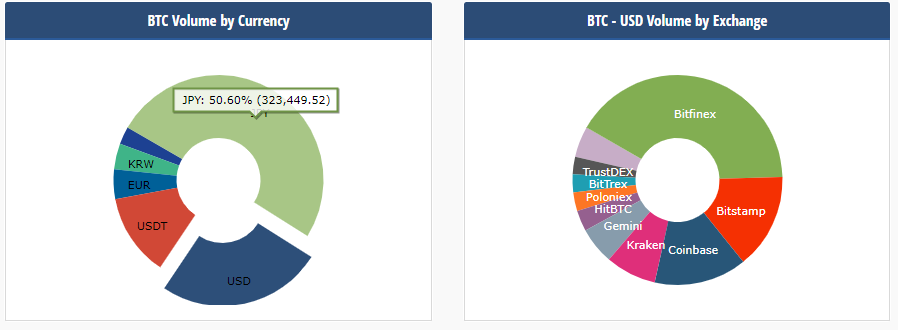
Given that Japan still remains as the largest bitcoin exchange market with over 51 percent of the market share, analysts stated that the crackdown on small exchanges have had an impact on the global cryptocurrency market.

Follow us on Telegram.
Advertisement

Published at Thu, 08 Mar 2018 21:05:37 +0000

bitcoin Analysis

Previous Article

Motley Fool tells their followers some truth!

Next Article

How IoT Chain is Revolutionizing the Internet of Things

You might be interested in …

Third Web #0 – The Ether Review Final Episode

Today we?’?re wrapping up The Ether Review and kicking off The Third Web. Some of the remarks I make in this episode are overstated and under qualified. Please feel free to critique any views you disagree with in the comments and if there is sufficient intelligent controversy I?’?ll revisit the subjects in question in subsequent episodes.

This podcast is targeted at industry observers looking for a technical examination of issues on the frontier of what has become known as the blockchain space. However, for those less versed in the field, supplementary content will be published in anticipation of each episode. Failing that, I?’?ll add links in the notes to help along the casual listener.

Blockchain technology, and specifically, the idea of a value-transport enabled internet is no longer new. Looking at the recent history of the space, we see a hockey stick of innovation and investment.

In 2014, just as the first ICO boom launched, I began producing my first podcast, Beyond bitcoin. It explored the explosion of new blockchain platforms and other innovations in the space.

As exciting as this technology was, common problems existed across all platforms: scaling to support broad adoption, and providing a service the mainstream market would accept.

After speaking with Meher Roy and Tim Swanson about these problems in early 2015, the line of questioning that inspired me to create Beyond bitcoin came to an end. In that final episode, we settled on a view of the future in which a network of blockchains secured by permissioned validators would enable global value transfer. This made more sense than a future based on permissionless blockchain networks and all the challenges that came with them.

Then came Ethereum. Infinite functionality paired with an aggressive scaling roadmap reopened the question of what might come next, this time examined in a new podcast, The Ether Review.

Two years on, having been immersed in the world of Ethereum, interviewed hundreds of people for podcasts, articles and videos and worked for the largest blockchain centric company in the world – ConsenSys, a disturbing reality has become apparent. We have not moved on from the paradigm of 2014, and the Ethereum scaling roadmap will not provide the performance new use cases need to emerge.

In future episodes of The Third Web, we will examine blockchain scaling, and ask the questions: What are the design trends bringing greater transaction supply to the market? What new business models will this enable? What new services can we expect to see, and what products will be built using those services?

Meher Roy was a virologist working in the vaccines industry when we first spoke in 2014. Today he is focussed full time on the blockchain space and hosts the excellent Epicenter podcast.

Tim Swanson was director of market research at R3 for two years and has recently founded his own research company, Post Oak Labs

That was it! The first episode of The Third Web! A big thanks to Breakmaster Cylinder for the tunes. No social, email, or web accounts just yet but you can reach me on twitter @arthurfalls. Of course you should subscribe on itunes or your favorite podcast manager. this feed will probably still be called The Ether Review but it will update in time.

https://twitter.com/ofnumbers

https://twitter.com/MeherRoy

https://en.wikipedia.org/wiki/Hawala

*Trivial issuance of a useful asset episode

https://propsproject.com