Product Description If you’ve heard about bitcoin but don’t really know what it is – let alone why you should care – this book is for you. If you’re looking for a clear guide to the what, the how, and the why of bitcoin – for yourself or for all the friends who give you blank looks regarding the cryptocurrency – bitcoin Basics: 101 Questions and Answers is just what you need.
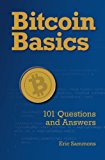
In this easy-to-read guide Eric Sammons brings to bear his technical and economic knowledge as well as his writing expertise to shine a light on the bitcoin phenomenon, answering questions like:
One day in the not-too-distant future we may view bitcoin as revolutionary. It has the potential to change the way we think about money, economics, communication, and data. If you don’t feel like you’re quite ready for the revolution, don’t worry. You don’t need to be an expert or tech geek to understand bitcoin. But after reading this guide you’ll have the answers to all your questions about the cryptocurrency – and you’ll be looking forward to beginning your own bitcoin adventure.
bitcoin News House of Nakamoto Opens in Amsterdam The House of Nakamoto, an Austrian project helping newbies enter the cryptocurrency world, has recently opened a new store in Amsterdam. Residents and guests of one of […]
Thank You Notes: bitcoin, Curly Fries Jimmy pens thank you notes to daylight saving time, beef jerky and other things. Subscribe NOW to The Tonight Show Starring Jimmy Fallon: http://bit.ly/1nwT1aN Watch The Tonight Show Starring […]
Support the show, consider donating:BTC: 17foNL7cdvPXPyiazDGuKfrjjdJQjwUTv1 ()ETH: 0x8cdb49ca5103Ce06717C4daBBFD4857183f50935 ()
For decades, science and academia have leveraged distributed computing to solve massive computational problems. Distributed grid computing schemes allow donors to volunteer their desktop computer’s idle resources toward scientific projects in physics, biology, and chemistry, where large amounts of parallel computing resources are necessary. Relying on software like BONIC, these networks provide features such as built-in fault tolerance and result verification. And with the proliferation of mobile and IoT, the potential for massively distributed grid networks has never been greater.
Gilles Fedak, a researcher at the French computer science research body Inria, joins us to discuss a new project which aims to build a high-performance distributed cloud infrastructure marketplace. Relying on mature grid computing technologies, iExec utilizes Ethreum to organize a peer-to-peer marketplace of computing resources, allowing anyone to rent their idle resources to grid networks. If it succeeds to execute on its vision, this game-changing project could revolutionize distributed computing through cost reduction and the commoditization of resources.
Topics discussed in this episode:
Gilles’ background as a distributed computing researcher
Distributed computing and it’s applications in science and industry
The problems we see in distributed computing networks
The iExec project and its vision for a distributed computing resource marketplace
How iExec works as an Ethereum smart contract
The different components and participants of iExec
The iExec token and upcoming crowds ale
The project’s business model and roadmap
Links mentioned in this episode:
Sponsors:
Jaxx: Wallets that Unify the Blockchain Experience Across Devices –
Ledger: Smart card security for your Bitcoins – Get 10% off your first order when you use the code EPICENTER –
This episode is also available on :
Watch or listen, Epicenter is available wherever you get your podcasts.
Epicenter is hosted by Brian Fabian Crain, S?ƒbastien Couture & Meher Roy.