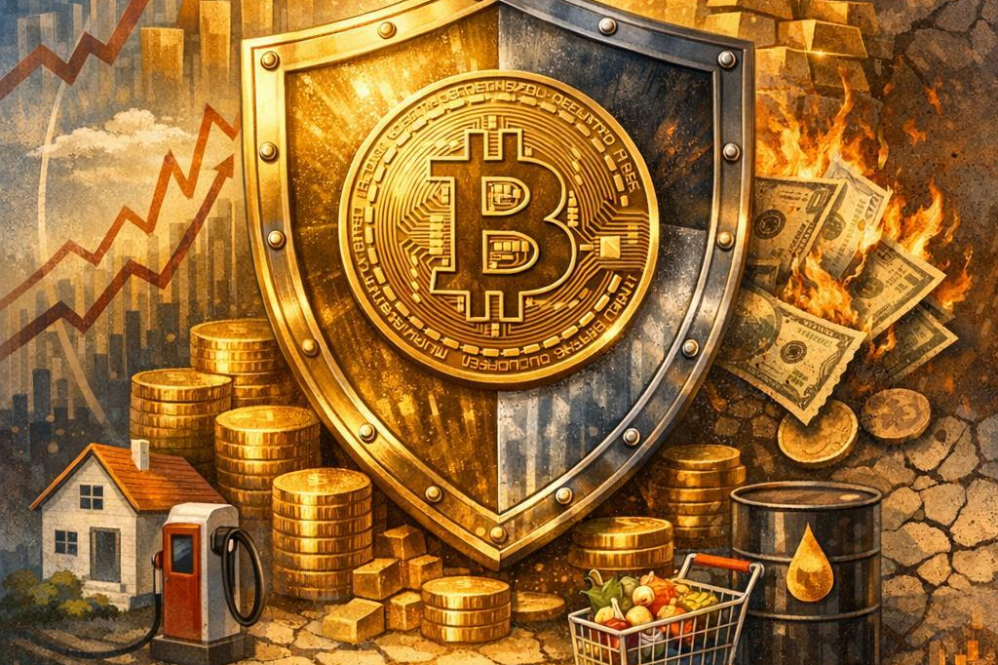
The Historical Relationship Between bitcoin and Inflation Trends
Throughout its existence, bitcoin has demonstrated a engaging correlation with global inflationary pressures, notably during periods of heightened economic uncertainty. As conventional fiat currencies depreciate due to expansive monetary policies and supply chain disruptions, bitcoin’s decentralized and limited supply design has frequently enough drawn attention as a potential store of value. Historical data suggests that particularly during spikes in inflation rates, bitcoin’s price movements reflect investor behavior seeking refuge from eroding purchasing power.
Key historical observations include:
- During the 2020-2021 inflation surge following massive fiscal stimulus, bitcoin experienced significant price appreciation, emphasizing its role in diversified portfolios.
- Contrary to conventional assets like bonds, bitcoin’s unique characteristics shield it from direct inflationary impacts caused by interest rate adjustments.
- Periods of hyperinflation in certain regions also saw localized increases in bitcoin adoption as an choice financial hedge.
| Year | Inflation Rate (%) | bitcoin Price Change (%) | Notable Event |
|---|---|---|---|
| 2017 | 2.1 | +1300% | First major bitcoin bull run |
| 2021 | 5.4 | +60% | COVID-19 stimulus and inflation rise |
| 2022 | 7.1 | -65% | Inflation peak, market correction |
These trends underscore the complex dynamics at play when considering bitcoin’s role relative to inflation. While it is not immune to market volatility, the cryptocurrency’s fundamental scarcity and protocol-driven issuance make it an intriguing asset for inflation-conscious investors.
Mechanisms by Which bitcoin Acts as an inflation Hedge
bitcoin’s design incorporates a fixed supply capped at 21 million coins, a feature that inherently limits inflationary risks related to currency dilution. Unlike fiat currencies, which can be expanded by central banks, bitcoin’s scarcity means no new units will be arbitrarily created beyond this limit. This predictable issuance schedule creates trust among holders that their purchasing power won’t be eroded over time by inflationary pressure caused by unchecked money printing.
Another core mechanism lies in bitcoin’s decentralized consensus model. Its blockchain, maintained across a distributed network without any single point of control, shields it from government intervention and policy shifts that typically influence inflation rates. By operating independently of monetary authorities, bitcoin offers a level of insulation against economic decisions that can trigger soaring inflation, such as quantitative easing or excessive debt monetization.
Additionally,bitcoin’s role as a global digital asset enhances its inflation-hedging potential through easy transferability and divisibility. Investors can quickly move value across borders and convert to smaller units without losing value, preserving wealth against currency devaluation. This flexibility, combined with heightened adoption in inflationary economies, underscores bitcoin’s capacity to act as a practical store of value in turbulent financial landscapes.
| Mechanism | Impact on Inflation Hedge |
|---|---|
| Fixed Maximum Supply | Prevents currency dilution, preserving purchasing power |
| Decentralized Network | Resists government inflationary policies |
| High Divisibility & Transferability | Ensures wealth mobility and protection across economies |
Comparative Analysis of bitcoin and Traditional Inflation-Protected Assets
When evaluating inflation protection, traditional assets such as Treasury Inflation-Protected Securities (TIPS), gold, and real estate have long been favored for their stability and predictable returns. Though, bitcoin offers a dynamic alternative characterized by decentralization and scarcity, challenging conventional hedging paradigms. Unlike traditional assets, bitcoin’s fixed supply cap of 21 million coins creates an inherently deflationary condition, which many investors argue makes it an effective store of value against fiat currency depreciation.
Key Differences in Inflation Hedging Characteristics:
- TIPS: Government-backed, providing guaranteed inflation adjustment but limited upside potential.
- Gold: Historical hedge with physical attributes, yet dependent on market sentiment and geopolitical factors.
- bitcoin: Digital scarcity combined with high volatility; potential for outsized capital appreciation alongside inflation resistance.
| Feature | TIPS | Gold | bitcoin |
|---|---|---|---|
| Inflation Adjustment | Directly indexed to CPI | Indirect, market-driven | Supply capped, not indexed |
| Volatility | Low | Moderate | High |
| Liquidity | High | High | Very High |
| Correlations to Inflation | Strong | Moderate | Emerging |
While traditional inflation-protected assets excel in predictability and established track records, bitcoin introduces an innovative hedge marked by robust scarcity and growing adoption as “digital gold.” For investors seeking to diversify inflation strategies, allocating a portion to bitcoin alongside conventional instruments may offer a complementary blend of security and growth potential.
Risks and Limitations in Using bitcoin for Inflation Protection
While bitcoin has emerged as a popular candidate for inflation protection,it is indeed essential to recognise the inherent volatility risks associated with its use.Unlike traditional inflation hedges such as gold or Treasury Inflation-Protected Securities (TIPS), bitcoin prices can experience dramatic swings within short periods, influenced by speculative trading, regulatory news, or technological changes. This volatility diminishes bitcoin’s reliability as a stable store of value in the short term and may lead to significant losses for investors seeking to preserve purchasing power during inflationary periods.
Another critical limitation involves the regulatory uncertainty surrounding cryptocurrencies globally.Governments and financial authorities continue to evaluate and frequently revise their stance on bitcoin, ranging from outright bans to cautious endorsements. these shifting policies can disrupt markets and inhibit institutional adoption, which is necessary to stabilize bitcoin’s role in inflation hedging. Consequently, investors must carefully monitor regulatory landscapes and regional legal frameworks, as sudden changes could adversely impact liquidity and access.
Additionally, bitcoin’s relatively nascent market infrastructure exposes users to security and technological risks.Issues such as exchange hacks, wallet vulnerabilities, and loss of private keys can result in permanent loss of assets. This contrasts with more established financial instruments backed by institutional protections and insurance. Thus, while bitcoin offers unique advantages, potential users need robust knowledge and security practices to mitigate these limitations effectively.
| Risk Factor | Description | Impact |
|---|---|---|
| Volatility | Sharp price fluctuations over days and weeks | High short-term investment risk |
| Regulatory Changes | Frequent updates on legal frameworks worldwide | Market instability and limited access |
| Security | Exposure to hacking and loss of private keys | Potential permanent asset loss |
Strategies for Integrating bitcoin into Inflation-Resistant investment Portfolios
Incorporating bitcoin into portfolios designed to withstand inflation requires a thoughtful approach to balance risk and reward. One effective method is to treat bitcoin as a complement to traditional inflation hedges rather than a replacement. By allocating a modest portion of the portfolio-typically between 3% to 7%-investors can gain exposure to bitcoin’s potential for high returns and store-of-value characteristics without overexposing themselves to volatility.
Strategic integration also involves diversification across asset classes to mitigate the inherent price swings in cryptocurrencies.Investors can combine bitcoin with inflation-indexed bonds, commodities, and real estate for a robust, multi-layered defense against purchasing power erosion. Utilizing dollar-cost averaging when acquiring bitcoin reduces timing risks,while periodically rebalancing the portfolio helps maintain target allocations and manage exposure effectively.
| Strategy | Purpose | benefits |
|---|---|---|
| Modest Allocation | Risk management | Reduced portfolio volatility |
| Diversification | Reduce crypto-specific risk | Stable, inflation-resistant growth |
| Dollar-Cost Averaging | smooth purchase prices | Minimize timing risk |
| Periodic Rebalancing | Maintain target exposure | Disciplined investment approach |
More advanced investors may also consider incorporating bitcoin-focused exchange-traded funds (ETFs) or trusts to gain indirect exposure while avoiding some of the complexities of direct bitcoin ownership. These financial instruments offer liquidity and regulated access to the crypto market, making them attractive components of an inflation-resistant strategy. Ultimately, the key to success lies in continuous monitoring and adapting bitcoin’s role within portfolios as market conditions evolve.
Regulatory Considerations and Future Outlook for bitcoin as an Inflation Hedge
As governments worldwide grapple with the complexities of digital currencies, the regulatory landscape surrounding bitcoin remains in flux.Increasingly, financial authorities are recognizing the importance of crafting frameworks that balance investor protection with innovation. In jurisdictions where clear guidelines have been established, bitcoin’s appeal as an inflation hedge has strengthened, encouraging institutional adoption. Though, inconsistencies across borders frequently enough create challenges for global investors trying to position bitcoin within their inflation-protection strategies.
Key regulatory considerations include:
- Classification of bitcoin as a commodity, currency, or security
- Tax treatment on gains derived from bitcoin holdings
- Anti-money laundering (AML) and know-your-customer (KYC) compliance requirements for exchanges
Looking ahead, regulatory clarity is expected to evolve with the maturation of the crypto market. Emerging global standards may offer greater harmonization, fostering broader acceptance of bitcoin as a mainstream financial instrument. Additionally,the progress of central bank digital currencies (CBDCs) and their interaction with decentralized cryptocurrencies could redefine how bitcoin is perceived in the inflation hedging context. Investors should closely monitor legislative developments to adapt their strategies proactively.
| Regulatory Aspect | Potential Impact | Current Status |
|---|---|---|
| Taxation Policies | Influences net returns from inflation-hedging | Varies widely by country |
| Exchange Regulation | Determines ease of access and liquidity | Increasingly stringent AML/KYC rules |
| Legal Classification | Shapes institutional acceptance | Still evolving internationally |