July 7, 2026

Capitalizations Index – B ∞/21M

“Bitcoin and Friends” Animated Series Airs Spicy First Episode

“bitcoin and friends” animated series airs spicy first episode

“Bitcoin and Friends” Animated Series Airs Spicy First Episode

“bitcoin and friends” animated series airs spicy first episode

There’s a new animated series called “bitcoin and Friends” that’s been making its rounds across the web after the first episode was released by Uncle Chris Productions. The humorous and sometimes raunchy cartoon is an eight-part series that aims to make people laugh during the depressing bear market and the crypto saltiness on social media.

Also read: Broken Phone? Don’t Sweat It — Restore a Bitcoin Wallet in Minutes

bitcoin and Friends Search for the Elusive Father of Crypto

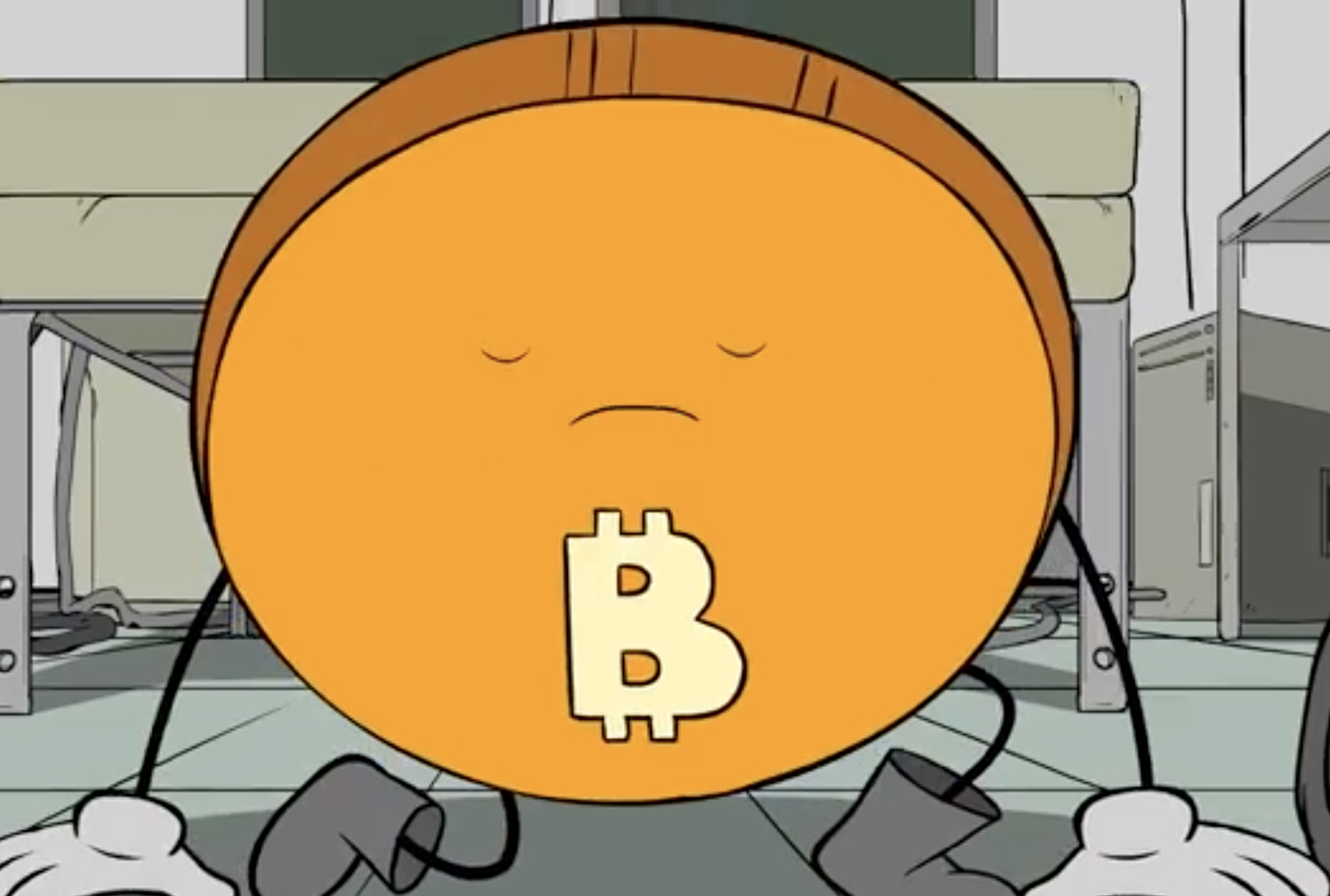
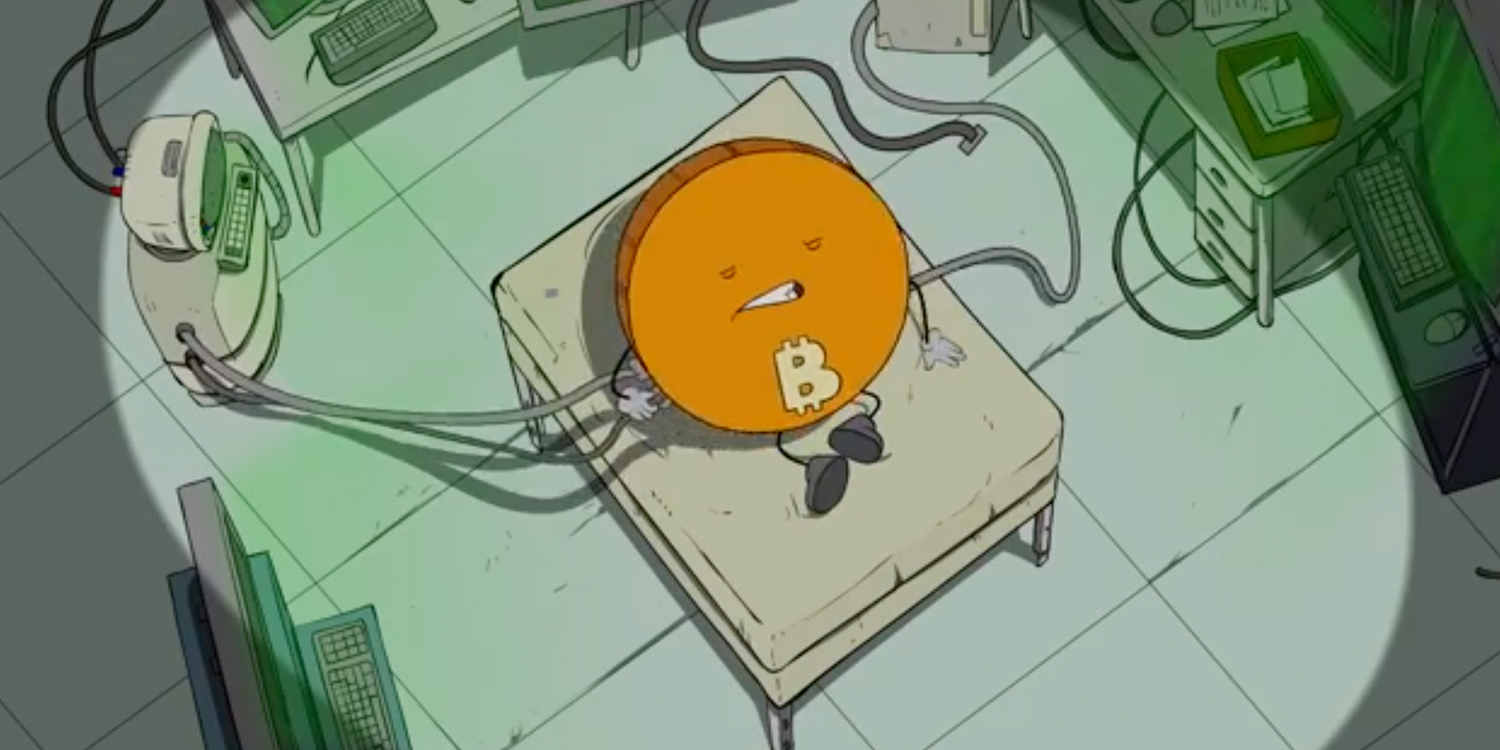
On March 29, Uncle Chris Productions released the first episode of an eight-part series that encapsulates the life of a lonely bitcoin in search of his lost father. The show “Bitcoin and Friends” stars “B,” a bitcoin who finds himself in a hospital and starts an adventure to find out who he is and who created him. Along the way, B finds some quirky friends in the first episode, called “Tears of a Clown”, whose storyline is based in New Jersey back in 2009.
A spicy animated series called “bitcoin and friends” airs first episode
B wakes up in a hospital lab and begins searching for his father and purpose.

The protagonist meets an assortment of characters including his father Satoshi Nakamoto, Pal Fifty, Itty Bitty, Mitalik, Ethereum, and the Bankster Henchmen. The show’s entire first episode can be seen on Youtube, though be warned the show is NSFW and can be a bit risqué at times. The cartoon’s remaining seven episodes are entirely crowd-funded and fans can donate to “bitcoin and Friends” via the official website.

Contributing to the show comes with perks which include the possibility of getting your own personalized character in the show, private screenings, and digital figurines depending on how much is donated. Users can donate BTC, BCH, ETH, LTC, NEO, and 12 other cryptocurrencies.
A spicy animated series called “bitcoin and friends” airs first episode

The funds go toward the production budget that consists of allocating the money to voice talent, sound design, original music, music licensing, and character design. The producer of “bitcoin and Friends,” Robert Allen, explained during the episode launch that “the story of bitcoin and crypto is so colorful that it was an obvious treasure trove of good comedy and compelling characters and stories.”

“In the pilot episode, we start at the beginning of bitcoin in 2009 and wanted to show the frailty and uncertainty of those early days,” explains Uncle Chris, the show’s director and the voice of the protagonist lead called B. “bitcoin will become more powerful and confident as the season progresses,” Uncle Chris added.

A spicy animated series called “bitcoin and friends” airs first episode
The character known as Mitalik.

Vomiting Proof-of-Work

During the episode, we find that B suffers from a condition known as “proof-of-work” which happens when he vomits a bunch of smaller bitcoins out of his mouth. B also meets an African American character named Jones who takes the bitcoin to meet the all-knowing inventor of Ethereum called ‘Mitalik.’ The show’s creators aim to use the humor and New Jersey lifestyle as a way to “educate non-crypto people about bitcoin and related technologies and bring them into the space.” “We think it could be a good entry point for the non-initiated and we also hope the show will be a bit of a pressure release valve for the crypto community at large,” Allen explained in a recent interview.

A spicy animated series called “bitcoin and friends” airs first episode
Proof-of-Work.

The next seven episodes are on hold until enough funding has been secured, and the synopsis of the upcoming stories is locked until funding is completed. However, the next episodes are titled already and consist of show titles Existence Crisis, The Silky Road, Federal Undercover Agents (F.U.D.), The White Paper, A Coin On A Mission, The Big Bank, and Jamie Sapphire & The Rod Of Truth.

A spicy animated series called “bitcoin and friends” airs first episode

Uncle Chris Productions is also looking for help if people would like to contribute to the new comedy series based on the original cryptocurrency. The production crew is looking for talented writers, editors, animators, and illustrators to keep the ball rolling and anyone can reach out to the team. While everyone’s bags are heavy and worth way less than last year, cryptocurrency fans can still lighten their hearts with a bit of laughter from this unique show about a lost bitcoin in search of his dad.

What do you think about the new series called “bitcoin and Friends?” Let us know what you think about this subject in the comments section below.


Image credits: Bitcoin and Friends, and Youtube.


Now live, Satoshi Pulse. A comprehensive, real-time listing of the cryptocurrency market. View prices, charts, transaction volumes, and more for the top 500 cryptocurrencies trading today.

Tags in this story
Animation, B, Bitcoin, Bitcoin and Friends, Cartoon, creator, Crowd Funded, Eight Episodes, Episode 1, Ethereum, Father, Humor, Mitalik, N-Featured, NSFW, Proof of Work, Protagonist, Robert Allen, Satire, Satoshi Nakamoto, Son, story, Uncle Chris, Uncle Chris Productions

“bitcoin and friends” animated series airs spicy first episode
Jamie Redman

Jamie Redman is a financial tech journalist living in Florida. Redman has been an active member of the cryptocurrency community since 2011. He has a passion for bitcoin, open source code, and decentralized applications. Redman has written thousands of articles for news.bitcoin.com about the disruptive protocols emerging today.

Published at Mon, 01 Apr 2019 19:22:53 +0000

Previous Article

“Bitcoin and Friends” Animated Series Airs Spicy First Episode

Next Article

Coincheck launches Bitcoin [BTC] OTC trading for large-scale institutional investors

You might be interested in …

The Moonbeam Scaling Network: A “Semi-Decentralized” Scaling Solution

Moonbeam scaling solution

bitcoin exchange and hosted wallet provider Luno (formerly BitX) is developing a bitcoin scaling solution called Moonbeam. Unlike the lightning network, Moonbeam does not require SegWit’s transaction malleability fix and would be able to operate on the bitcoin network as it is today.

Moonbeam  aims to provide a way for multi-user bitcoin platforms — such as exchanges, hosted wallets, and payment processors — to easily open standardized one-way payment channels with each other, and thereby offload the bitcoin network from a growing number of transactions.

How Does it Work?

Moonbeam aims to take advantage of the fact that many bitcoin transactions occur among multi-user platforms. Using Moonbeam, these platforms can open standardized one-way payment channel contracts with one another to facilitate payments. By taking these transactions off-chain, Moonbeam can reduce transaction fees for those who use it and benefit bitcoin users generally by reducing congestion in the mempool.

These channels are simple smart contracts in which one party locks up a certain amount of bitcoins for a specified period of time (with the end point referred to as the “timeout”) for the purpose of sending payments to the other party. Before the timeout, the party that has locked up funds can send an unlimited number of off-chain transactions using those locked up bitcoins (until the channel runs out of bitcoins). Each channel involves only two on-chain transactions: one to open the channel and one to close it.

Because these intermediate transactions are off-chain, they are nearly instant. Without the need for a blockchain confirmation, the transactions only take as long as it takes to route an http request (think: loading a simple web page). These transactions would also be cheap. Only two transactions per channel require miner fees, and the rest are essentially free to the platform, though the platform could charge fees to its users.

The one-way payment channels used by Moonbeam are not a new invention. bitcoin inventor Satoshi Nakamoto embedded preliminary code for payment channels in the very first release of bitcoin, and more recent protocol upgrades like CheckLockTimeVerify have further enabled this usecase. bitcoin platforms could negotiate and implement these smart contracts on the blockchain today.

What Moonbeam aims to do is facilitate the creation of these channels between major payment platforms by using the Domain Name System (DNS) to route communications related to creating and using these channels. This way, high volume platforms can easily discover one another and enter into a payment channel smart contact using the standardized Moonbeam terms. Using the Moonbeam protocol, this process can happen automatically when it is more efficient to open a channel than sending payments on-chain.

Trust

The Moonbeam project overview indicates that it is “semi-decentralized.” It is labeled as such because while the Moonbeam network does not require platforms to trust one another, it does require users to trust their platforms. A hosted wallet with a Moonbeam address is a custodial account, where the platform is managing the funds, and credits and debits user accounts accordingly as users send and receive transactions. Exchanges such as Coinbase operate in this manner; users do not directly control their private keys. Moonbeam can be a useful tool for these services, but it will likely not be a suitable scaling solution for users who prefer to manage their own private keys.

Other Downsides

The Moonbeam specification document also mentions several other potential downsides. Among them is the cost of capital. In order to open these channels, sending platforms must commit capital in the form of bitcoin for a period of time. If the receiver does not use the channel, the sending platform must wait until timeout to regain control of the funds, entailing potentially large financing costs.

Another risk involves the use of DNS. DNS hijacking is an attack that involves rerouting domain name requests to an attacker’s server. These attacks could be used to receive payments over new channels that were meant for the authentic server.

While Moonbeam does not offer the level of decentralization of the lightning network, the fact that it does not require any fork to the network may may make it an attractive solution to bitcoin’s scaling troubles in the short term. It could be implemented by hosted wallet providers as soon as the project is production ready.

The current state of Moonbeam can be found on the project’s Github.

Luno was not available for comment for this article.

The post The Moonbeam Scaling Network: A “Semi-Decentralized” Scaling Solution appeared first on Bitcoin Magazine.

Salus rt500rf - how to use

Salus RT500RF – How to use

Salus RT500RF – How to use How to use and program the Salus RT500RF wireless thermostat. http://plumb-buddy.co.uk Bardsley & Co. Plumbing & Heating Boiler service specialists in Wakefield, West Yorkshire