March 26, 2026

Capitalizations Index – B ∞/21M

Binance Graciously Decides Not to Nuke the Bitcoin Blockchain

Binance graciously decides not to nuke the bitcoin blockchain

Binance Graciously Decides Not to Nuke the Bitcoin Blockchain

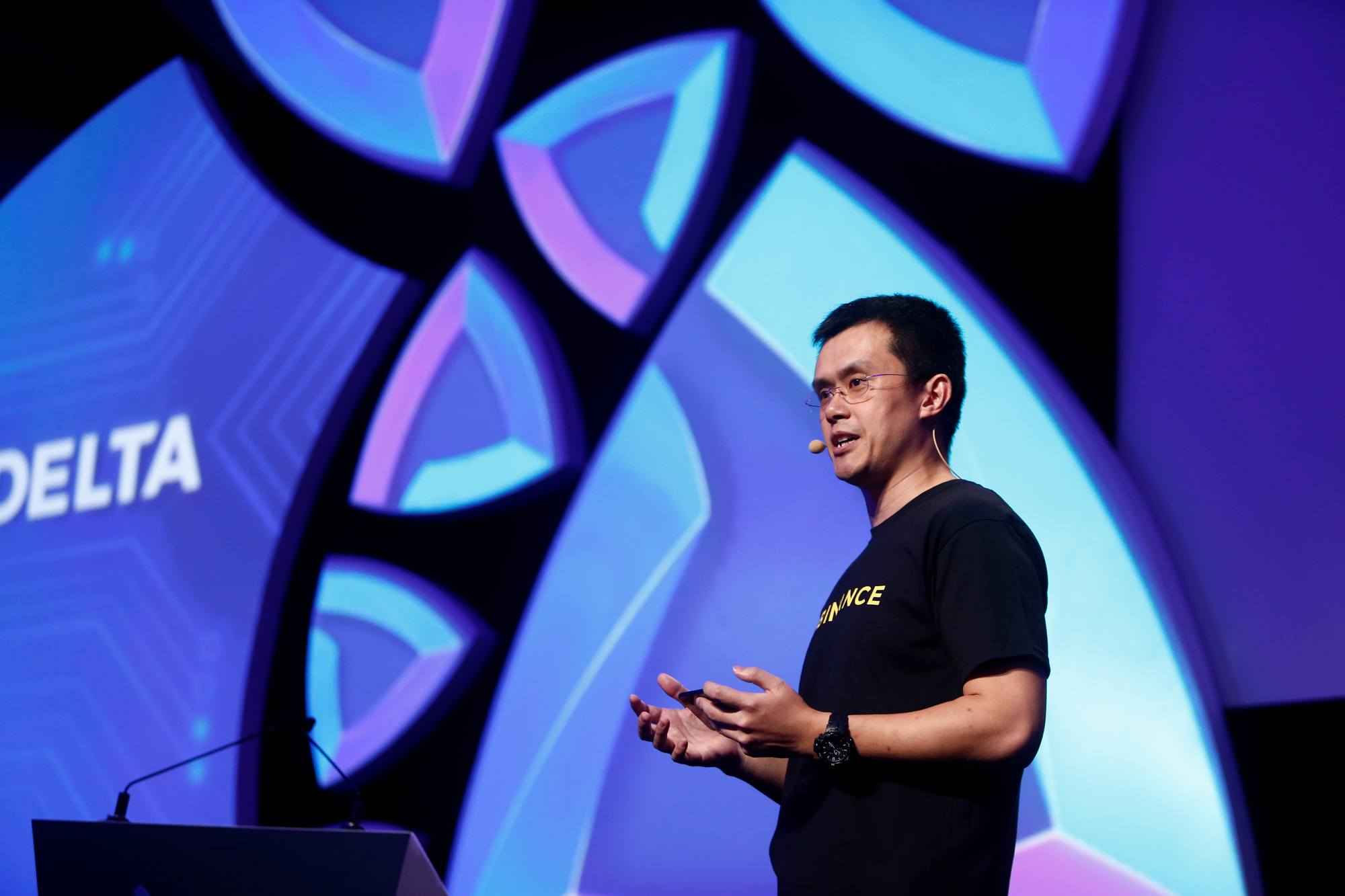
By CCN: Binance CEO Changpeng Zhao discussed the idea of potentially reorganizing the bitcoin blockchain. In this vision, the 7,000 BTC recently stolen from the cryptocurrency exchange would be redistributed to miners in the form of fees.

A coordinated effort with miners, within a specific time frame, could theoretically make it possible to empty the balances of the Binance hackers.

Binance CEO: “It Wasn’t My Idea.”

The idea didn’t originate with Binance or Changpeng Zhao, and CZ wants to be clear on that. It started with bitcoin Core contributor Jeremy Rubin:

James Prestwich also chimed in:

BitMEX Research pointed out that this idea had been floated before, in 2016, when Bitfinex was hacked to the tune of 120,000 BTC. The genesis of the concept posits that the financial rewards of reorganizing the chain to thwart the attackers were much higher than the incentives to maintain the blockchain as it was.

“In this case, Bitfinex could promise to pay the miners, say, 25 BTC per block for however many blocks it takes to reorg out the theft transactions and replace them with a spend aggregating the funds off of BitGo and into cold storage. As long as this is less than a few thousand blocks, it makes economic sense for everyone involved, simply because of the enormous size of the theft. […] To be absolutely clear I hope that this doesn’t happen. If it does, I’m not sure what value proposition bitcoin would have left. Uncensorable, nonpolitical money is what bitcoin is about, and without that it is nothing. If this manages to go through, I hope the outrage pushes people to fight for more decentralization and fungibility at the protocol level. Otherwise I don’t know what future bitcoin would have.”

Playing With Fire
Binance changpeng zhao bitcoin

Anyone who believes the bitcoin blockchain should be rewritten to suit their purposes overestimates their importance. | Source: REUTERS / Darrin Zammit Lupi

The idea that Binance could reorganize the blockchain rests on the notion that it’s technically feasible, and that those with the mining equipment will be willing to cooperate with them. The idea of rewriting the blockchain to benefit one organization brings to mind the infamous DAO hack, in which Ethereum reorganized its chain to restore stolen balances.

A minority group of Ethereum miners and users decided that immutability was more important than a single participant in the economy, and Ethereum Classic emerged.

People believe this would likely happen if Binance or any other exchange were to attempt a similar act with Bitcoin.

Rewriting bitcoin Would Open a Pandora’s Box

Generally, Bitcoiners operate on two fundamental ideas. First, their transactions are uncensorable. The second is that there is a predictable 21 million unit supply cap for bitcoin. The psychological damage that a “rollback” would have on the space cannot be understated.

A minimal amount of people in the world actually own the hashpower to achieve a successful rollback. CZ clarified that the goal of the theoretical reorganization wouldn’t be to get the money back to Binance but to get it away from the attackers.

Ultimately he opened a Pandora’s box at a bad time for his exchange. As he said, the idea, briefly discussed as it was, is currently getting more attention on Twitter than the attack itself.

The most relevant aspect of such a move is that it would almost certainly shake investor faith in bitcoin. We could expect prices to plummet across the board. It’s unclear if money would stay in crypto at all, or if a move to protect one institution would break the entire system.

We’ve learned one thing from this (non) episode. Anyone who believes the bitcoin blockchain should be rewritten to suit their purposes overestimates their importance.


Published at Wed, 08 May 2019 15:51:31 +0000

Previous Article

Turkish University Launches Blockchain Center at a Boston University

Next Article

Top 4 Cryptocurrency Blockchain Reorganization Events

You might be interested in …

The biggest banks using ripple products

The Biggest Banks Using Ripple Products

The Biggest Banks Using Ripple Products RippleNet is a network that processes cross-border payments in real-time and with little costs. Banks that join this platform are able to extend their payments offerings into new markets that […]

Bitcoin is Booming in India as ‘Digital Gold’ Among Other Underlying Benefits

bitcoin is gaining a lot traction in India. Bitcoinist spoke with Sunny Ray, co-founder of India’s bitcoin exchange UnoCoin, to better understand what is fueling this growing trend in the country.


bitcoin Goes Mainstream in India

bitcoin is going places. After conquering China and catapulting it to the front line of bitcoin’s trading and mining sector, it is now starting to get traction in other countries like Japan and South Korea.

Now, bitcoin is also showing signs of a growing adoption rate in India, a country that has been deeply impacted by the demonetization policies implemented.

A look at yesterday’s Times of India publication shows that bitcoin is featured on the front page. The publication tells the story of a man who unknowingly exchanged, what would now be, a bitcoin fortune for extra lives on an online game, something that he obviously regrets.

The article also provides some facts about the cryptocurrency, its price, and regulatory standing. It also mentions the Interdisciplinary Committee created to assess the current state of existing global regulatory and legal structures as a means to apply the best regulatory framework possible for bitcoin in India.

The paper reads:

Finance ministry has set up a committee that will look at global regulatory frameworks for bitcoin and suggest measures for India.

bitcoin adoption in the country can be seen, not just in media reports, but also in the data provided by Unocoin, India’s most popular bitcoin Exchange. Co-founder Sunny Ray recently noted that:

It took 2 years and 10 months for Unocoin to reach 100,000 users. It only took another 6 months to reach 200,000 users.

Why is bitcoin Booming in India?

bitcoin’s received a lot of attention after the demonetization policies that saw India’s highest denomination banknotes removed from the economy were implemented in November 2016.

Since then, however, much has changed. Unocoin’s Sunny Ray explained what’s fueling bitcoin’s growing popularity in the country:

We think it’s less to do with demonetization and more to do with its underlying benefits. The uses range from: store of value is the number one use case (digital gold), second is inward remittance (as opposed to losing 4 days and 10% in fees), p2p payments, buying things online (mobile top up, etc), and it keeps going.

Furthermore, it’s not just Unocoin that is seeing an increasing adoption in bitcoin within the country.

Trading volume from p2p exchange LocalBitcoins reveals this growing trend, for example, as does the global INR market data provided by CryptoCompare:

“We conclude that, while the demonetization itself may have been a catalyst for bitcoin’s growth in India, it simply revealed one of the many advantages that bitcoin brings, in this case, the lack of centralized control and the superior privacy provided by the cryptocurrency,” he added.

India’s Government is Studying bitcoin

Earlier this month, the Indian government established an Interdisciplinary Committee chaired by various institutions like the country’s central bank and ministry of home affairs.

The committee’s main functions are

  • to take stock of the present status of virtual currencies (VCs) in and outside of India;
  • examine existing global regulatory and legal structures for VCs;
  • suggest measures for dealing with such VCs including issues relating to consumer protection, money laundering, etc;
  • and to examine any other matter related to VCs that may be considered as relevant.

Bitcoin India

The committee is expected to release a report on its findings by July of this year. 

It is unclear what changes the committee will bring about but Ray hopes that the creation of this organization will help citizens better understand virtual currencies, their benefits and risks.

Ray told Bitcoinist:

Our only hope is to try and educate the public. We are working with the best law firm in the country. The same law firm that’s helped to establish the largest self regulatory body in India, they helped enable payment processing and ecommerce to emerge and many many other seemingly disruptive change to the country:  Nishith Desai & Associates. All we can do is try. And the fact that some journalists in India are writing sensationalist articles to pry on people’s fears is not helping the cause.

The “largest self regulatory body in India” mentioned by Ray is the Digital Asset and Blockchain Foundation of India (DABFI). The self-regulatory body is comprised of bitcoin startups in the country such as Unocoin, Zebpay, Coinsecure, and Searchtrade.

The organization will focus on creating standard guidelines for trading blockchain based assets, KYC/AML and STR norms, while collaborating with regulators, creating awareness about the benefits and risks of cryptocurrencies such as bitcoin, and producing an environment that will stimulate the creation of other blockchain startups. DABFI will also publish reports regarding cryptocurrencies and blockchain technology.

Will the new Interdisciplinary Committee help advance bitcoin’s adoption in the country? Let us know in the comment section!


Images courtesy of Times of India, CryptoCompare, Shutterstock

The post Bitcoin is Booming in India as ‘Digital Gold’ Among Other Underlying Benefits appeared first on Bitcoinist.com.

Atomicpay Launches Private Beta of Digital Currency Payment Gateway

bitcoin News Atomicpay Launches Private Beta of Digital Currency Payment Gateway Startup Atomicpay.io announced the beta launch of its cryptocurrency payment gateway on Dec. 3, with support for six different digital assets. The payment processor eliminates third parties and […]