July 9, 2026

Capitalizations Index – B ∞/21M

Binance DEX and Singapore Fiat-to-Crypto Exchange Coming this April

Binance dex and singapore fiat-to-crypto exchange coming this april

Binance DEX and Singapore Fiat-to-Crypto Exchange Coming this April

Binance dex and singapore fiat-to-crypto exchange coming this april

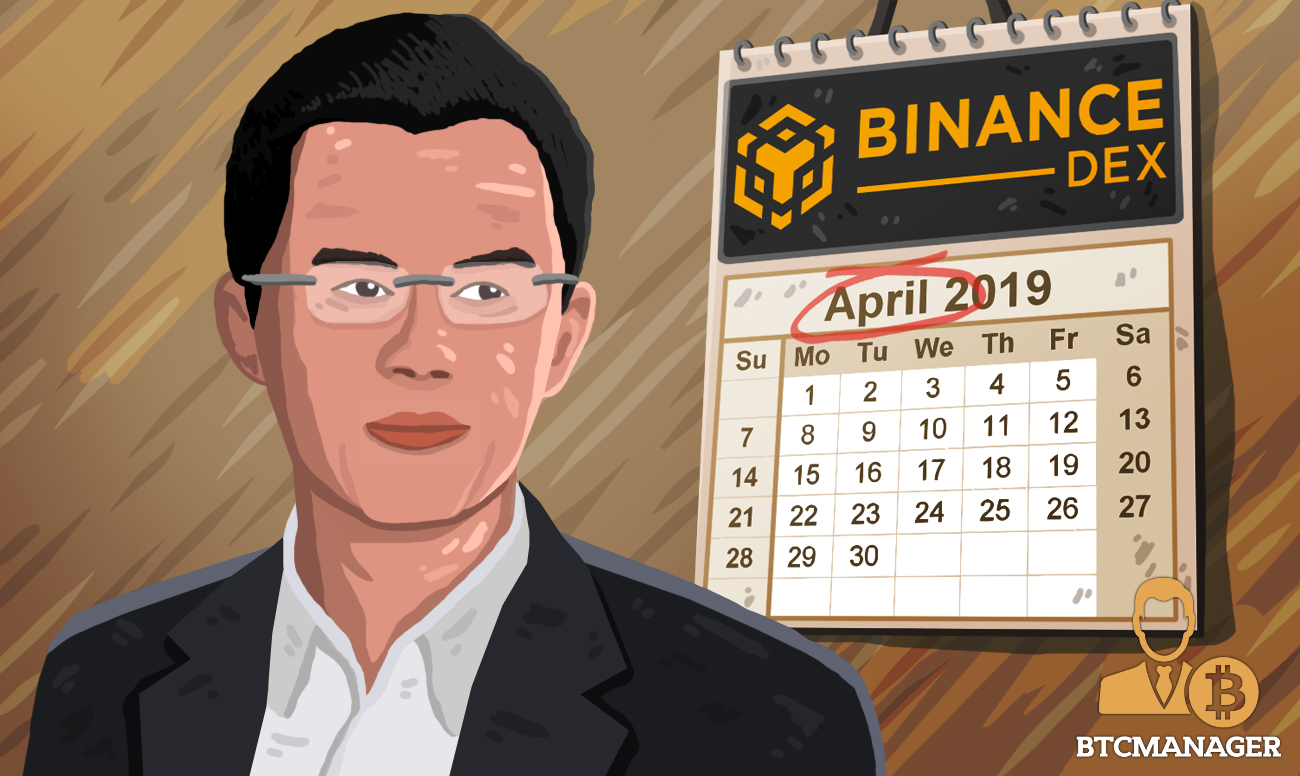
On April 4, 2019, cryptocurrency exchange Binance announced that its decentralized exchange (DEX) is set to go live this month. The Malta-based exchange also stated that its Singapore offshoot is poised to become operational in April 2019.

Binance DEX on the Cusp of Launch

Binance, the world’s third-largest crypto exchange by 24-hour adjusted volume continues to stretch the boundaries of the emerging cryptocurrency industry.

Speaking at the Deconomy Conference in Seoul, South Korea, Binance CEO, Changpeng Zhao, said that the exchange’s highly anticipated DEX would launch later this month. Zhao stated that Binance’s in-house blockchain infrastructure would fully power Binance DEX.

As previously reported by BTCManager, Binance DEX was launched in testnet in February 2019. The decentralized trading platform which aims to revolutionize peer-to-peer trading will run on Binance Chain Technology.

Seeing the recent surge in cryptocurrency exchange hacks and other illicit activities of similar nature, Binance DEX provides a healthy alternative to people who are firm believers of decentralized ideologies.

Also, it’s worthy of mention that Binance Coin (BNB), an ERC-20 token that runs through the veins of Binance exchange will be migrated to Binance Blockchain to function as the native cryptocurrency of the soon-to-be-launched DEX.

Binance Singapore Incoming

Zhao made another announcement at the two-day crypto conference, stating that Binance’s next fiat-to-crypto exchange, Binance Singapore, will also go live in April 2019.

As can be inferred from the above tweet, users of the exchange will be able to buy and sell cryptocurrencies with the Singapore dollar. The exchange is expected to encourage the local Singaporean populace to enter the world of cryptocurrencies without having to worry too much about its technical nitty-gritty.

BTCManager had reported on October 25, 2018, about Binance’s intentions to launch a fiat-to-crypto exchange in Singapore after the company bagged investment from Vertex Ventures for the same.

In the wake of recent unfortunate incidents in the cryptoverse, Binance, on March 27, 2019, partnered with security firm IdentityMind to bolster its KYC and AML measures.

Further, in a bid to expand its business footprint in Australia, the exchange also launched its “Binance Lite” service which allows Australians to purchase bitcoin for cash from over 1,300 stores.

Like BTCMANAGER? Send us a tip!

Our Bitcoin Address: 3AbQrAyRsdM5NX5BQh8qWYePEpGjCYLCy4

Published at Sun, 07 Apr 2019 06:54:32 +0000

Previous Article

Ethereum Classic Pumps 25% on Hard Fork Proposal

Next Article

Bitcoin Gold [BTG] sees double-digit gain following new wallet launch, surges by 11% |

You might be interested in …

BEHIND DRIFE, STORED BY THE POWER OF DELIVERY TECHNOLOGY

BEHIND DRIFE, STORED BY THE POWER OF DELIVERY TECHNOLOGY Technology is a major force in building a functionality of a digital platform. This certainly cannot be underestimated because the facilities that will be provided in […]

わかるPlasma MVP – Junki Yuasa –

わかるPlasma MVP – Junki Yuasa – こんにちは!この記事はEthereum初心者がPlasma MVPを通じてPlasmaを理解するためのものです。Ethereumについて最低限の知識がある方ならわかる内容になっていると思います。 はじめに Plasmaはスケーラブルなアプリケーションを構築するためのスマートコントラクト実行フレームワークです。「Plasma」という単一のプロジェクトはありません。Plasmaは概念であり、Plasma MVPやPlasma Chamberはその概念にそって設計されたものです。 Plasmaを理解するのにとてもいい記事があります。 なぜPlasmaが必要か ブロックチェーンでは単純な支払いを処理するために1秒間で数千トランザクションを処理することが求められています。しかし、現在Ethereumでは最大で毎秒20~30のトランザクションしか処理できません。これは「スケーラビリティ」問題と呼ばれます。 開発者たちはこの問題を解決するために様々な角度から取り組んでいます。ブロックチェーン自体をアップグレードすることでよりチェーンをスケーラブルにしようとする取り組みである「レイヤー1」スケーリングと元のブロックチェーンは変更せず新しいレイヤーを追加する「レイヤー2」スケーリングがあります。 「レイヤー2」スケーリングにおいてAからBへの送金を考えましょう。Aはアセットを元のチェーンにロックし、その資金を2番目のチェーンに「作成」します。そして2番目のチェーン上でAからBへのアセットの移動を行います。Bが資金を取り出す時はサイドチェーンのアセットを「破壊」して元のチェーンのロックを解除します。それが「サイドチェーン」の考え方です。 サイドチェーンで処理をすることで高速かつ低い手数料が実現できます。その一方、サイドチェーンでそれらのアセットを作成することを「合意」しなければならないのでそこにはコンセンサスアルゴリズムが必要になります。このコンセンサスアルゴリズムが正しく機能すれば資産は安全ですが、失敗すると資産は奪われてしまいます。 そこでPlasmaの登場です。Plasmaチェーンはコンセンサスアルゴリズムが正しく機能しなくても資産の安全性を保証します。なぜ安全性を保証できるのかを単純なUTXOベースのPlasmaチェーン用の設計であるPlasma MVPの仕組みにそってみていきましょう。 Plasma MVPの仕組み デポジット まずユーザーがEthreumのスマートコントラクトにETHを入金すると、単一のトランザクションのみを含むブロックがPlasmaチェーン上に作成されます。このトランザクションは、預金額と等しい価値で預金者のための新しいアウトプットを作成します。これで取引の準備は完了です。 トランザクションの作成 ユーザーは作成されたアウトプットを使って新しいアウトプットを作ることで、Plasmaチェーンで取引ができます。ユーザーはトランザクションを作る際に署名を行います。この取引はその後オペレーターと呼ばれる人に送信されます。オペレータは十分なトランザクションを受け取ると、このブロックのマークルルートをEthreumチェーンに送信します。マークルルートがなんなのかは以下でみていきます。 マークルルート マークルルートを理解するためにブロックチェーンにおいて使用されるマークルツリーというデータ構造を知っておく必要があります。マークルツリーを使用するとハッシュ関数を用いてたくさんのデータセットを一定のデータ長に要約できます。これがマークルルートです。それに加えて特定のデータがセットに含まれていることを証明できます。 全てのトランザクションはマークルツリーの形で構成されており、オペレーターはこのマークルツリーのマークルルートをEthereumチェーンに送信します。マークルルートのみをルートチェーンに記録するので効率的です。 Exitを始める ユーザーはPlasmaチェーンから資金を回収したい時はEthereumチェーンでExitトランザクションを送信します。MVPでは資金はUTXOとして示されるので資金の出口は特定のアウトプットを示す必要があります。アウトプットの所有者しか取り出せないようにするためユーザーはマークルツリーにおけるトランザクションの証明とともに資金の出口を送信します。コントラクトはこのトランザクションがブロックに含まれていることとアウトプットが持ち主のものであることの確認をします。 Challenge期間 上のことを確認してもユーザーはすでに使用されているアウトプットを引き出すということができてしまいます。アウトプットが未使用であることを確認するためにChallenge期間を設けます。それはアウトプットが使われていることを証明することで異議申し立てをできる期間です。 Exitの優先度 ここでオペレーターが無効なトランザクションを作成して引き出しをすることなどができてしまいます。 […]