
October 5, 2026

Capitalizations Index – B ∞/21M

Big Differences Between Gold and Bitcoin, According to World Gold Counci

Big differences between gold and bitcoin, according to world gold counci

Big Differences Between Gold and Bitcoin, According to World Gold Counci

Big differences between gold and bitcoin, according to world gold counci

Due to its success as a store of value bitcoin is often labeled ‘digital gold.’ This sentiment came to the fore in the latter months of 2017, as Bitcoin entered massive bull run that had the financial world in a bit of spin.

Scalability has been a long-term problem plaguing Bitcoin, but the saving grace from high transaction costs and delays has been its emergence as a store of value. While bitcoin remains in a volatile state, it is still head-and-shoulder above its altcoin predecessors in terms of value per coin. A plethora of cryptocurrency and mainstream financial analysts have likened bitcoin to gold for this very reason.

Well-known American broadcaster Max Keiser has been particularly vocal about his predictions for bitcoin. While he envisions the preeminent cryptocurrency hitting $100,000 highs, Keiser also believes bitcoin will lead to the revival of physical gold trade, by highlighting speculative trading methods employed by mainstream traders:

“bitcoin is helping gold by shattering the matrix of Wall Street that is incurring the naked short-selling and financial manipulation that is going on in the futures market of gold.”

World Gold Council says bitcoin is not like gold

In a document published on Jan. 25, the World Gold Council (WGC), the market development organization for gold, shed light on its stance towards cryptocurrencies. Based on the gathered statistics, Gold saw 13 percent growth in value in 2017- which by all accounts is a positive statistic, but it pales in comparison to the parabolic growth of bitcoin during the same time period.

Nevertheless, WGC’s report went about explaining its stance on cryptocurrency, and why it sees Gold remaining an integral store-of-value investment in the age of cryptocurrencies. It’s hard to call the arguments shockingly fresh though as gold trade sees less volatility, its market is far more liquid and highly regulated. It is also well-established as an investment portfolio.

Gold liquidity and diversity

The WGC highlighted the fact that gold has a far higher day-to-day liquidity. In relation to gold’s $250 bln worth of trades per day, the WGC estimates that bitcoin’s daily trade is worth around $2 bln- roughly the equivalent of gold-backed exchange traded funds.

Another factor is the diverse uses and applications of gold. Gold’s highest demand comes from the jewelry industry, accounting for 50-60 percent of gold demand over the past 20 years. Another 30 percent of demand comes from the investment portfolio, while the rest applies to the tech industry and central banks.

Common characteristic- scarcity

As the WGC cites, bitcoin’s supply increases at around four percent each year- as it nears its 21 mln coin cap. This will only be reached in the year 2140, due to the scaling difficulty of mining – but this anti-inflationary process is a common characteristic shared with gold as the WGC points out in its report:

“Approximately 3,200 tonnes of gold have been mined on average, each year, adding about 1.7 percent to the total stock of gold ever mined. bitcoin’s future diminishing growth rate and ultimate finite quantity are clearly attractive attributes, as is gold’s scarcity and marginal annual growth.”

Gold trade looking into Blockchain

While the WGC clearly wants to quash any comparisons to bitcoin and cryptocurrencies, the industry seems to appreciate the value of Blockchain technology. The distributed-ledger system that underpins bitcoin and various altcoins have proven its value, and bright minds began exploring almost limitless applications of Blockchain systems. According to the WGC, the gold industry is among them:

“In the gold market, various players are exploring Blockchain in the context of transforming gold into a ‘digital asset,’ tracking gold provenance across the supply chain, and introducing efficiencies into post-trade settlement processes.”

This is likely to be done on private Blockchains. But nevertheless, the financial world is taking to the idea of Blockchain technology.

Published at Tue, 30 Jan 2018 16:12:53 +0000

bitcoin

Previous Article

Do-It-Yourself Trading Strategies for All With Signals

Next Article

1337 meaning and pronunciation

You might be interested in …

+700% in 7 days! (gpucoin, nullex, greencoin, game com, ink)

+700% IN 7 DAYS! (GPUCoin, Nullex, GreenCoin, Game com, INK)

+700% IN 7 DAYS! (GPUCoin, Nullex, GreenCoin, Game com, INK) Subscribe === https://goo.gl/7FkfFU === THE CRYPTO SPHERE IS NOT PROVIDING INDIVIDUALLY TAILORED INVESTMENT ADVICE AND IS NOT TAKING SUBSCRIBERS PERSONAL CIRCUMSTANCES INTO CONSIDERATION WHEN DISCUSSING […]

Chinese Bitcoin Exchanges Expected to Resume Withdrawals Soon

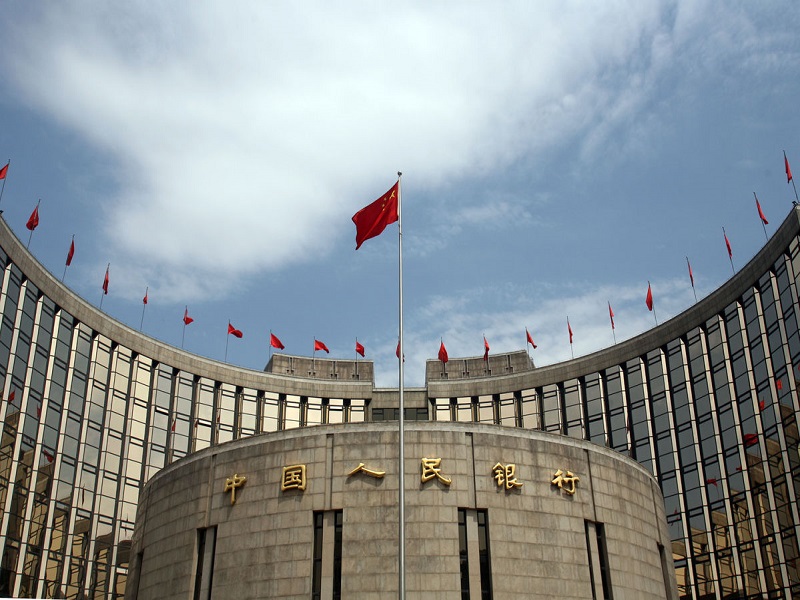
Withdrawals are expected to resume soon in China as bitcoin exchanges are finalizing regulatory guidelines with the country’s central bank.


Exchange Requests Proof of Customers’ Funds

It seems like the moratorium on cryptocurrency withdrawals from Chinese bitcoin exchanges imposed by the People’s Bank of China (PBoC) may be coming to an end. A new round of PBoC meetings are being held this week to discuss the regulation draft details with the heads of Chinese BTC exchanges, according to local news resource cnLedger.

Now it appears that exchanges in the country are starting to ask users for detailed explanations/proof of fund sources along with their intended withdrawal destinations. 

According to an (unconfirmed) email, translated from Chinese, from the Huobi exchange, users must provide account information, login information and account UID along with explanations of the sources of the funds to be withdrawn.

Bitcoinist_PBOC

The exchange also requests a screenshot of a detailed transactions list between user’s bank account from which the funds were deposited. Moreover, users are requested to identify the wallet to which they want to send their coins (personal wallet or otherwise) as well as explain for what purpose the cryptocurrency (i.e. commodity) will be used.

Although no limits have been stipulated by Huobi, a previous draft by the People’s Bank of China suggests that users could also be required to verify their identity in person before initially depositing or withdrawing any sum above 50,000 CNY (roughly 6.6 BTC).

The suspension of withdrawals was initially expected to last for a month, although exchanges announced that they would extend the moratorium until regulators approve the internal compliance upgrades, which we may now be seeing.

With the implementation of these new rules, similar to KYC (Know-Your-Customer) regulations with which many foreign bitcoin exchanges already comply with (e.g. Coinbase), exchanges in China are expected to resume withdrawals soon.

//platform.twitter.com/widgets.js

Regulations Transformed bitcoin in China

The latest moves by the PBoC have changed the bitcoin landscape dramatically. The regulatory clampdown, which resulted in the drafting of new AML procedures, the end of zero-fee trading, and a temporary suspension of withdrawals, forced traders to seek alternatives elsewhere (e.g. Japan) such as P2P trading services like LocalBitcoins and BitKan, where there is less regulatory scrutiny but higher premiums. 

“If users want to trade more that 5 BTC a day – they need to comply with KYC and AML guidelines,”  BitKan CEO Leon Liu told Bitcoinist in a recent interview. “The maximum is 5 BTC without having to submit any personal information.”

Following the suspension of withdrawals, CNY has gone from comprising over 90% of all bitcoin trading volume to just under 10% today. 

day_vol_cny_180_11490101045035

Now, as Chinese exchanges are gearing up to resume withdrawals under strict AML and KYC guidelines, the biggest question is whether users will be willing to jump through more hoops to buy and trade cryptocurrency or whether they will continue to seek alternatives instead, such as more anonymous P2P services or even anonymizing cryptocurrencies. 

Some have already started sharing their predictions saying that holders will withdraw bitcoin to off-exchange wallets and then sell on the aforementioned P2P platforms at a 8-10% premium.


Images courtesy of cryptocompare.com, Shutterstock, Twitter

The post Chinese Bitcoin Exchanges Expected to Resume Withdrawals Soon appeared first on Bitcoinist.com.