
October 11, 2026

Capitalizations Index – B ∞/21M

BASIS Coin for $133M? — A Boring Coin by Design

Blockchain on Medium
BASIS Coin for $133M? — A Boring Coin by Design
Basis coin for $133m? — a boring coin by design

That’s a lot of money for a project… so, what will they plan on doing with it?

https://medium.com/media/0265f2eee50cb341326fa1e47e894525/href

Sponsored by Concierge.io
Is this the Expedia Killer? Using NEO Blockchain for travel and booking marketplace!
Learn more at http://concierge.io/

Originally published at DECENTRALIZED TV.

Basis coin for $133m? — a boring coin by design

BASIS Coin for $133M? — A Boring Coin by Design was originally published in DecentralizedTV on Medium, where people are continuing the conversation by highlighting and responding to this story.

xDAC — Decentralized Autonomous Company — the Evolution of Business

A very interesting project is coming to the cryptocurrency market. A company named xDAC from Palo Alto in California is developing a platform that will allow a full decentralization of any business, solving the problems of geographic limitations. The company promises to remove many obstacles and discomforts associated with standard centralized business model. xDAC is Decentralized Autonomous Company created and operated on xDAC platform.

The company is managed by one or multiple human or autonomous agent (assistant software that, after it’s initial programming, requires no further instruction, and will operate continuously without prompting — an agent independent of the user) owners. xDAC operates on a decentralized network with a bulit-in PoW (Proof of Work algorithm that is used to confirm transactions and produce new blocks to the chain. With PoW, miners compete against each other to complete transactions on the network and get rewarded) incentive mechanism. The entire ecosystem is built on EOS blockchain.
Basis coin for $133m? — a boring coin by designDecentralized Autonomous Organization

xDAC is a subclass of DAO which stands for Decentralized Autonomous Organization consisting of smart contracts that are automatically triggered on the basis of inputs from outside. DAO as a term refers to an organization that combines several basic elements: owner, capital, rules and contracts. In principle, these are the same elements that we can find in standard companies.
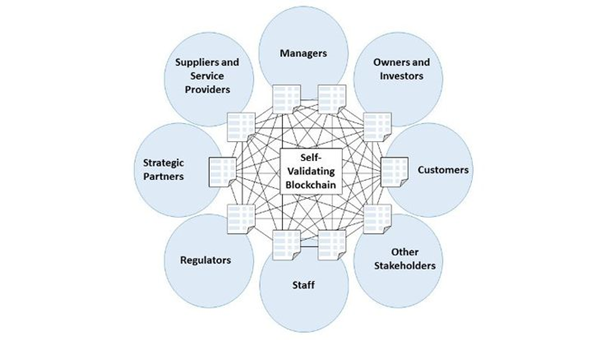
Basis coin for $133m? — a boring coin by design

If we look at centralized organizations, it is challenging to synchronize large groups of people to work on a common goal. A high degree of motivation, coordination and the involvement of all members is needed. DAO can reduce these requirements by using software scheduling. This will reduce mistakes and deficiencies of human management, while reducing costs. Large companies spend millions of dollars each year to plan resource consumption and they also have to pay the accountants and lawyers who are involved in planning and controlling the engagement. DAO can reduce those costs aswell. Those are just few examples of how the companies can benefit from the DAO system.

What is a smart contract?

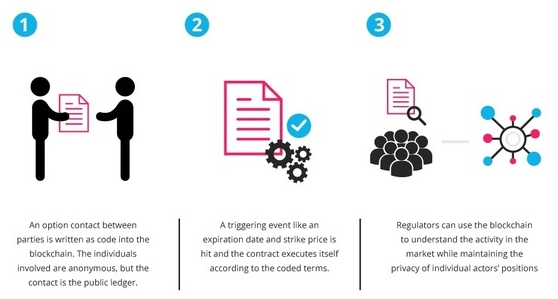
Smart contract is a protocol or software that ensures, verifies or enforces the negotiation or execution of a contract (agreement). This can be done in a way that eliminates the need for a real contract between people. Smart contracts typically provide a user interface and often emulate the logic of contractual arrangements. Smart contracts have the potential to provide greater security and enforcement than classical law for a lower cost.
Basis coin for $133m? — a boring coin by designThe xDAC Architecture

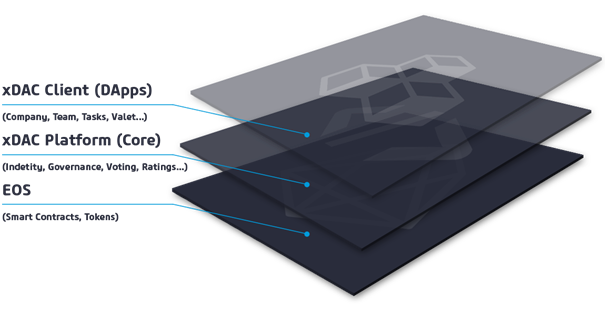
The ecosystem can be viewed as several distinct technological layers strategically connected together. xDAC ecosystem consists of three layers displayed on the image below.
Basis coin for $133m? — a boring coin by design1. EOS Platform

EOS is a blockchain based system designed to support decentralized applications on a commercial scale. It provides all necessary basic features and enables companies to create applications running on a blockchain platform in a similar way to web applications. Due to problems with transaction rates of other blockchain systems, EOS has decided to focus primarily on this aspect. The main goal of the creators was to achieve a high number of transactions that would be processed almost immediately. Currently, this EOS can process up to 50,000 transactions per second. Just for comparison, the international giant overarching credit and debit card — Visa — can currently process only 24,000 transactions per second, which is one half less than EOS.

Basis coin for $133m? — a boring coin by design2. xDAC Platform (Core)

xDAC Platform is the public’s smart contracts layer which provides an opensourced implementation of the key components creating not only an environment but the governance for DApps (Decentralized applications that run on a decentralized network. DApps are not deployed by a single individual or company, but instead run on a peer-to-peer network) and Autonomous Agents to be built on. The xDAC platform will be generating revenue from fees that will be used to reward the most productive xDACs based on their PoW performance rating to incentivize their productivity on xDAC platform.

3. xDAC Client

xDAC Client is a user interface that aggregates all available DApps and Autonomous Agents in one place. The initial plan is to build website and desktop applications for easier interaction with xDAC Platform. Listed applications might not be available with initial releases and could be added in different order as work on project progresses. The DApps features will include company overview, voting, bylaws and company assets, team, project management, wallet and a list of existing public xDAC companies.

How does it all work?

If you want to find out more about this interesting project, I recommend checking the official website https://www.xdac.co, where you can find all the information you need to know. The website describes the problem and the solution, xDAC platform features and the architecture. Even more detailed information can be found in the whitelist and the pitch deck. You can also take the opportunity of joining their initial coin offering and get an attractive discount for being one of the early investors.


Basis coin for $133m? — a boring coin by design

Previous Article

lambo

Next Article

Bitcoin is Not A Tool For Illegitimate Transactions, Says Quebec Chief Scientist

You might be interested in …

NO2X: Breaking Bitcoin Shows No Love for the SegWit2x Hard Fork in Paris

no 2x breaking bitcoin

“There’s no such thing as a safe hard fork,” Electrum lead developer Thomas Voegtlin corrected an audience member at the Breaking Bitcoin conference in Paris last weekend. “I would recommend to have replay protection, of course,” he added.

Community support for SegWit2x, the bitcoin scaling proposal spearheaded by Barry Silbert’s Digital Currency Group, was virtually absent in Paris. Whenever the “2x” part of the New York Agreement was discussed in the French capital, speakers and visitors overwhelmingly considered it a risk to defend against — not a proposal to help succeed.

Electrum users, for example, will not blindly follow hash power in case of a chain-split, Voegtlin explained throughout his talk; instead, they’ll be able to choose which side of such a split they want to be on. And importantly, the lightweight wallet will implement security measures to prevent users from accidentally spending funds on both chains: “replay protection” that seems unlikely to be implemented on a protocol level if SegWit2x does fork off.

“We are ready,” Voegtlin said. “If [SegWit2x] doesn’t include replay protection, the fork detection we have in Electrum will be useful.”

Breaking bitcoin

Inspired by the successful Scaling Bitcoin conference format, the French bitcoin community hosted the first edition of Breaking bitcoin two blocks from the Eiffel Tower last weekend. bitcoin developers, academics and other technical-minded Bitcoiners gathered for a diverse program, but with the common denominator being bitcoin’s security.

“For the past two years, the bitcoin community has been obsessing with scale and scalability,” Kevin Loaec, managing director at Chainsmiths and co-organizer of the event, told bitcoin Magazine. “But I’m not so worried about scale, I’m worried about mining centralization, a lack of privacy and fungibility … these kinds of things. As an industry we need to recognize there are more challenges than just scalability; hopefully this conference reflects that.”

Whereas the first Scaling bitcoin conference two years ago was a very specific reaction to a looming block size limit increase hard fork — then put forth by Bitcoin XT — this wasn’t necessarily the motivation behind Breaking bitcoin. Yet, once again, a controversial hard fork is looming on the horizon. This time imbedded in the BTC1 implementation developed by Bloq co-founder Jeff Garzik, the New York Agreement’s SegWit2x is scheduled to increase bitcoin’s “base block size limit” to two megabytes by November — an incompatible protocol change that could split the bitcoin network in two.

And it did not take much to recognize how unpopular the proposal was in Paris. Perhaps most vividly, Italian bitcoin startup ChainSide led a protest campaign by distributing NO2X stickers; the Twitter hashtag was proudly added as a piece of flair to the by now well-known Make bitcoin Great Again and UASF hats. And voices critical of the project — like Voegtlin and his call for replay protection — could consistently count on rounds of applause. From a technical perspective, the proposal is often considered — quite frankly — to be reckless.

“Unfortunately, SegWit2x […] was designed to effectively be as disruptive to the minority chain,” MyRig engineer and BIP91 author James Hilliard said on stage during the miner panel.

SegWit2x: The Arguments

Arguments against the 2x hard fork are diverse.

Perhaps its biggest problem, SegWit2x currently lacks basic safety measures to prevent unsuspecting users from losing funds. This includes, most importantly, the aforementioned replay protection, but a new address format would be similarly helpful.

Additionally, the three-month lead time for this specific hard fork is considered extremely short — assuming the goal is to prevent a chain-split in the first place. “If you ask any of the developers, they will typically want to see 18 months or two years lead time, for something with as wide an impact on all the software and hardware out there as a hard fork,” Blockstream co-founder and Hashcash inventor Dr. Adam Back noted during a Q&A session.

And if the chain does split into different networks and currencies — one following the current bitcoin protocol and one adopting the hard fork — the question becomes which of the two gets to use the name “bitcoin.” So far, proponents of the SegWit2x hard fork have shown no willingness to pick a new name.

This branding issue, Bitcoin Core contributor and Ciphrex co-founder Eric Lombrozo pointed out, provides yet another point of controversy.

“My personal opinion is that whomever is proposing the change, the onus is on them to demonstrate widespread support,” Lombrozo said during his talk on protocol changes. “The people that want to keep status quo don’t need to show anything. It’s the people who want to change the stuff that actually need to demonstrate there is widespread support.”

And for now, not everyone is convinced that SegWit2x does indeed have this level of support — or anything close to it. While several large mining pools, as well as a significant number of companies, have signed on to the New York Agreement, this agreement was itself drafted without any feedback from bitcoin’s technical community nor — even more important — a reliable gauge of user sentiment.

And while some bitcoin companies claim to represent their customers, this is — once again — not taken for granted by everyone.

“One debate I want to draw attention to,” venture capitalist Alyse Killeen pointed out, “is the debate whether businesses speak for their users. I think this is probably a debate you would only see now in this space because it’s pretty well established that businesses outside of this space do not speak for users, but it’s a debate we still have in our community. Of course they don’t.”

NO2X

If Breaking bitcoin in Paris can be considered at all representative of SegWit2x’s community support — which, it should be noted, is not necessarily the case — the proposal will face an uphill battle to be widely accepted in November.

Indeed, some signatories of the agreement are not so sure about the hard fork anymore: Bitwala and F2Pool have publicly backed out of the agreement. And, during a mining panel in Paris, Bitfury CIO Alex Petrov ever so slightly opened the door to potentially withdrawing support as well, if both the original and the 2x chain manage to survive.

In fact, it’s not just that contentious hard forks are considered a threat to be defended against by bitcoin’s technical community. It goes beyond that.

In the words of bitcoin developer Jimmy Song, at the conclusion of his opening talk of the event:

“What doesn’t kill bitcoin makes it stronger. And conferences like this prove that we’re getting better at this. We’re getting immunized to all these hard forks, and it’s creating a better bitcoin as a result, and that’s a very good thing. We’re securing against a lot of these attacks, and figuring out ways to mitigate these threats.”

Image courtesy of Federico Tenga

The post NO2X: Breaking Bitcoin Shows No Love for the SegWit2x Hard Fork in Paris appeared first on Bitcoin Magazine.

South Korean cryptocurrency employees detained over alleged…

YouTube: cryptocurrency South Korean cryptocurrency employees detained over alleged… SEOUL (Reuters) – Employees of Coinnest, South Korea’s fifth largest cryptocurrency exchange, were detained on Thursday in connection with the alleged embezzlement of assets, Maeil Business… […]

Tristar(2)

Tristar(2)

Tristar(2) TriStar crypto currency