
April 14, 2026

Capitalizations Index – B ∞/21M

Australians Can Now Buy Kebabs with Bitcoin, But Will They Want to?

Australians can now buy kebabs with bitcoin, but will they want to?

Australians Can Now Buy Kebabs with Bitcoin, But Will They Want to?

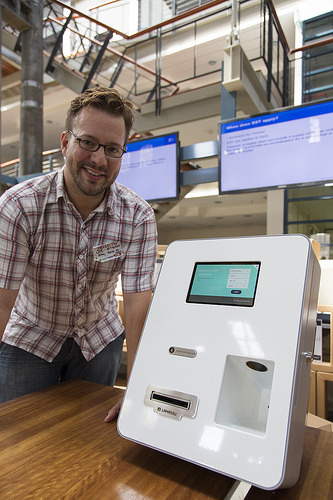
Origin Kebabs, an Ozzie favorite fast food chain, is now accepting bitcoin payments and even support lightning payments. But will people really want to use their digital gold to buy kebabs?


The Dutch Proved That bitcoin Is for HODLing

Despite forming its first golden cross since its 2015 bottom, bitcoin may not be out of the woods yet. However, it’s certainly piquing interest again and is more popular than Elon Musk and SpaceX combined, according to Google.

But as the majority of the community has demonstrated time and again, they don’t want to spend their bitcoin on everyday items.

Arnhem in the Netherlands was labeled the world’s most bitcoin-friendly city, accepting bitcoin payments for anything from Dutch open sandwiches to sporting equipment.

But after the first wave of hype died down, the people who spent there felt rather foolish.

After all, buying a T-shirt for $20 worth of BTC on one day is no great shakes. Watch the price skyrocket afterward and you’re stuck with a fading T-shirt in your closet when you could have had $1,000 of bitcoin in your wallet.

Australians Can Now Get Kebabs with bitcoin Payments

Don’t get me wrong. Raising awareness about bitcoin in any way is a great step forward. And in fact, Australia is among the most active countries when it comes to blockchain schemes and development.

It’s also active with the Lightning Network that allows merchants like Origin Kebabs to accept bitcoin payments quickly and easily.

The fast-food chain will also accept payment in LTC, ETH, and BNB. The centralized, in-house exchange digital token Binance Coin? Yeah.

Binance Is Everywhere and Getting Big Down Under

Most stores start out by accepting bitcoin, maybe ETH, and perhaps LTC. However, it’s quite unusual outside of Asia to see them start out accepting BNB. CZ’s formidable creation is like one giant octopus with tentacles everywhere (with the notable exception of the United States–for now).
Australians keep getting scammed out of their bitcoin

Last month, Binance broke into the Australian market officially launching Binance Lite. It may sound like a low-calorie beverage, but Binance Lite allows people to buy bitcoin through newsagents across the country (should they be so inclined).

Since TravelbyBit has worked so closely with Binance, they say, they included BNB payments at Origin Kebabs.

The article enthuses:

With Binance Lite, you can easily trade cash for bitcoin, then spend right away at Origin Kebabs.

Awesome. But the question remains… Why would anyone want to go through that hassle when they could just spend $10 on a kebab? No extra steps and no buyer’s remorse when BTC breaks into bullish terrain again.

It’s great that you can now buy falafel and breakfast kebabs with BNB, LTC, ETH, and BTC. But for the moment at least, it’s doubtful that many people will.

Will more people spend bitcoin and crypto on everyday items as more merchants accept them? Share your predictions below!


Images via Shutterstock

The Rundown

Published at Fri, 26 Apr 2019 14:00:34 +0000
Previous Article

Will the New Government Stand Boost South Korea’s Quest for Crypto-Market Leadership?

Next Article

Prominent Investor: Institutions are Paying Attention to Bitcoin, Sentiment is Changing

You might be interested in …

Cloud token big news plus bitconnect update

Cloud Token BIG NEWS Plus Bitconnect Update

Cloud Token BIG NEWS Plus Bitconnect Update ► http://www.cloudtoken.me INVEST ► http://www.huffingtonpost.com/entry/new-cloud-ico-aims-to-create-decentralized-cloud-services_us_59a592e2e4b0b234aecad26d HUFF POST ARTICLE ► http://markets.businessinsider.com/news/stocks/Jeff-Pulver-Internet-Pioneer-of-VoIP-and-Entrepreneur-Joins-Cloudwith-me-Advisory-Board-1002290419 BUSINESS INSIDER ARTICLE Seems good things are going on with Cloud, as am early investor I’m happy to […]

Exclusive: Discussion With Australian Blockchain Startup Power Ledger Co-Founder Jemma Green

Australian Solar Startler Power Ledger thinks that Blockchain Technology can stimulate the energy industry to more efficiency, reducing both distributor waste and consumer costs.

Since finalizing its initial offer of 34 million Australian Dollars (ICO), the company has participated in several blockchain studies, including one financed by the Australian government.

Power Ledger was co-founded by Dr. Jemma Green, a researcher at Curtin University in Western Australia. Before setting up his Power Ledger, Dr. Green worked as an investment banker at the JP Morgan subsidiary in London, where he also received two postgraduate degrees from Cambridge University in the field of sustainability. Dr. Green was also freshly elected as Deputy Mayor of Perth, Western Australia.

Dr. Green spoke to the CCN about the challenges of disrupting the energy industry with blockchain technology, as well as about the launch of the first ICO in Australia.

CCN: Dr. Green, you have a charming summary, at least. What prompted you to leave the investment banking industry and start developing blockchain-based solutions for sustainable energy?

 Jemma Green: Halfway through JP Morgan I looked encompassing the office and noticed that there were no recycling facilities. I glanced at it and found that 500,000 pounds a year could be saved from their enlightenment, so I threw this concept to COO in Europe, and he said well. Three months later we launched recycling boxes, and I was very excited until I saw that people were recycling in their office boxes. So I formed a secondary phase called “Bin The Bin,” and I shifted the ugliest person in the office.

Something overturned my mind at that moment, and I found that renewable energies are more exciting than my daily work, so I decided to pursue the study of sustainability.

CCN: What will be the role that blockchain platforms, such as Power Ledger, will play in the future of the energy industry?

Jemma Green: Blockchain platforms will support to facilitate our future energy distribution with the better return on investment for solar panels and batteries. It also allows for a low-cost, low-carbon energy system that sets the client in the first place.

Clients will have more authority over their functionalities, as well as a better knowledge of their energy profiles.

CCN: What are the vast barriers that Power Ledger and other energy companies face when trying to decentralize the energy industry?

Jemma Green: There are a lot of adjustments in the field of the energy industry, so it is indeed an obstacle. The most challenging part is finding a way to work within the rules, while disturbing sector – it is a balancing act, but one that we managed through partnerships.

By saying this, there are limited incentives in specific markets for a market that needs to innovate on a platform like the Power Ledger.There is also a massive educational process that has to happen so that purchasers understand their choices when it comes to energy.

CCN: You had an ICO / TGE with great success, mainly since you were the first Australian startup to keep one. What was the most challenging about this experience?

Jemma Green: It was very hard for our resources. I was simultaneously juggling the business while I was also spending 12 hours a day at ICO. Being a startup, everyone has been and still is using multiple hats, so we steadily manage how to spend the best time, making sure that we do not differ too much from our long-term goals.

It’s also hard because you do not need to outsource anything. So we’d be in our telegram chat until 1 am and the dawn break that runs the business. It was imperative for us, as executives, to be involved in the community throughout the ICO process, introducing new customers and leading the company.

CCN: In retrospect, occurs there any aspect of the ICO / TGE you would like to have treated uniquely, or advice that you would give to other companies that are trying to launch token sales?

Jemma Green: Through all the madness, sometimes we were caught reactive preferably than proactive with our official answers. For example, we would be in trenches on our telegram chat!. Talking with each person instead of being strategic and using the voice of the company and getting to it.

We also had crew members radiated all over the globe, which was very good to reach, but brought its challenges. I would advise other ICO’s to prioritize the establishment of an internal connection both in the location and in the discipline.

In retrospect, these things were easy to change, but the reality is that we could not have gotten a better result than what we have achieved.

The post Exclusive: Discussion With Australian Blockchain Startup Power Ledger Co-Founder Jemma Green appeared first on Crypto News 24/7 – Bitcoin News.