The crypto community is bracing for a real revolution – leading cryptocurrencies may abandon the Proof-of-Work (PoW) algorithm. The reason is the far-reaching game of mining giant Bitmain, which is on the market by stamping out new ASICs for top coins. This not only the users who prefer traditional GPU farms, but also the developers themselves, as the ecosystem becomes increasingly centralized and vulnerable to attacks.
It seems that the line production of short life ASICs for new coins has turned into an arms race between Bitmain and less-rapid rivals. Everyone wants to bite off the last piece from the PoW algorithm, and leaving no chance to traditional GPU farms. The first Antminers are before the start of sales, and users seem to receive the promised profit. If it were not for one thing – ASICs are quickly becoming unprofitable, and growing hash rates lead to Blockchain centralization.
ASIC resistance
In the community, Bitmain has gained a reputation of a “” after using a huge hashrate on its own pool (Antpool.com) to in the bitcoin network. The resistance formation itself began at the start of the year when Bitmain suddenly announced the launch of Antminer A3 production for SiaCoin mining, destroying 4 months of labor of its old competitor Obelisk.
We are proud and happy to announce that we are launching the Antminer A3, a new Antminer model to mine cryptocurrencies using the hashing algorithm Blake(2b).
The actual price and option to buy will be available here after 2:30PM (17 Jan, GMT+8).— BITMAIN (@BITMAINtech)
At that time, David Warrick, the founder of SiaCoin and owner of Obelisk, did not fulfill his soft fork promise and gave Bitmain a chance to fix the situation.
After much consideration and discussion, we’ve decided to not invalidate A3 miners via soft-fork unless Bitmain takes direct action to harm the Sia project. We’re incredibly excited about 2018 and will move forward stronger. Full response:
— Sia Tech (@SiaTechHQ)
Actually, the situation was corrected by itself. At the start of sales, Bitmain promised a daily profit of , which in just 10 days fell by 2 times, with only $10 to date.
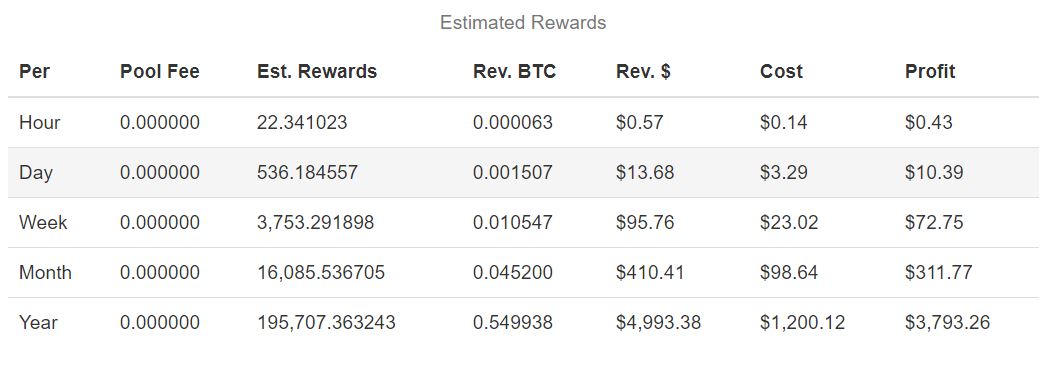
Image source: Whattomine
Yellow card #1
The winter party A3 was not sold out yet when Bitmain a new model, which this time would take up the extraction of more popular coin, Monero (XMR):
We are pleased to announce the all-new Antminer X3, to mine cryptocurrencies based on the CryptoNight hashing algorithm.
Two batches: shipping in June () and shipping in May ()
To prevent hoarding and to enable…. (1/2)— BITMAIN (@BITMAINtech)
Already tense, the state of things was further fueled by Baikal, which following its rival to bite off a piece from the Monero pie. Developers of the latter were less compliant than SiaTech and kept their to conduct a hard fork for resisting ASIC mining. Nevertheless, Bitmain didn’t arrive and withdrew from responsibility for possible problems with Monero, promptly placing the following disclaimer on its :
“One major cryptocurrency which is using CryptoNight hash function is about to change their PoW algorihtm [CT: site misprint], and according to their public statement, it is purposely to brick ASIC mining rigs including X3. When you buying it, you are betting that they are wrong.”
Although ASIC miners support other coins, for example, Bytecoin, Aeon and Dash, what about the $4,500 profit per month that turned into a pumpkin?
Monthly return as of April 26, according to Cryptocompare
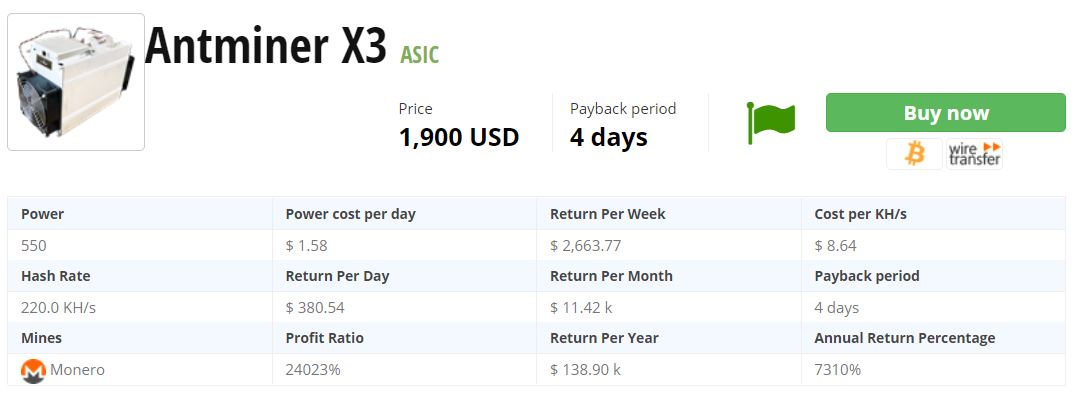
Image source: Cryptocompare
Monthly return as of March 17, according to Cryptocompare
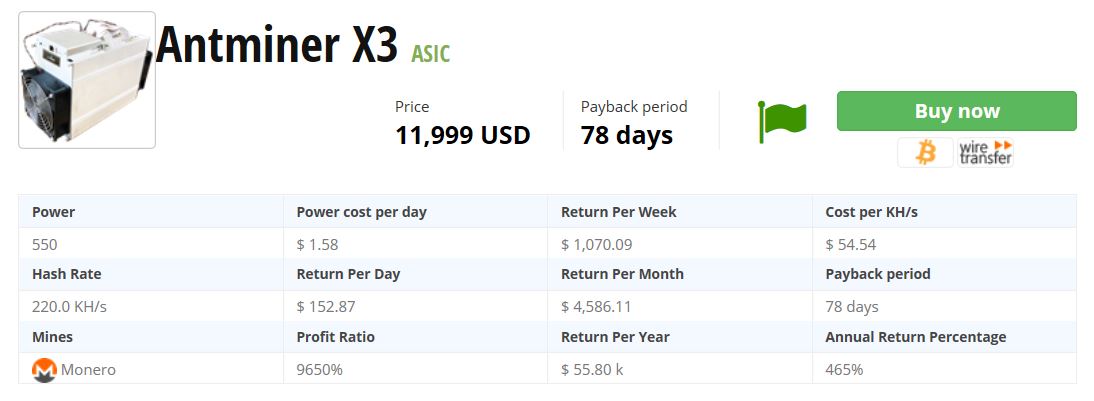
Image source: Cryptocompare
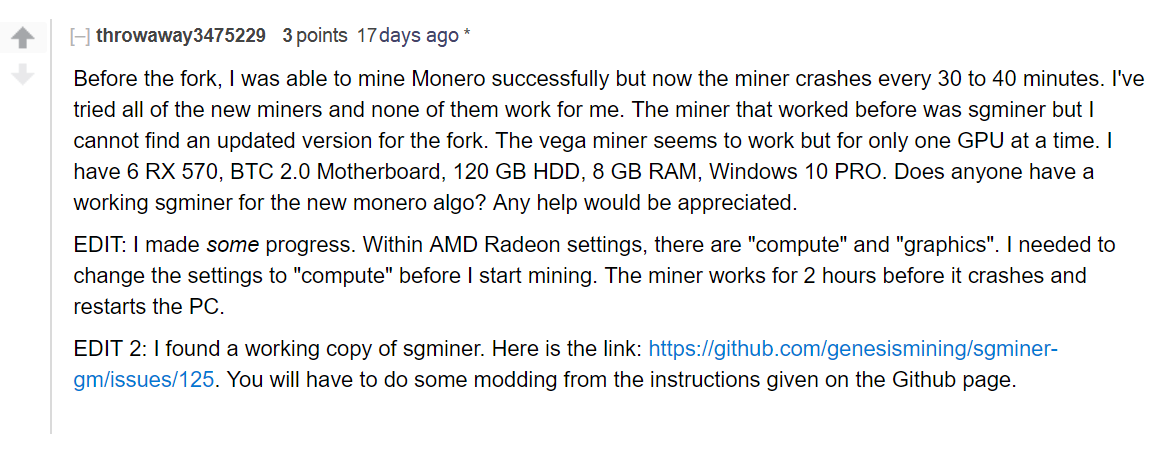
Particularly as many users with the the reduced profitability and unusable equipment that “crashes every 30 to 40 minutes and restarts the PC”.
Yellow card #2?
Bitmain owners would not have been themselves, had they not coveted a more delicious crypto piece. On April 3, developers the release of the “world’s most powerful and efficient EtHash ASIC”, now under the Ethash algorithm, which Ethereum and Ethereum Classic work on.
We are pleased to announce the Antminer E3, world’s most powerful and efficient EtHash ASIC miner.
Ordering limit of one miner per user and not available in China.
Limited stock, order here now:— BITMAIN (@BITMAINtech)
The master of surprises from China successfully refuted the general belief that the Ethash protocol is and Ethereum can be mined only through traditional GPU cards.
In addition to Bitmain, three other companies are working in this direction, one of whom – Halong Mining – the Blockchain Defensive Patent License initiative with a patent for the overt version of AsicBoost technology.
It seems that this caused in the Ethereum Foundation, which until then had been slow to move to the for reducing the role of mining. Is Bitmain sure that Ethereum will not be able to abandon PoW, and the transition to PoS will result in just another Ethereum classic-style hard fork?
While one of the Ethereum developers initiates a hard fork on Github, and the other one a 57 percent vote from his Twitter followers supporting this radical measure, Vitalik Buterin shared with Cointelegraph his opinion that the threat is overestimated:
“I am in principle open to it, but I feel it’s early to commit to a specific fork, because we still know fairly little about what kind of ASICs we’re dealing with, whether they are really ASICs or just super-optimized GPUs with non-essential parts stripped out, and what options there are for changing the algorithm.”
He also told Cointelegraph that he expects it “to continue to be debated within the community in the short to medium term”.
It seems that he is right. While some users to see a large number of GPU cards coming to the secondary market soon, others to the fact that by the time the Antminer E3 reaches the consumer, it may actually lose its relevance. According to , E3 owners will get $7.38 per day or $221.36 per month after deducting electricity costs.
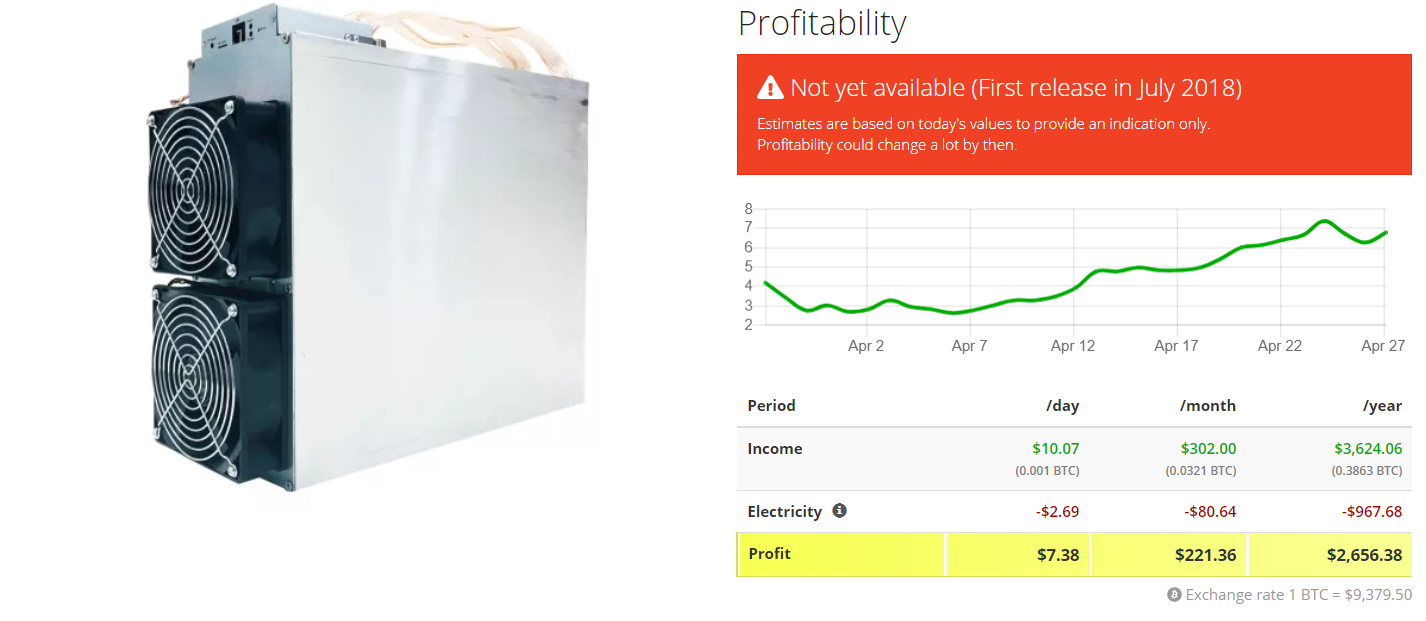
Image source: AsicMinerValue
While Bitmain again shirks responsibility and happily accepts orders for the Antminer E3, . , by the time the shipments start, the performance and energy efficiency of the model will be improved.
Penalty bench risk
Bitmain’s monopoly continues to grow. At the same time, the number of available coins decreases and the number of miners remains the same. The debate is becoming more acute, shifting more pressure on the development team. The creators of ZCash were openly of betraying the interests of the community, Monero conducted a , and Ethereum is on the way to .
While some companies conduct hard forks and others occupy waiting positions, Bitmain and its colleagues are actively bringing more and more powerful devices to the market that can supplant obsolete configurations. However, it is worth remembering one weak spot of ASICs is they can be hit by ASIC Resistance followers. This is the . So, fundamental changes in the PoW algorithm could soon send Bitmain to the panel bench.
Published at Tue, 01 May 2018 04:49:23 +0000
Altcoin
