November 11, 2026

Capitalizations Index – B ∞/21M

Another ‘Satoshi Message’ Attempts to Sway Public Opinion, But Fails

bitcoin News
Another ‘Satoshi Message’ Attempts to Sway Public Opinion, But Fails
Another 'satoshi message' attempts to sway public opinion, but fails

It’s been a crazy week in cryptocurrency land as a large portion of the community watched the bitcoin Cash (BCH) network split into two chains on Nov. 15. Following the 24 hours of the BCH hash war, an interesting message was found stemming from block height 9 that claims there is an “issue with Segwit.” Of course, a few cryptocurrency developers have once again deemed the latest Satoshi signature as “fake” and have explained that the new message was likely another fluke attempt by Craig Wright.

Also read: Hash Wars: BCH Proponents Confident a Resolution Is in Sight

Cryptocurrency Community Scrutinizes Another So-Called Signed Message from Satoshi

Another 'satoshi message' attempts to sway public opinion, but failsDuring the second day of the BCH hash war, a few cryptocurrency enthusiasts came across a message that appeared to be a valid signature for Satoshi’s key in block 9. The address contained a message which warned of some issues with the Segwit protocol on the BTC chain. Furthermore, the owner of Coingeek, Calvin Ayre, tweeted out to his followers a small statement in regard to the block 9 key signature and stated that “Satoshi Lives.” Ayre also retweeted the message from a Twitter account called “@Satoshi” which led to a few other tweets about the message.

“I do not want to be public, but, there is an issue with Segwit,” explains the signed message and the tweet from the now deleted, but archived Satoshi handle. “If it is not fixed, there will be nothing and I would have failed — There is only one way that bitcoin survives and it is important to me that it works. Important enough, that I may be known openly.”

The Satoshi Twitter handle also tweeted a message across the social media platform that said:

The message will be clear in Dec 2019.   

Another 'satoshi message' attempts to sway public opinion, but failsMost of the cryptocurrency community believes the signed message is just another failed attempt by Craig Wright.
More Proof of Nothing

With all that’s going on in the BCH community and specifically Craig Wright, many observers believe the signature stems from him. Of course, a large majority thought it was just a PR stunt from Wright and company and quickly disregarded the message.

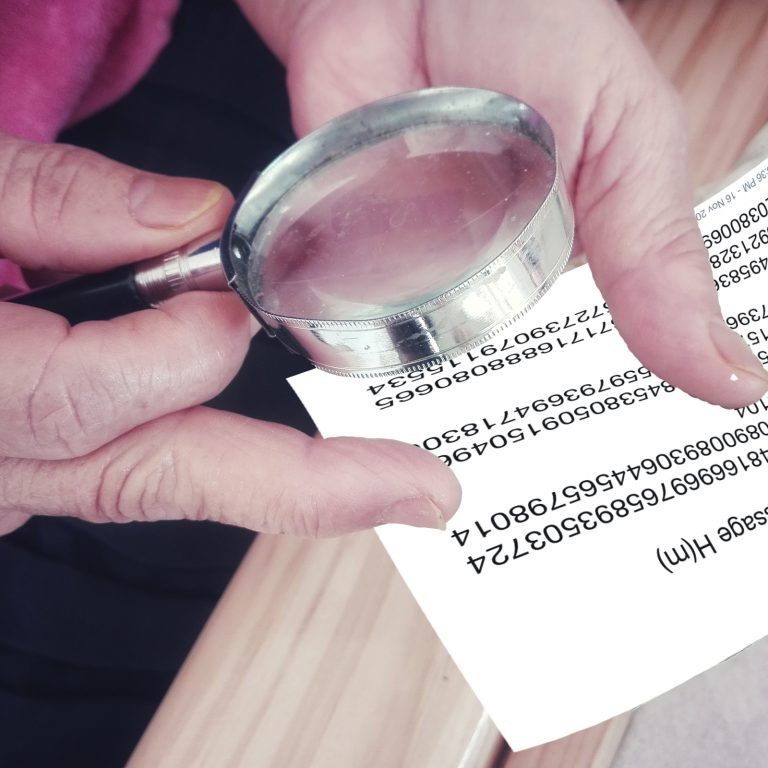
Another 'satoshi message' attempts to sway public opinion, but failsThe message allegedly signed by Satoshi.

However, lots of people took a closer look at the message and agreed that it likely derived from Wright and even so the signature was still phony. For instance, the CTO of Purse, Christopher Jeffrey, detailed that the message appeared to be a valid signature from Satoshi’s key in block 9 but further stated that “anyone can mutate a hash for a valid ecdsa signature to produce a seemingly ‘new’ signature/message.” Jeffrey further said that he and a friend had fun creating fake Satoshi signatures in the past. “Looks like another failed attempt from Craig Wright if I had to guess,” explained the Purse developer.

Another 'satoshi message' attempts to sway public opinion, but failsMany respected bitcoiners explained that they considered the message to be phony and invalid.
Another 'satoshi message' attempts to sway public opinion, but failsCTO of Purse, Christopher Jeffrey.

In addition to Jeffrey’s statements, the BTC developer Gregory Maxwell showed the Reddit community on r/btc how easily the fake signature message can be accomplished. Jeffrey further explained on Reddit that he had long suspected that Craig would attempt this type of stunt. Overall, most of the BCH community members across social media channels like Twitter and Reddit didn’t seem to think the latest Satoshi message was legitimate. Craig Wright did respond to a Twitter handle called @Checksum0 who tweeted about the message during the day and said, “No, that is bamboozled — The last time it was spent from that address is 2009.”

Later on, Wright did tweet some more cryptic messages to his Twitter followers that seemed very similar to the block 9 message.

“I have done all I can for now to warn people — I will work to make the system right, it is not you, it is not your profit, it is sound money for the world,” Wright detailed. “If you cannot understand that, I cannot make you — I hope that your children will. About a year from now, I have something to release, but, right now, I cannot. So, the place is marked and saved, and in the time it takes, you will find what that is… when it is fixed — So, more cryptic markers,” the Nchain representative concluded.

What do you think about the so-called message from Satoshi warning about Segwit in Dec. of 2019? Do you think the signature attempt was phony and proved nothing? Let us know what you think about this subject in the comments section below.

Images via Github, Pixabay, Archive.org, and Shutterstock.

At news.bitcoin.com all comments containing links are automatically held up for moderation in the Disqus system. That means an editor has to take a look at the comment to approve it. This is due to the many, repetitive, spam and scam links people post under our articles. We do not censor any comment content based on politics or personal opinions. So, please be patient. Your comment will be published.

The post Another ‘Satoshi Message’ Attempts to Sway Public Opinion, But Fails appeared first on Bitcoin News.

Previous Article

What Web3JS method do I call to know what value to use for the gas price with sendSignedTransaction?

Next Article

Crisis: After $30 Billion Invested, Most Crypto ICOs Have Nothing to Show

You might be interested in …

Cryptocurrency and Blockchain Tech Market Could Reach $10 Trillion in 15 Years, Says RBC Analyst

RBC

In a report published on January 3, 2018, Royal Bank of Canada (RBC) Capital Markets analyst Mitch Steves confidently stated that the cryptocurrencies and blockchain technology applications market could increase thirteenfold in 15 years, reaching $10 trillion.

Steves’ report, titled “Crypto Currency & Blockchain Technology: A Decentralized Future — A Potential Multi-Trillion Dollar Opportunity,” has been sent to RBC’s clients. A short summary has been shared on Twitter.

In a video published by CNBC, Steves, who often covers high technology stocks including Nvidia, whose value has been boosted by cryptocurrency mining, defends his bullish expectations on blockchain technology and its applications. According to Steves, cryptocurrencies represent only a part of the $10 trillion pie, the bulk of which is in the rest of the ecosystem existing around blockchain technology and cryptocurrencies.

“I think what people misunderstand about the cryptocurrency space is that it’s not only a store of value, but it also allows you to secure the internet,” says Steves. Blockchain-based cryptocurrencies will permit creating decentralized versions of value storage services like Dropbox or iCloud. The $10 trillion figure represents one third of the current size of the market for value storage.

Steves argues that blockchain technology will permit creating a “Secure World Computer,” a decentralized world computer without a third-party intermediary, intrinsically more secure because there won’t be centralized servers that can be hacked, and suggests that next-generation killer apps will be built on top of this secure layer.

The smart move for investors, according to Steves, is to get involved with cryptocurrencies directly. As far as traditional stocks are concerned, Steves mentions public companies like AMS and Nvidia, whose chips power cryptocurrency mining hardware, and the private companies that make ASIC chips for bitcoin mining. At the same time, Steves warns that cloud service providers are likely to be the most impacted from blockchain technology, with negative results if they don’t manage to adapt.

According to Steves, the value of the blockchain technology market is also growing due to international remittances — the sending of payments overseas is currently estimated at half a trillion dollars per year — “fat protocol” layers that increase in value as the applications grow, and throughput scaling efforts, such as the Lightning Network, which “appear on track to deliver scaling that accommodates higher transactions/second, ultimately driving higher utility and network value.”

While warning that the cryptocurrency space has many risks, Steves argues that the opportunity appears vast, with constant technology updates, and a multi-trillion dollar market will likely emerge.

In a recent, related article published by the RBC, Frédérique Carrier, managing director and head of investment strategy for RBC Wealth Management in the British Isles, argued that, while cryptocurrencies are unlikely to replace traditional money, blockchain technology could have wide-ranging implications in many industries and for investors in the medium-to-long term.

The potential of blockchain technology “makes it a technology well worth watching closely, which we intend to do,” notes Carrier, adding that RBC is experimenting with blockchain technology in its personal, commercial and capital markets businesses. RBC recently announced the implementation of a blockchain-based shadow ledger for cross-border payments between the U.S. and Canada.

The post Cryptocurrency and Blockchain Tech Market Could Reach $10 Trillion in 15 Years, Says RBC Analyst appeared first on Bitcoin Magazine.

Ripple price analysis: xrp approaching next significant break

Ripple Price Analysis: XRP Approaching Next Significant Break

Ripple Price Analysis: XRP Approaching Next Significant Break Ripple price struggled to break the $0.3300 and $0.3250 resistance levels against the US dollar. There were many rejections noted near the $0.3250 resistance area. There is […]