Positano, Amalfi Coast, Italy
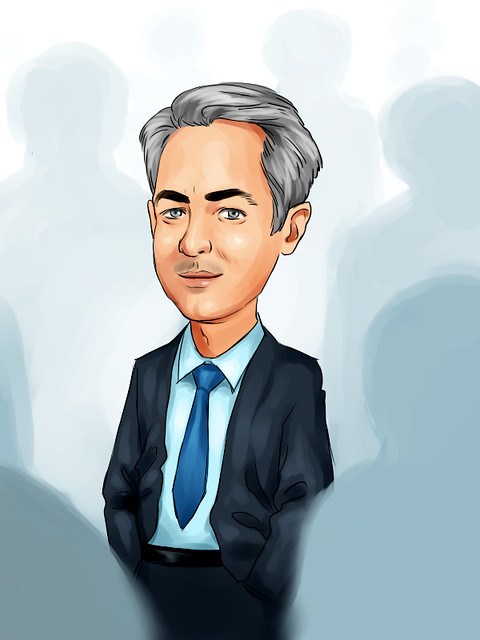
Hi all, I’m David Geddes and I’m very happy to have joined this impressively dedicated and motivated team to take on the task of managing customer support. Everyone has made me feel so welcome during my first couple of days and I’m looking forward to getting to know each one of them a little better over the next few weeks.
So a little about me… I started at the University of Strathclyde studying a joint Computer Science and Electronic Engineering degree where it took me the best part of three years to realise that I simply didn’t “get” analogue electronics (I guess my mind isn’t wired that way). I switched focus for my third year to purely Computer Science modules for my BSc. On leaving university I signed up with a Scottish Enterprise scheme in Glasgow called Graduate Into Business which aimed to place graduates with local start-ups. I found myself attracted to a software company called IES who wanted to play their environmentalist part by reducing the amount of energy buildings consume through sustainable design and intelligent building control. My first tasks were to learn a new programming language (Visual Basic) and create database tables of which I can say that the former was definitely more interesting than the latter. I moved on to creating front-end interfaces using Visual Basic to link with Fortran calculation engines and learned many lessons through trial and error about the importance of a good user-experience. After a couple of years we created the second and third generations of what became the Virtual Environment and by now I was working almost exclusively in C++. I had gained responsibility in multiple projects for the full application lifecycle: design; coding; testing; delivery and end user support and I have to say that if I never have to document a product again it’ll be too soon. I did however find that I was able to build up a good rapport with many of our regular users which I guess led to my next career move.
I moved into technical support in 2006 after a very enjoyable secondment to Boston in the States where I was both continuing to develop software and provide user support to the NA market. In the beginning it was just myself handling all technical enquiries but as time went on I was allowed to grow the team and take management responsibility for it. I set up the procedures required to run the department and had to establish these in person by visiting the Pune (India), Boston (MA) and San Francisco (CA) operations… a dirty job indeed but somebody had to do it. By the end of my tenure as Technical Support Manager we had support staff in Australia, India, Scotland, Ireland and the USA meaning that we could provide 24 hour support – the sun never set on the IES support team!
During 2011 I transferred back in to the software development department to assist the Technical Director in the administrative and planning management of the team. We were working within a hybrid waterfall/agile methodology until a restructure in 2013 where I moved to a more hands-on development role again heading up a team responsible for adding productivity enhancements to the Virtual Environment. Having squared the circle and being back in C++ development I felt that I’d probably done all I could within IES and it was time again for a change so I set my sights on pastures new… which resulted in me coming to MaidSafe.
I’ve been playing more and more tennis over the last couple of years and I think that I am driving poor my poor wife Victoria crazy with how obsessed I’m becoming. I joined the local David Lloyd club where I’m very active in the tennis community there and while I’m not exactly brilliant I’m starting to get the hang of how to hold the, err, “bat” is it? Recently I’ve learned how to string a racquet and am threatening to buy my own stringing machine… I told you… obsessed!
One thing that Victoria and myself are obsessed about together is travel. We’ve seen some pretty beautiful places all over this wonderful world and to be honest our own country of Scotland is right up there with the best of them. I try and take the occasional photograph when we are away and now and again if the timing is just right they come out quite well.
That’s probably more than enough from me at this time so I’ll not take up any more of your day other than to finish by reiterating how excited I am to be part of the SAFE revolution.
David.
Whoever thought the Lambo-buying millennials who’ve made fast fortunes from early cryptocurrency investments are good-for-nothings, thought extremely wrong. According to latest developments, and Vitalik Buterin, the founder of , are donating $1 million worth of OMG tokens directly to refugees living in extreme poverty.
OMG’s Tryst With GiveDirectly
This bout of generosity comes after many individuals in the cryptocurrency space have found themselves members of the newfound ‘crypto-rich’ community.
And surprisingly so, they are willing to these quick bucks to honourable use.
OmiseGO has partnered with the fundraiser ‘’ for donation as both of these organizations have similar views – the ones that aim at providing “alternatives to legacy systems, enhancing accountability.”
According to the official :
“Refugees are a perfect population to serve through this effort. The world is in the midst of a refugee crisis, with more than 65 million displaced from their homes. [Many] also find it difficult to re-enter the formal financial system as they lack appropriate local documentation. They are precisely the people we wish to see benefiting from the “unbanking” effect that OMG is designed to create. We’re excited to plug them back in, transfer funds, and let them get to work.”
Buterin No Stranger to Philanthropy
The 24-year-old Buterin made another Donation in February 2018 to the . They are a charity organization for treating age-related disorders, and Buterin made a $2.4 Million donation in ether.
OmiseGo () is a project Buterin holds in close regards and has highly of it.
Right now my favorite token model is OMG-style staking tokens. Reasons:
* Not a medium-of-exchange token
* Clear valuation model (expected discounted future tx fees minus node operation cost)
* Requires running node to get returns, not passive income (so more legally defensible)
— Vitalik "Not giving away ETH" Buterin (@VitalikButerin)
The company is a public Ethereum-based financial technology for use in mainstream digital wallets, that enables real-time, peer-to-peer value exchange and payment services agnosticly.
Keeping in line with this donation, OMG’s slogan is “Unbank the banked,” which states its vision to provide better financial services for everyone, especially people in developing countries and locales which lack traditional banking infrastructures.
‘Tis the Season of Sharing!
As earlier reported by BTCManager, had donated a significantly larger amount of $29 million to support public schools in the United States. However, this in no way undermines the donation put together by OmiseGO and Buterin.
The donation made by Ripple was made in , Ripple’s premined digital currency, to .
The foundation is a US-based 501 non-profit organization that enables users to donate directly to public school classroom projects.
Lesser Known Org Makes $5 Million Donation
Another organization that has actively donated large amounts of bitcoin to good doing is .
This anonymously operated beneficiary donated a total of $1 million to the , an organization involved in research for ME/CFS (myalgia encephalomyelitis / chronic fatigue syndrome) and other related chronic complex diseases.
This donation was made recently, on January 14th, 2018.
After receiving an outpour of gratitude and encouragement on social media platforms, The Pineapple Fund surged its donation up to $5 million. Indeed, recognition and empowerment take donations to a different level.
As such, we can only hope these crypto giants continue distributing their newfound wealth in sorely needed areas.
The post appeared first on .

 Das russische Ministerium für Kommunikation hat in dieser Woche erste Entwürfe für kommende ICO-Richtlinien veröffentlicht. Dabei stellt Moskau die eigene Währung in den Mittelpunkt. Künftig sollen akkreditierte Initial Coin Offerings auf russischem Staatsgebiet nur noch mithilfe des Rubels möglich sein. Die Richtlinien sind Teil eines größeren Gesetzespakets zur Krypto-Regulierung, das bis Juli von der russischen…
Der Beitrag erschien zuerst auf .