June 30, 2026

Capitalizations Index – B ∞/21M

An In-Depth Look at Ethereum’s Maker and Dai Stablecoin

An in-depth look at ethereum’s maker and dai stablecoin

An In-Depth Look at Ethereum’s Maker and Dai Stablecoin

An in-depth look at ethereum’s maker and dai stablecoin

Since tether (USDT) bolstered the idea of a working stablecoin over the last few years, there’s been a variety of different types of stable cryptocurrencies that are usually pegged to the U.S. dollar. However, there’s one particular stablecoin that’s been a hot topic of discussion lately called dai, a coin that’s backed by ethereum locked into a smart contract.

Also read: Payglobal Provides Cryptocurrency to Fiat Transfers With Existing Bank Cards

Maker and Dai

The following is an overview of how dais are created within a network called the Maker DAO and why some cryptocurrency enthusiasts seem to like the concept better than its fiat alternatives. But there’s also a slew of critics who dislike the Maker project for a multitude of reasons that could theoretically hurt a few individuals’ dreams of the perfect stablecoin backed by crypto assets.

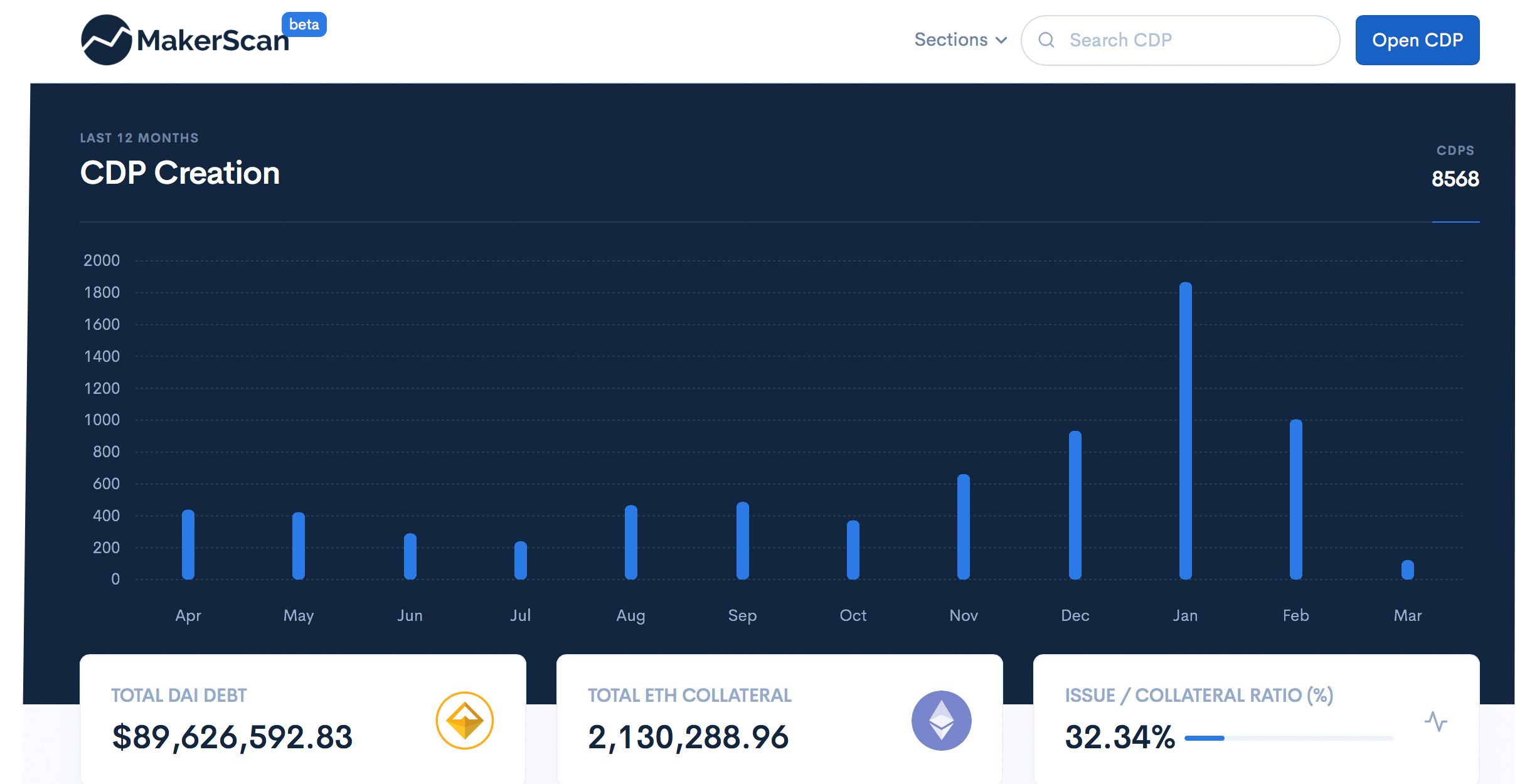
The Ethereum network has a popular decentralized autonomous organization (DAO) called Maker, which is now well known for creating a cryptocurrency-backed stablecoin called dai. The Single-Collateral Dai (SCD) system, launched in December 2017, allows anyone to leverage their ETH in order to create a stablecoin that keeps price valuation down to around $1 most of the time. Over the last 14 months of operation, the Maker DAO has become the most popular Ethereum-based system in 2019. At the time of publication, there’s more than 1 percent of the entire ETH supply in circulation locked up into the Maker system as there’s 2.1 million ETH used as collateral.
An in-depth look at ethereum's maker and dai stablecoin

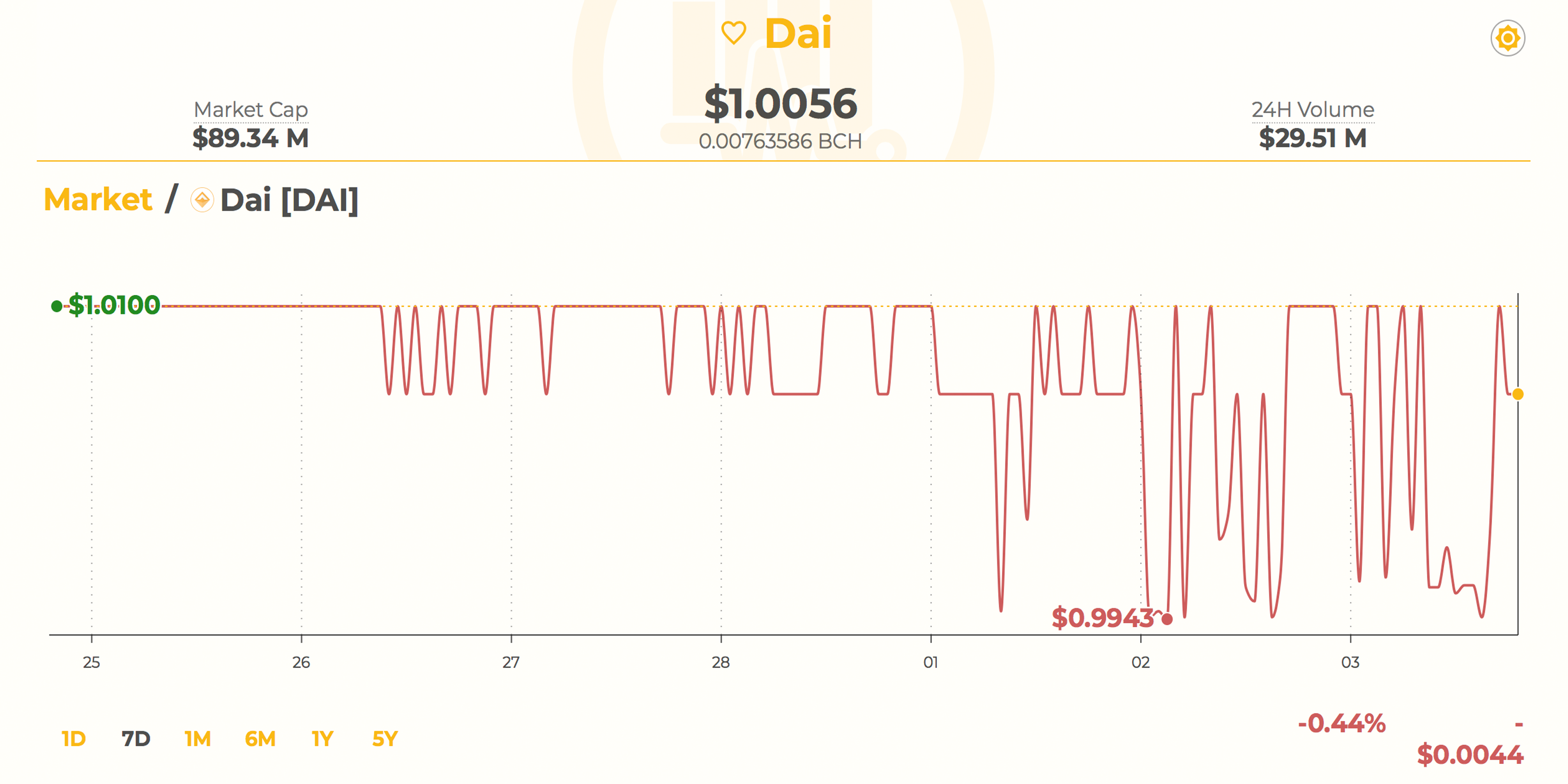
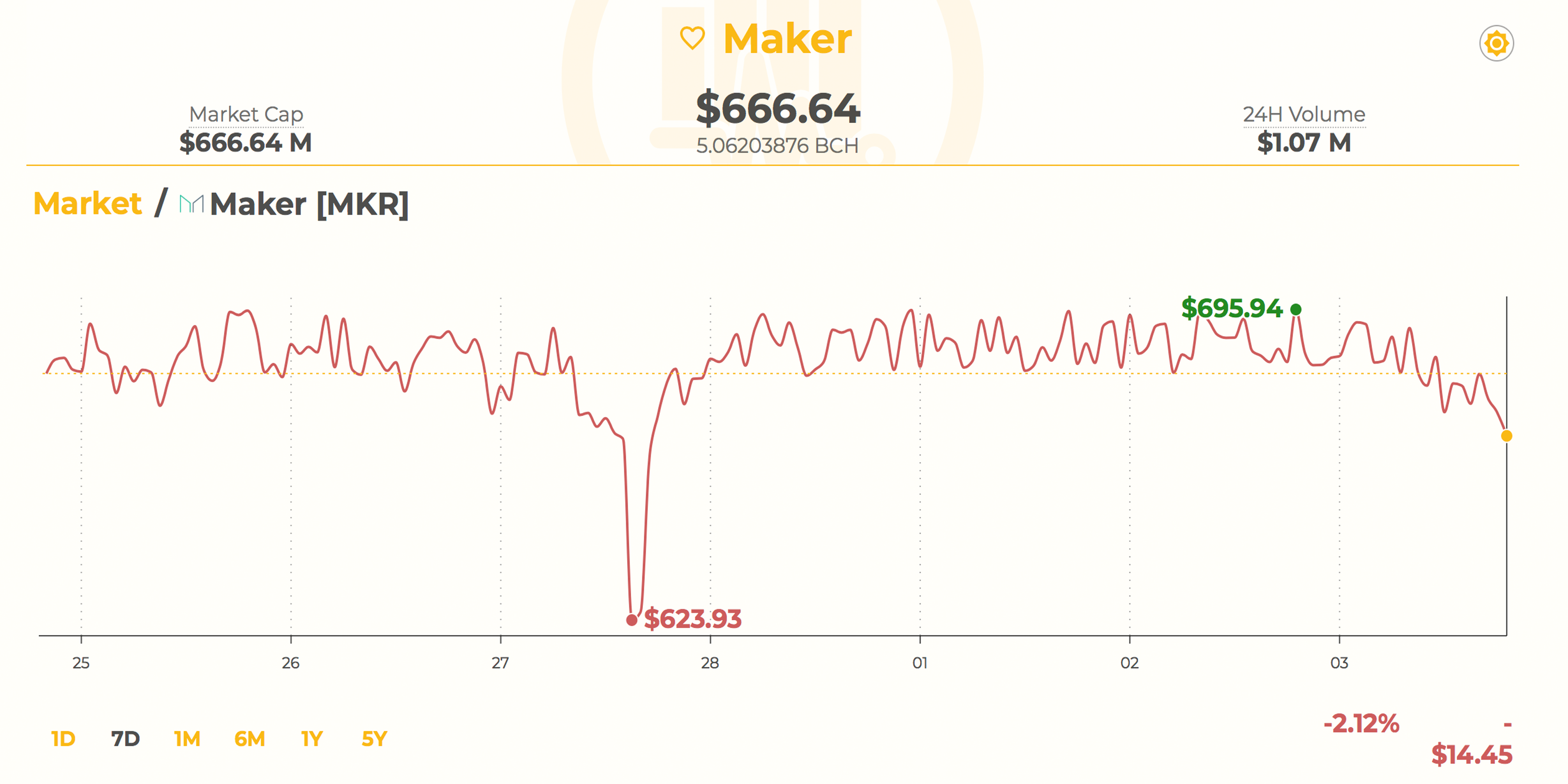
The Maker team consists of CEO Rune Christensen, CTO Andy Milenius, President Steven Becker and roughly 18 other leaders. The community is relatively small but has been growing since the project’s inception. Maker and the stablecoin dai community have a blog, a chat forum, and its own subreddit where individuals discuss the nascent ecosystem. At press time, dai is ahead of the stablecoin GUSD with the 55th largest market capitalization of around $89.3 million.

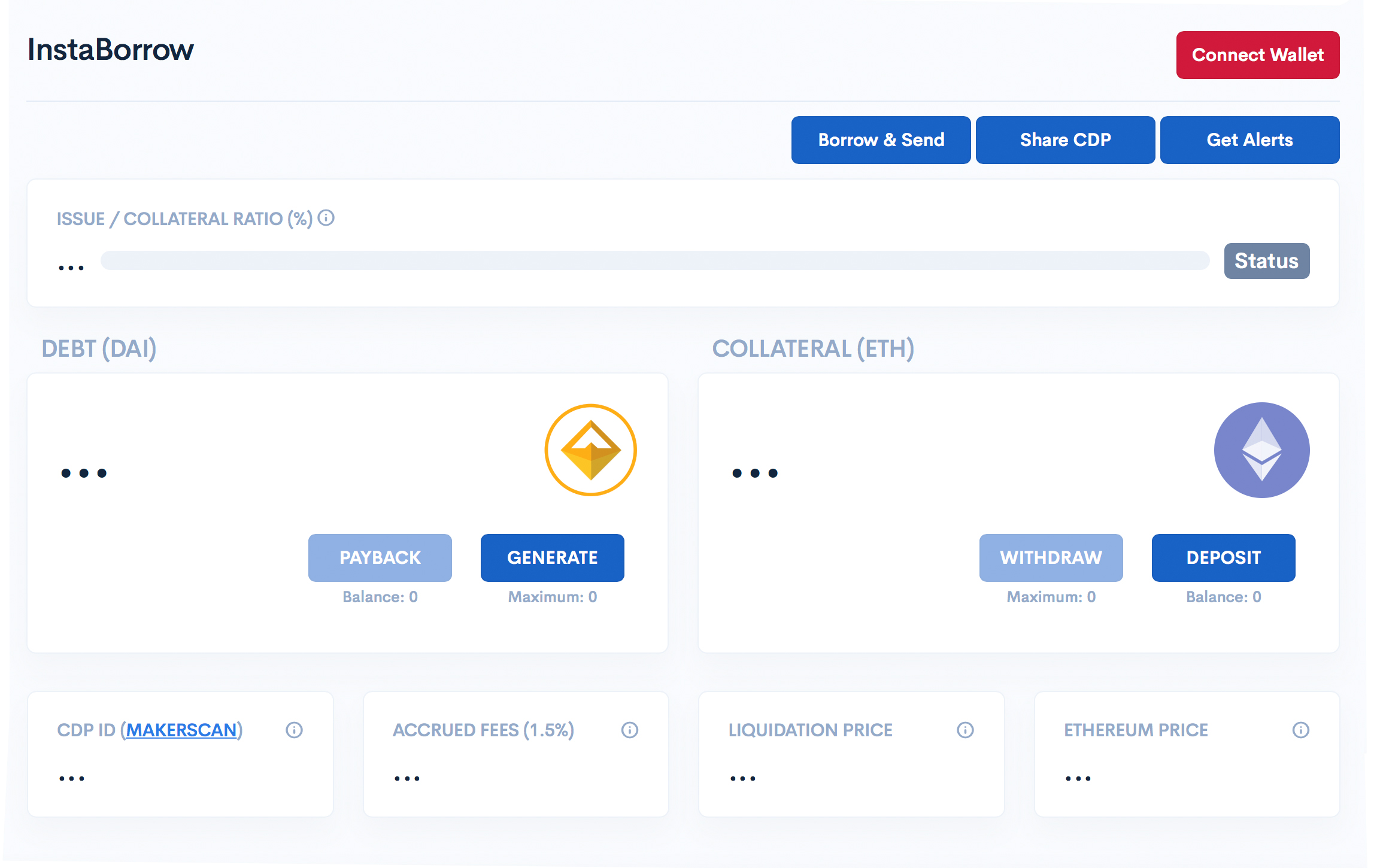
There are two fundamental differences between Maker’s dai and other stablecoins like USDC, GUSD, and USDT. For one, dai is not backed by fiat reserves held in a bank like a great majority of its stablecoin peers. The other difference is that fiat systems are collateralized by the company’s word and third-party audits while the transparency of dai can be seen onchain at all times. Basically, dai holds stability because ETH is locked into a contract used in a system called a Collateralized Debt Position (CDP). A user wanting to acquire dai sends the ETH to a CDP and can withdraw dai from there.
An in-depth look at ethereum's maker and dai stablecoin

However, the collateralization ratio uses a method called overcollateralization (OC), which helps lower the system’s exposure to risk and keeps the credit (dai) through Maker’s autonomous feedback mechanisms. OC requires more funds than a typical dollar for dollar trade in order to obtain dai. The ratio of ETH collateral needed in order to acquire dai is fixed at 1.5:1 at all times, but users can purchase dai on the open market too.
An in-depth look at ethereum's maker and dai stablecoin
There is currently 2. 1 million eth locked into maker contracts that produce dai.

Critics of Maker, Overcollateralization, and a Stablecoin Unmediated by the Legal System

Maker and dai have become a popular subject among cryptocurrency supporters largely because some people like the concept of a liquid stablecoin for certain use cases as well as the idea dai is backed by crypto. However, there are some critics of the Maker protocol and the dai stablecoin it produces. Some skeptics believe the project could fall victim to the same scenario that happened to the Ethereum network’s first DAO which saw the loss of $50 million in June 2016. At the time, users exploited the DAO’s code enabling them to take one-third of the DAO’s funds to a subsidiary account. Another critique of Maker DAO explains that the OC scheme and paying the contract back with the equivalent amount of dai is well known. However, what the organization hasn’t explained yet “is that you also need to pay a stability fee in MKR,” Bennett Tomlin said last June.

“Also [dai] cannot always be collateralized in excess, because if there is a black swan event that destroys the value of ethereum that is no longer true,” Tomlin’s research details.
An in-depth look at ethereum's maker and dai stablecoin

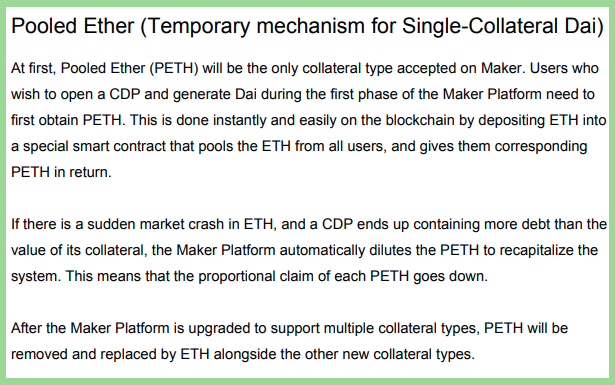
Tomlin’s study called a “Deep Look at Maker DAO and Dai and MKR” adds that the Maker’s creators explain in the white paper that in the event of a “black swan” crash the organization will dilute the “pooled ether.” The author’s post explains, “Why someone would trust this, I do not know — The developers are obviously aware of this risk, but it seems to be ignored.” Tomlin’s report also details that the biggest hurdle for the Maker team is the government-specific entities that regulate the U.S. financial activities. “Better watch out for the SEC, the CFTC, and the rest of the alphabet soup,” Tomlin warned.
An in-depth look at ethereum's maker and dai stablecoin

A Multi-Collateral Dai and Other Chain’s Creating a Stablecoin

Despite some concerns, the Maker DAO continues to rake in lots of ethereum in order to create the world’s first working consumer-grade stablecoin based on the collateralized crypto assets. The project’s roadmap calls for a Multi-Collateral Dai system which will at some point be able to collateralize the dai stablecoin with other cryptocurrencies. On Nov. 6, 2018, the development team detailed that the code for Multi-Collateral Dai was published and contracts have been deployed to the system’s testnet.
An in-depth look at ethereum's maker and dai stablecoin

Additionally, there has been talk of other cryptocurrencies following suit with the dai idea. Just recently the bitcoin Cash (BCH) community discussed the creation of a stablecoin built on the BCH chain. The BCH network has been recently experimenting with token creation but something like dai on BCH would require some different elements. By and large, the Ethereum community seems to appreciate the Maker protocol and dai stablecoin and so far it has brought some more traction toward that ecosystem.

What do you think about the Maker protocol and the dai stablecoin? Let us know your thoughts on this subject in the comments section below.

Disclaimer: This article is for informational purposes only. OhioBitcoin.com does not endorse the Maker DAO or dai stablecoin. Readers should do their own due diligence before taking any actions related to the mentioned companies, creators, associates, or any of its affiliates or services. OhioBitcoin.com and the author are not responsible, directly or indirectly, for any damage or loss caused or alleged to be caused by or in connection with the use of or reliance on any content, goods or services mentioned in this article.


Image credits: Shutterstock, Maker DAO, Dai, Makerscan.io, and Pixabay.


Need to calculate your bitcoin holdings? Check our tools section.

Tags in this story
Andy Milenius, collateral, DAI, Dai Stablecoin, DAO, DAO Hack, ETH, Ethereum Network, Maker, maker dao, N-Featured, Rune Christensen, Single-Collateral Dai, Smart Contract, Stablecoins, Steven Becker

An in-depth look at ethereum’s maker and dai stablecoin
Jamie Redman

Jamie Redman is a financial tech journalist living in Florida. Redman has been an active member of the cryptocurrency community since 2011. He has a passion for bitcoin, open source code, and decentralized applications. Redman has written thousands of articles for news.bitcoin.com about the disruptive protocols emerging today.

Published at Mon, 04 Mar 2019 02:55:45 +0000
Previous Article

Overstock Issues Statement Regarding Proposed tZERO Equity Investment Nasdaq:OSTK

Next Article

Warren Buffett’s Bitcoin Aversion Might Be a Positive Crypto Signal: Here’s Why

You might be interested in …

Options for Borrowing and Lending With Cryptocurrency Are on the Rise

borrowlend.jpg

Cryptocurrency has opened up a new world in the financial sector that was primarily owned by banks, namely the borrowing and lending of capital.

While peer-to-peer borrowing and lending has developed in recent years in the fiat currency space, it is only recently that companies have been finding methods of replicating these ideas in the cryptocurrency space. What follows is a short evaluation of several available options.

SALT

SALT is a lending platform for blockchain-backed loans. No credit check is required: Users purchase  ERC20 SALT tokens to become a member and then put up bitcoin or other blockchain-backed assets as collateral. They can then borrow money from the platform’s network of lenders. Once the loan is paid back, borrowers get their crypto back: There are no prepayment penalties.

SALT makes no guarantee that a sufficient pool of liquidity is available to fulfill every loan request right away, however, even for approved borrowers. If the pool of money provided by the lenders is all lent out, then prospective borrowers will have to wait for more lenders to enter the system or for funds to be paid back into it.

The cost of one SALT token is set at $25. Tokens are currently sold within the SALT system; however, the token is also available on several exchanges where it is currently trading at about $4. SALT is used to pay for your membership in the SALT system; it is a tiered annual fee that varies based on the size of the loan. At the bottom is 1 SALT that covers up to $10,000 and at the top it is 100 SALT to borrow over $1,000,000 with various tiers in between.

Interest rates on the loans themselves will vary between 10 percent and 15 percent, depending on the terms of the individual loans. When borrowers apply for a loan, the available options are then presented and they can choose among them.

All of the member lenders at SALT are Accredited Investors under Regulation D of 17 CFR § 230.501 et seq., who have passed the SALT Lending Suitability Test. The loans are not transferable via blockchain; they are themselves securities that are transferable through existing financial channels.

Unchained Capital

Unchained Capital is very similar to SALT in that it provides loans against your bitcoin capital. Their details are easier to find on their website than SALT, namely the following:

  • Interest rate is 10 14 percent APR inclusive of all interest and fees

  • Terms are 3 24 months with options to renew

  • Loan to value ratio is 50 percent. Borrow $1 for each $2 you deposit as capital

  • Borrow up to $1 million without a credit check

  • Make monthly payments on the interest. Due in full on the final payment

CEO Joe Kelly told bitcoin Magazine that Unchained Capital is working with accredited investors and small institutions. They are specifically reaching out to partners to work with them and do not have any public call for investors. Interested investors, however, can contact them and see about working with them. Their current lending fund is over $10 million at the time of this writing.

EthLend

EthLend has more of a full free-market approach as a facilitating platform. Borrowers and lenders can use their system to connect and negotiate everything from interest rate to duration. The platform is entirely based on Ethereum, any other ERC20 tokens are admissible as collateral on the loan. If borrowers fail to abide the terms of the smart contract, then all collateral is forfeit.

This setup is similar to what is currently available with many peer-to-peer fiat lending options. The price of the LEND token is not clear because of various discounts and the highly fluctuating price of ether right now, but the purpose of the token is to provide discounts on the fees charged to use their system.

Othera

Othera says they use blockchain technology to facilitate digital loan contracts, manage their risk and tokenize the repayment cashflow. There has been news going around about the company since the middle of 2016, but their website offers no demonstrations and very few details. A recent partnership announced with London-based commercial real estate lending company Lendhaus indicates big things are in the works, but the Lendhaus website itself is very slim on details and their Twitter profile was only recently created and has no tweets. It isn’t clear if the platform is currently available. bitcoin Magazine reached out to Othera reps for more information but has not yet received a response.

Everex

Everex has been in the press for over a year and touts a number of products and services, such as the ability to transfer, borrow and trade in any fiat currency around the world. One aspect is their EVX token which provides a multitude of utility functions in their microfinance and payment program. EVX token ownership is required to access the system and can also be earned as an incentive or reward based on terms the lenders can specify. Those same EVX tokens can then be used as collateral for secured lending. To use their platform you need to either install their mobile wallet or use their Everex web service.

There is a lot of activity in other parts of the financial market with regard to cryptocurrency as well, such as tokenizing real world assets as investment vehicles. What this tells us is that there is a lot of interest and activity in this space that is certainly going to change the face of banking.

Note: This article is for informational purposes only. bitcoin Magazine does not necessarily endorse any of the above platforms. Readers are encouraged to perform their own due diligence.

The post Options for Borrowing and Lending With Cryptocurrency Are on the Rise appeared first on Bitcoin Magazine.

The seventh international diamond week opens in israel

The seventh International Diamond Week opens in Israel

The seventh International Diamond Week opens in Israel International Diamond Week in Israel (IDWI) is held from February 5 to 7. The event, organized by the Israel Diamond Exchange, has become a fixture on the […]